




















Loading...
Monuments Guide
Your quick reference guide to the most common types of Ancient Sites and Monuments you can expect to find during your search.
Site TypeAgricultural Sites
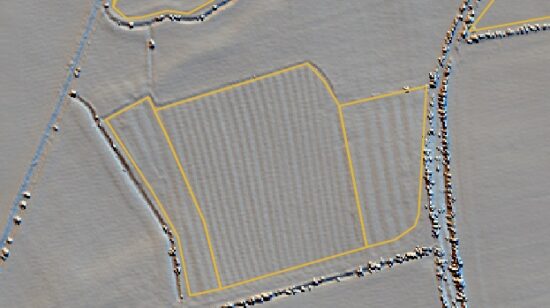
Agricultural sites result from farming activities, including the management of crops, livestock, woodland, and routine land use. Earliest agriculture in Britain dates to the Neolithic (4000 BC-2200 BC), when fields and animal enclosures began to appear with permanent settlements. The impact of grazing, ploughing, field clearance, deforestation, and enclosure on the landscape increased as agricultural activity intensified.
Site TypeBank Type
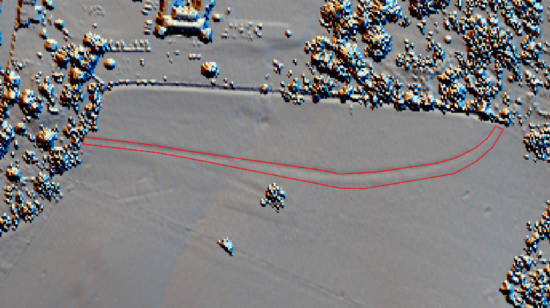
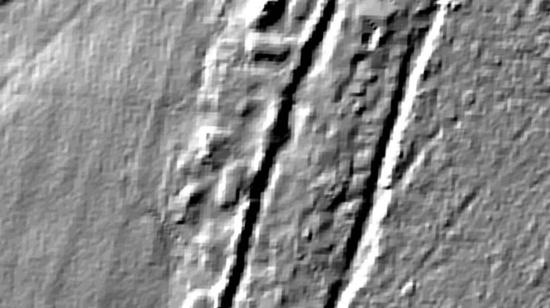
Banks are earthwork mounds that are longer in plan than width and usually act as a monumental boundary.
Site TypeDitch Type
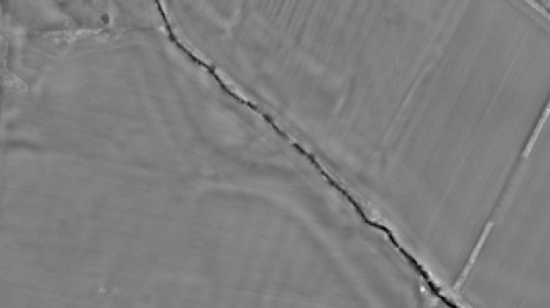
A Ditch is any long and narrow trench or hollow that is dug into the ground.
Site TypeEnclosure Type
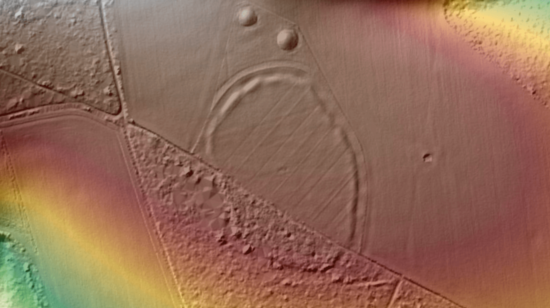
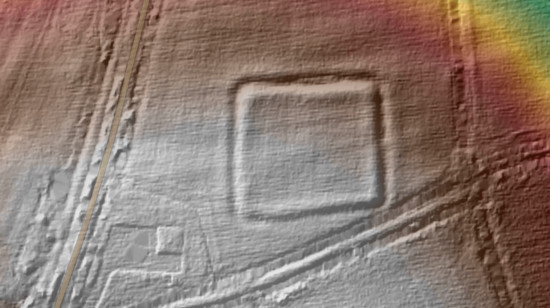
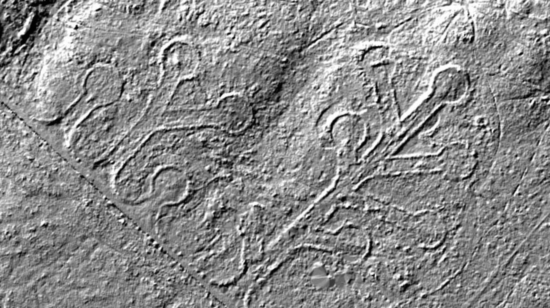
An enclosure is an area of land surrounded on all sides by another feature: usually a boundary ditch, bank, wall, palisade or other similar barrier. Enclosures may have a combination of enclosing features, or have several concentric enclosing ditches or banks.
Site TypeIndustrial Site
An industrial site is a monument that is associated with trades or manufacturing activities. Most industrial sites can be classified as either extraction sites (such as digging for minerals or ore) or areas of processing (e.g., iron, glass, brick, etc), although both were often in close association with each other. Many of the most visible sites are likely to be of relatively recent origin, but Roman, medieval and earlier industrial works are known from excavation. Industrial sites are largely characterised by signs of built structures, pit features and scattered debris that relate to the particular industry.
Site TypeLandscape Intelligence Features
Site TypeMilitary Type
Military type monuments can include anything related to warfare in England. This usually refers to monuments from the Roman period on. Prehistoric fortified structures definitely served a defensive purpose but it is hard to designate them as specifically military or civilian. Military sites include fortified structures, military camps, training sites, and battlefields. Britain has a rich military history and there are a huge array of military monuments, some of the most common are listed in this monument guide.
Site TypeMilitary WWI Type
This type includes any sites relating to the First World War. Monuments made in preparation for the war or as a result of it, including fortified buildings, factories, housing, military camps, training sites, coastal defence structures, and battlefields are classified here.
Site TypeMilitary WWII Type
This type includes any sites relating to the Second World War. Monuments made in preparation for the war or as a result of it, including fortified buildings, factories, housing, military camps, training sites, coastal defence structures, and battlefields are classified here.
Site TypeMound Type
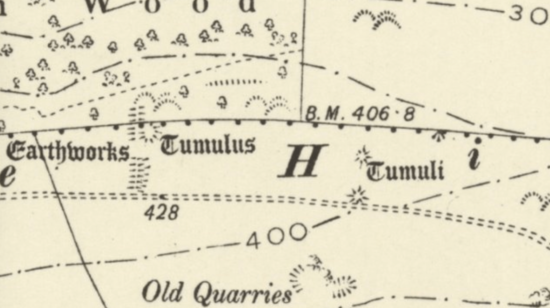
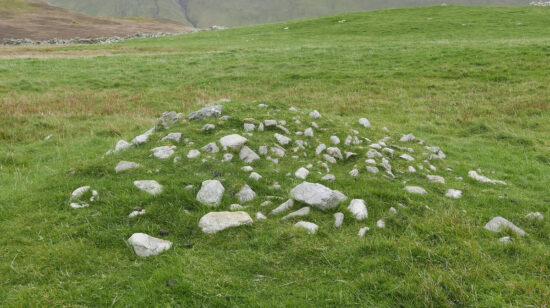
Mounds are elevated earthworks that have been deliberately constructed and usually, but not always, take on a circular or sub-circular-shape.
Site TypePit/Hollow Type
A pit is a ‘negative’ feature or one that is represented by a depression in the ground.
Site TypeRailway Type
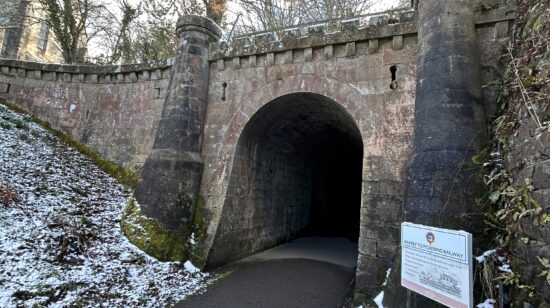
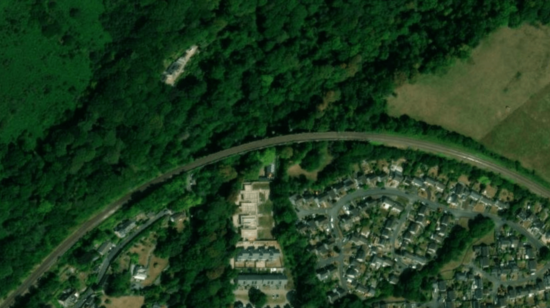
A railway is a method of transport by a wheeled vehicle that is guided by the track it runs on – generally two narrow, parallel rails. Britain’s earliest railways date to the 16th century, used in copper mines eg Mine Royal, Keswick. Wooden waggon ways developed around the coal-trade in the early 17th century eg Nottinghamshire, Shropshire. These connected mines to navigable water or with road systems. By late 17th century they were used to carry other goods. Steam locomotives were invented in England and the first railways for steam engines were built to move coal across the country more efficiently. The first successful railway was the Stockton and Darlington Railway It opened in 1825 for coal haulage and as it developed, was the first to transport passengers on a public railway. The building of the commercial railways in Britain was an enormous undertaking, it employed thousands of workers, moved millions of tonnes of earth, and necessitated many engineering innovations. By 1852 there were over 7000 miles of track in England and Scotland, connecting every significant city. Railways have many associated architectural features, from stations and storage buildings to aqueducts and railway bridges, turntables, towers, signals, railway hotel, carriage works, wagon works. Some of the more common examples are represented in the Monument Guide.
Site TypeRouteway Type
A routeway is a linear landscape feature joining two points, as a result of transit by people.
Site TypeSettlement Type
Settlements are places that were inhabited by multiple people and contained dwellings. There is a huge variety in settlement types from small groupings of prehistoric huts to large scale Roman cities. They can be recognised as places with multiple dwellings, often associated with farming. More complex settlements can include roads, enclosures, field systems and services like drainage. As settlements become cities they develop both public and private buildings, with some performing trade, industrial or military functions. Some settlement types appear elsewhere within other monument types in this Monument Guide.