Railway Type
Railway Tunnel
Railway tunnels are underground passages built to shorten the distance a train or wagon must travel.
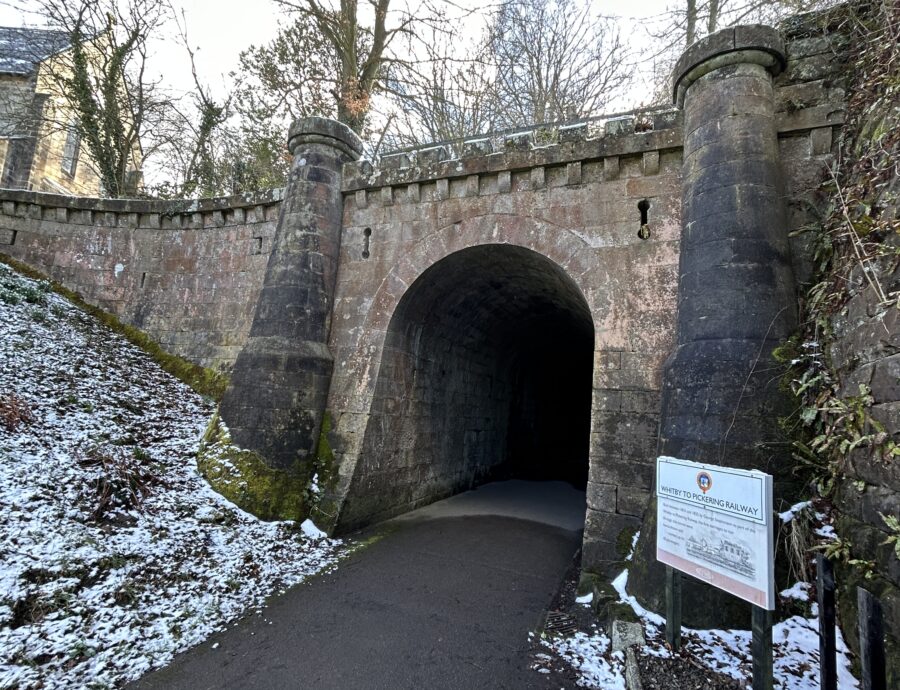
Railway Tunnel - Grosmont, George Stevenson's tunnel of 1835 on the Whitby to Pickering line
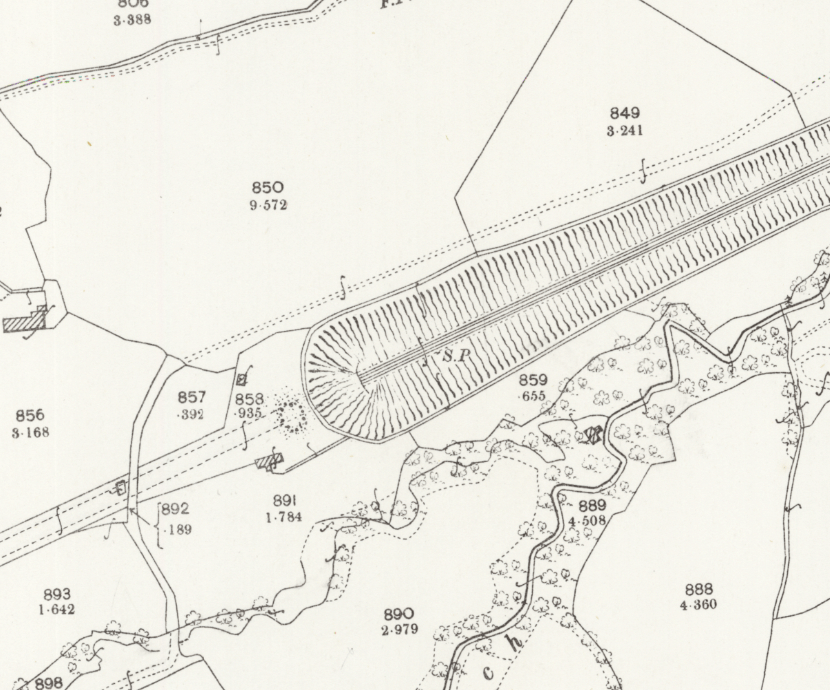
Railway Tunnel - historic mapping
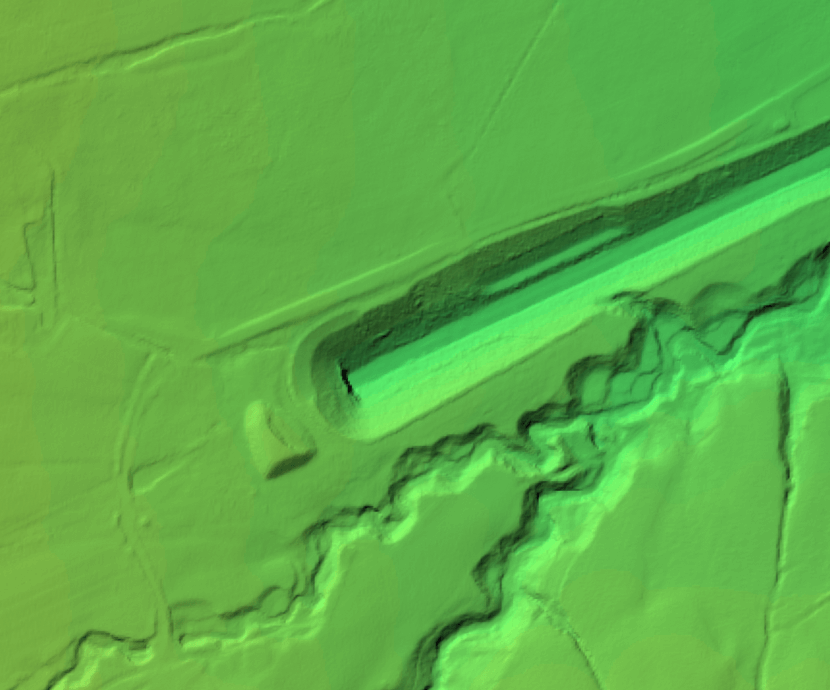
Railway Tunnel - digital terrain model
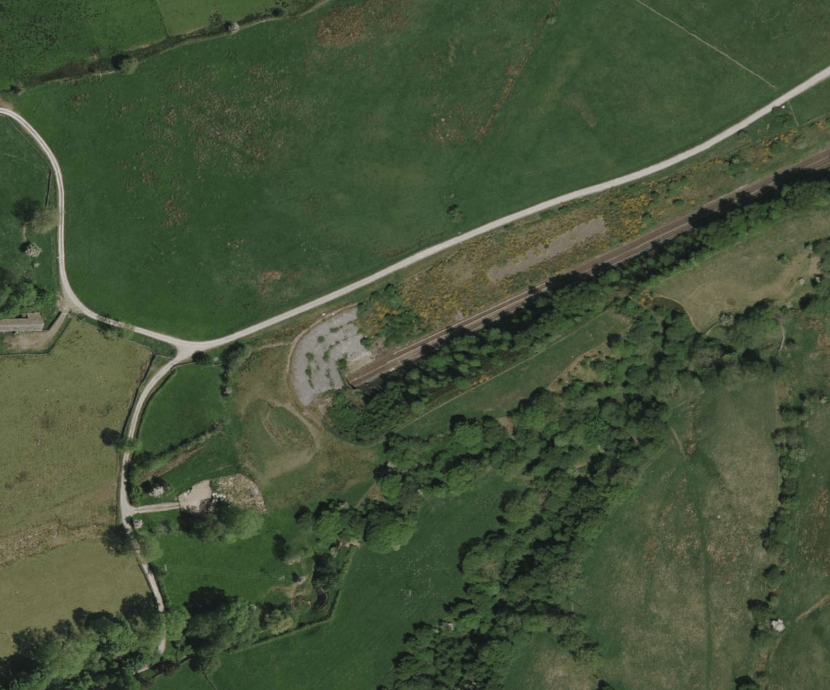
Railway Tunnel - satellite imagery
In order to run efficiently while pulling heavy loads, trains need to run on level tracks. Therefore, during railway construction hills are flattened or tunnelled through and valleys are filled or bridged. Tunnels are made under natural obstacles like hills or bodies of water and manmade ones like cities and roads in order to create more efficient transport routes.
The earliest rail tunnel is believed to be the Fritchley Tunnel in Derbyshire, originally constructed in 1793 for a horse-drawn plateway (a wagon way with rails made of cast iron) to pass beneath a road junction to transport limestone.
What to look for:
- Evidence of railway or track bed leading to and from a hill, road or body of water
- Information on historic maps for disused tunnels