Causewayed Enclosure
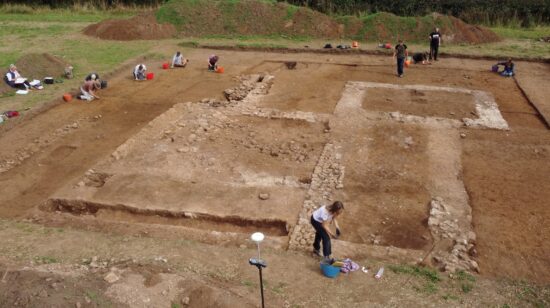
Causewayed enclosures are enclosed earthwork features with raised tracks or causeways crossing the encircling ditches at multiple locations. The corresponding banks are often but not always interrupted.

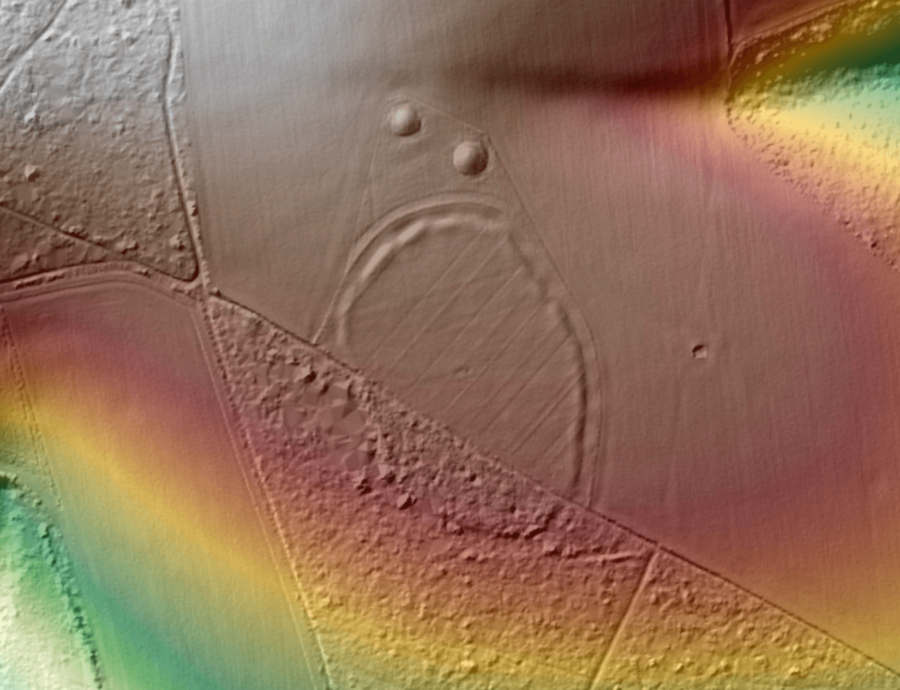
These are the earliest known type of enclosure earthworks,dating to the first half of the Neolithic Period (BCE4000-3300). Their function is not well understood, but excavations suggest they wouldn’t have been settlement sites and likely saw only occasional use. They are usually oval or subcircular in plan, made up of at least one encircling bank with some having two or three concentric lines of earthworks. They most commonly enclose 0.4-3ha, but can be as large as 10ha.
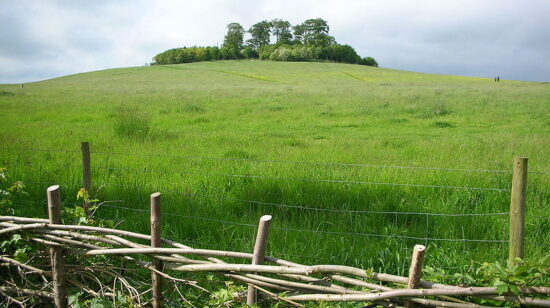
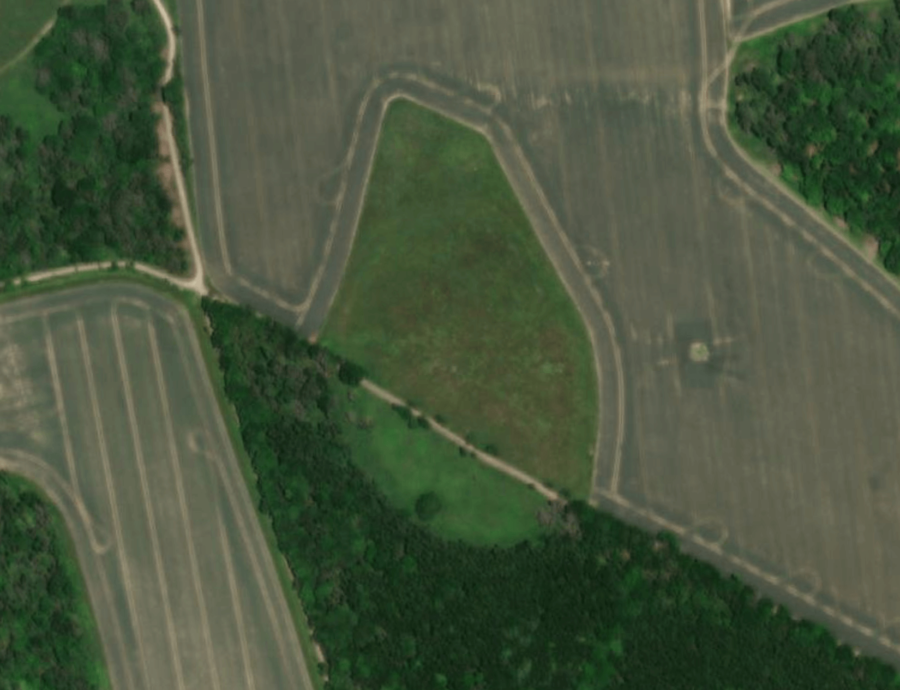
Causewayed enclosures are regularly located near other Neolithic earthworks like barrows. Unlike hillforts, their position is often just off of the summits of high ground. Although they would have originally been sizeable in scale, they are not as obviously visible in the landscape today and tend to be detectable in cropmarks rather than standing earthworks.
Further Reading:
Historic England’s Introductions to Heritage Assets: Causewayed Enclosures
What to look for:
- Normally roughly oval in shape enclosing 0.4-10ha
- One or more earthwork circuits
- Bank-and-ditch network which originally would have been as deep as 3m (ditch) and 2m in height (bank)
- Usually multiple, wide breaks in ditch circuits