Settlement Type
Leat
A Leat is an artificial watercourse, most commonly dug to feed a watermill or mill pond. They can also be for flooding agricultural land or for industrial use.
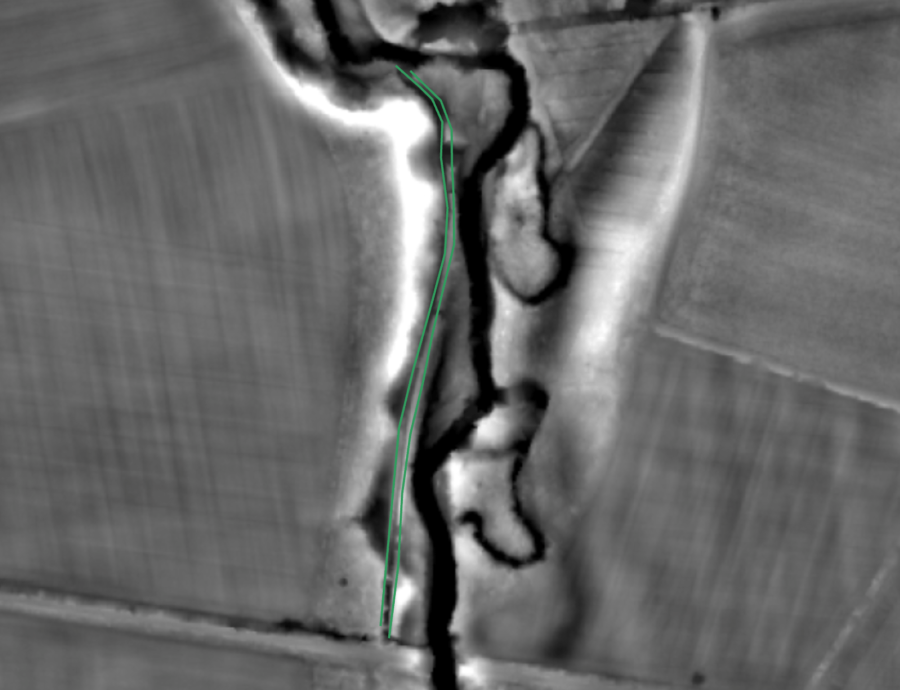
Leat - local relief model polygon
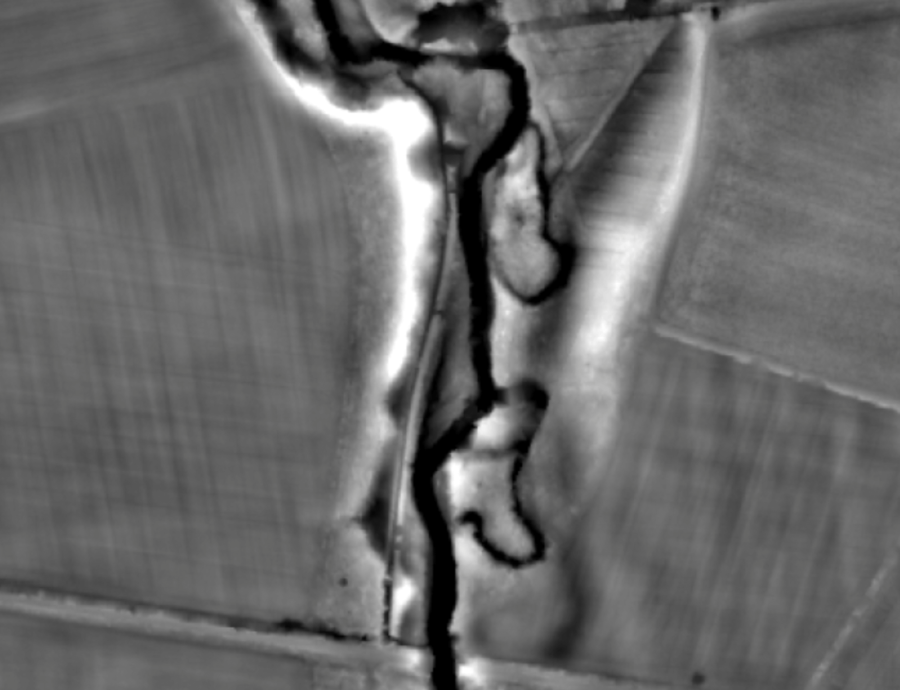
Leat - local relief model

Leat - multi-directional terrain model

Leat - historical mapping

Leat - slope (gradient of elevation)

Leat - sky view factor
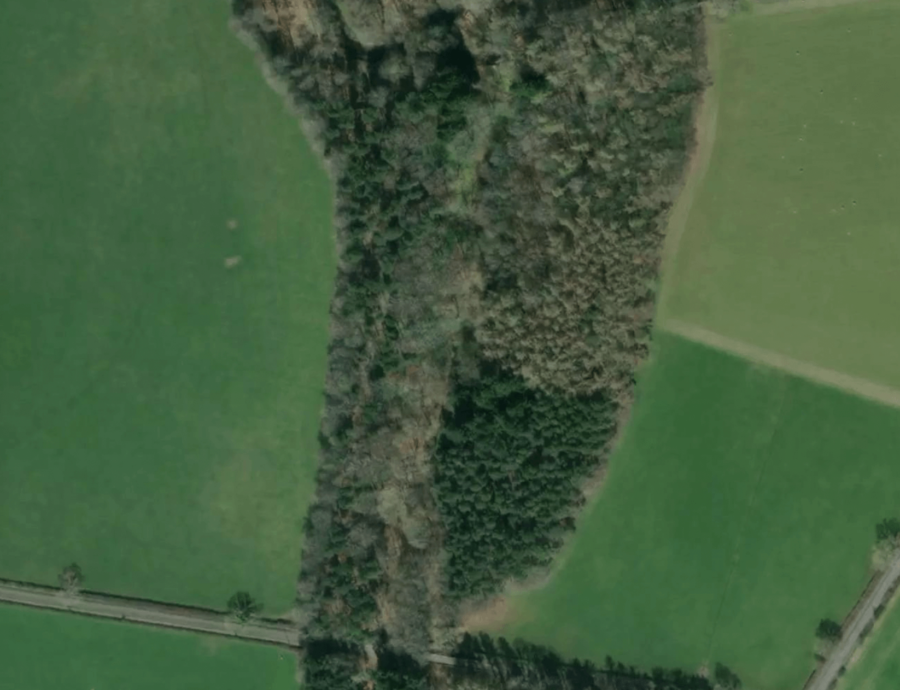
Leat - satellite
Leats are made to divert water from a source to a new end point. A sluice gate is often used at the terminal ends of a Leat to enable it to be opened and closed, controlling the water flow as needed. The channel would also be made with a particular gradient to determine the rate of the flow. Mills need a steeper slope and Water Meadows require a gentler one. Dams or weirs may also be used to control the flow depending on need.
Further Reading:
What to look for:
- Associated buildings, waterways or landscape interventions
- Long ditch between pond, mill, watercourse
- Ditches from a water course to a field system
- Evidence of features to control water flow