Long Barrow
Long barrows are early monumental burial mounds that are longer than they are wide.


Long barrows are the earliest earth mounds known in the landscape today. They were commonly built in the Neolithic period between 3800 BC and 3500 BC but they were present as early as 5800 BC. They vary in shape (lozenge, oval, trapezoidal, rectangular) but will generally be elongated, with one end built higher than the other. They usually range from 20-50m long but some extend to 120m, with a width of up to 25m. They are invariably flanked by ditches that would have contributed building material. These ditches sometimes extend around the ends of the mound.
Long Barrows contain burial chambers that are often found to contain several individuals. The burial chambers were constructed first and then earth was piled on top. Some were elaborately designed with several stone chambers and others were simpler and built in timber.
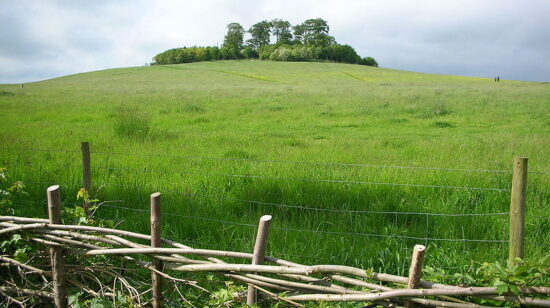
Due to their extreme age, long barrows can be difficult to identify, especially. examples with a timber burial chamber that has decomposed. Long Barrows are often ploughed-out and can look relatively flat.
Further Reading:
Historic England’s Introductions to Heritage Assets: Prehistoric Barrows and Burial Mounds
What to look for:
- 20m-120m long and up to 25m wide
- A front end which is usually higher and wider than the back
- Orientation which is usually east-west
- Traces of ditches along the sides flanking the mound, or even encircling it by continuing around the back
- If excavated previously, a possible irregular indent on top