Roundhouse
A Roundhouse is a type of round dwelling characteristic of the Bronze and Iron ages.

There are a variety of types of roundhouses that are characterised by architectural variation.
Roundhouses were commonly constructed with timber post and stakes and woven with wattle and daub: thin strips (the wattle) usually of willow are woven between vertical stakes and packed with a mixture of materials like mud, clay, sand and straw (the daub). The roofs were thought to have been thatched with reeds. They range in size from 4-14m in diameter with the average size being 8m. Clay and turf walled structures are another type of Roundhouse as are stone ones like the small Roman examples or monumental Scottish brochs.
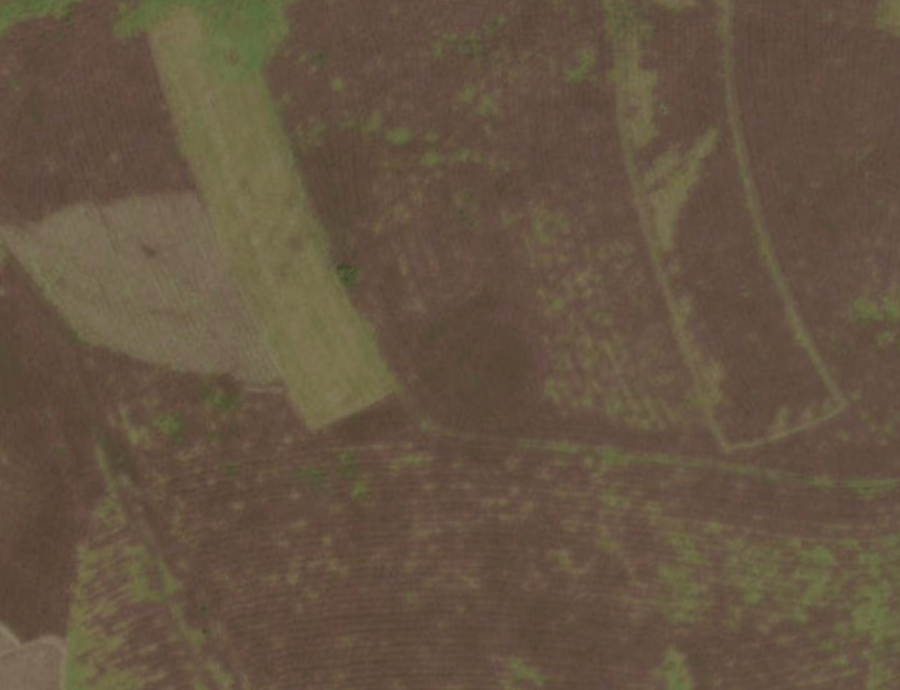
Evidence can survive in the form of circular arrangements of post and stake holes showing the location of central roof supports and wall stakes. Sometimes a gully is present enclosing the house footprint – either dug for drainage of water runoff from the roof or as a product of natural erosion from this water. Breaks in the circular plan can be interpreted as entranceways. In some types (ring ditch) there may also be circular depressions or gullies dug for the construction of a wall. Other types (ring bank) had a foundation turf with stone.
What to look for:
- Circular depressions, often in groups, often within enclosures
- Circular low earthworks