Agricultural Sites
Plough Headland
A plough headland is an area at the end of a field used for turning the plough and oxen.
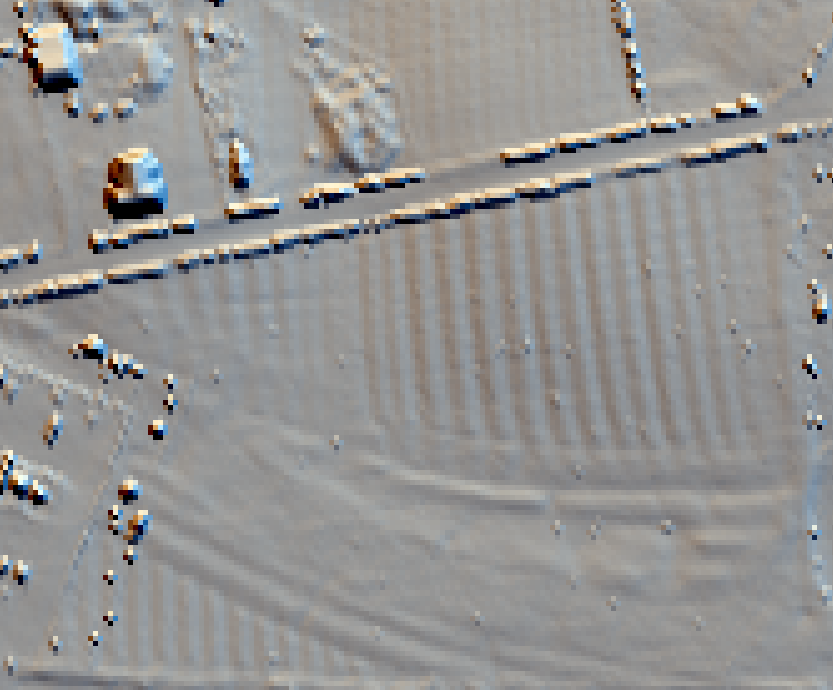
Plough Headland - digital surface model

Plough Headland - digital surface model polygon (red)

Plough Headland - digital terrain model
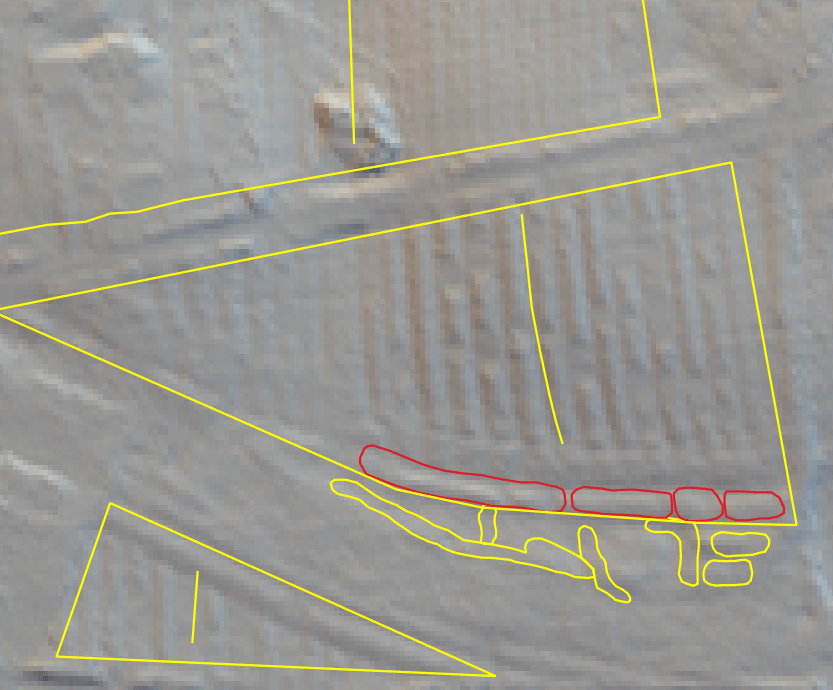
Plough Headland - digital terrain model polygon (red)

Plough Headland - historic mapping
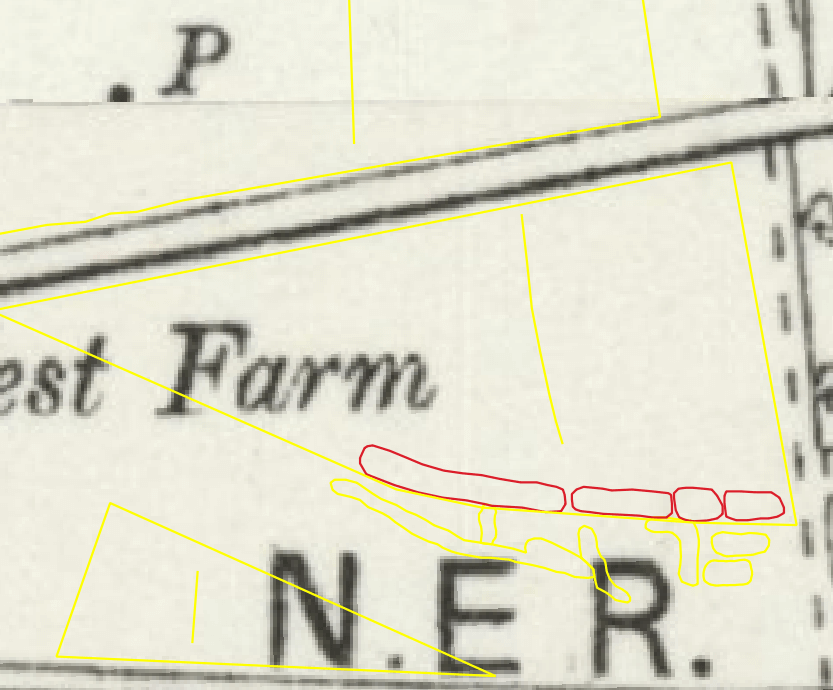
Plough Headland - historic mapping polygon (red)
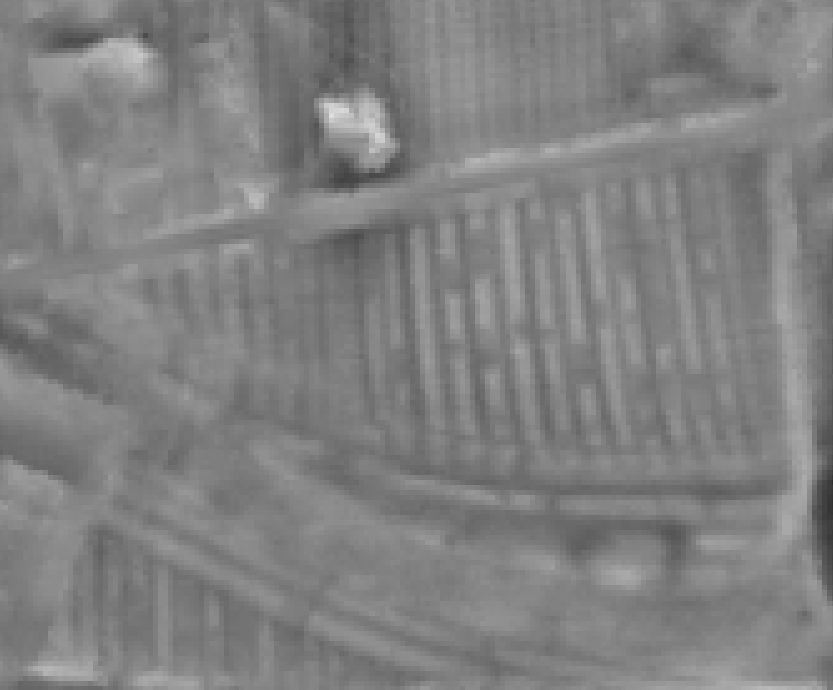
Plough Headland - local relief model
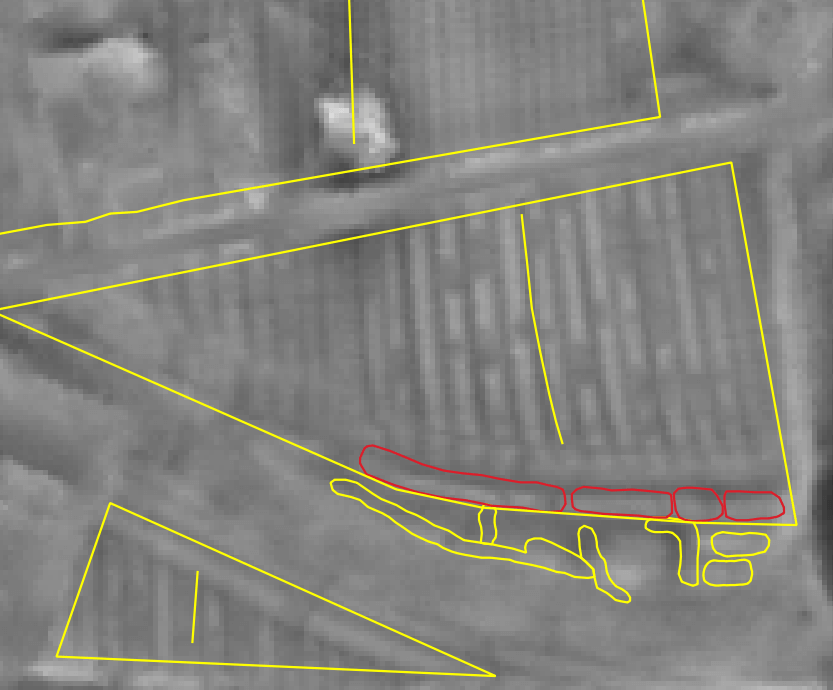
Plough Headland - local relief model polygon (red)
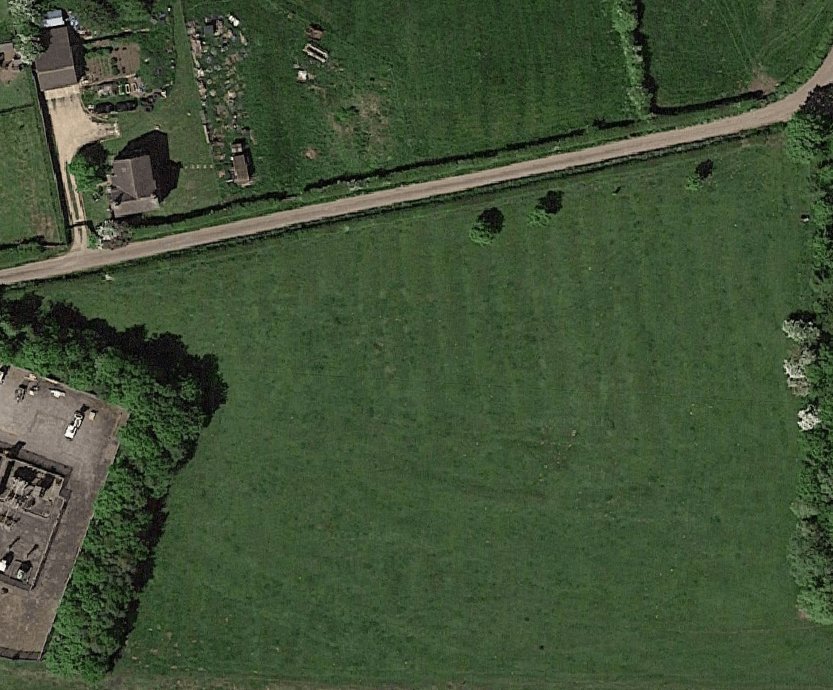
Plough Headland - satellite
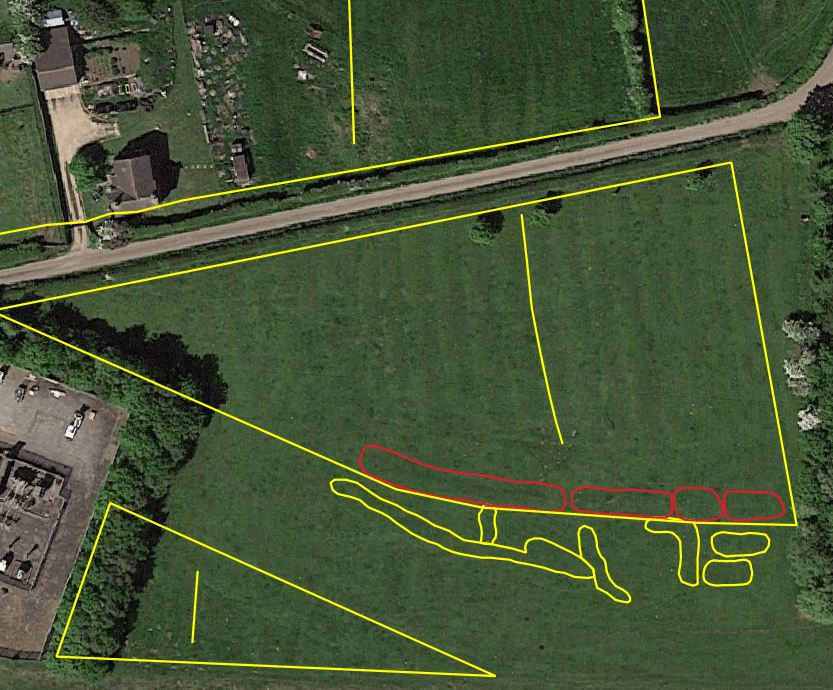
Plough Headland - satellite polygon (red)
Medieval ploughs were usually pulled by long teams of eight oxen. This meant they would need space at the end of each field to turn and align to plough the next furrow. This space called the Plough Headland was sometimes ploughed in the perpendicular direction after the rest of the field was finished but it could also be left unplanted and used as an access way or for animal grazing.
Even where traces of the open fields and ridge and furrow patterns are no longer visible on the ground, headlands can still commonly be seen as low ridges which cross-cut modern field boundaries.
What to look for:
- Possible associated ridge and furrow
- Evidence of earthen bank