Saw Pit
A saw pit is hole that is made to allow a person to stand below a log and mill it with a two-person hand saw partnered with a colleague on the surface.

A log was laid horizontally across the pit and one person held the saw above the tree and one person below it, standing in the pit.
Temporary pits were sometimes dug in woodlands when it was preferable to mill trees on site. Large estates and occasionally villages had their own timber yard with pits that were permanent structures lined with stone or wood. These would have been covered by a wooden frame for supporting the tree and there would have been equipment to help position logs over the saw pit.
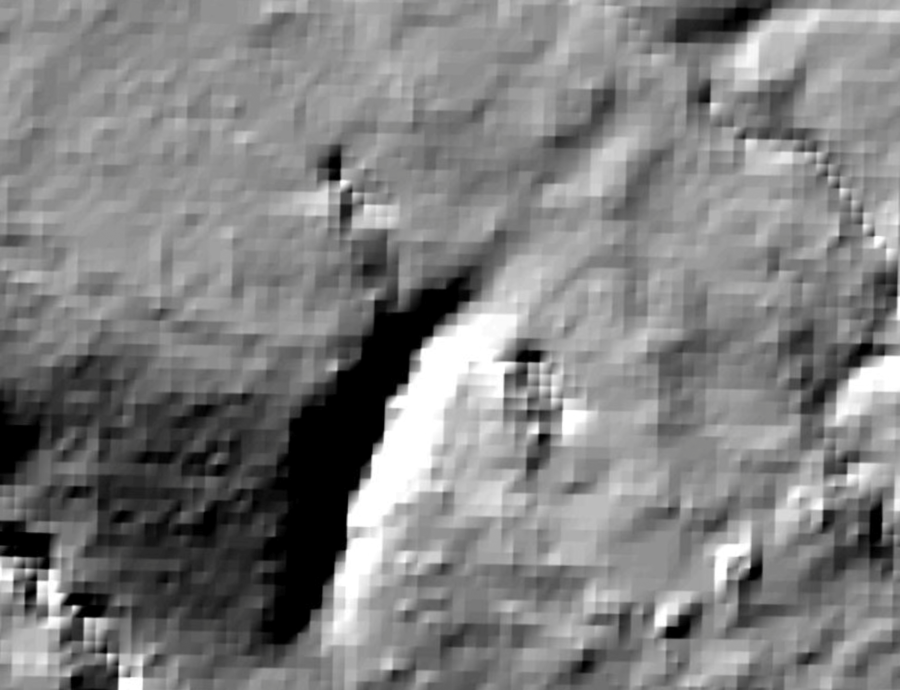
Today these pits are often not backfilled completely, and survive as shallow depressions, though their original depth had to be sufficient for a man to stand in.
Further Reading:
The High Weald AONB: Gazetteer of archaeological features found within woodlands
What to look for:
- A location on sloping ground, either near an access to a woodlot or inside it
- An elongated usually elliptical shape about 3-4m by 1-2m in size
- Relatively shallow depression with a mound about 0.5m in height
- A level platform for the framework on the pit’s downward-sloping side
- Evidence of mill buildings or equipment