From crystal arrowheads to intricate stone carvings, this year’s discoveries span at least 5,000 years of human history.
In 2024, 1300 adults and children joined us on site to help make new discoveries about the past, digging alongside our archaeologists or sorting through artefacts with our finds team. And over half of you were trying archaeology for the very first time!
Together, we excavated 43 trenches, shifted 6,700 wheelbarrows of dirt, exposed 869 different archaeological features and layers, made 243 archaeological drawings, and sorted over 300 trays of ancient artefacts – from 8 different archaeological sites.
Some of these discoveries are already making a big impact on our understanding of the past, and some are even challenging prevailing historical narratives. Thank you to everyone who got involved – we couldn’t have done any of it without you. It really is Archaeology In Your Hands!
As our specialists begin to analyse all of these discoveries in the lab this winter, we’re already looking forward to sharing the stories their work will reveal. To give you a taste of what’s to come, we’ve picked out one extraordinary discovery from each site that we can’t wait to learn more about. Enjoy!
1. A rare Anglo-Saxon carving from Lindisfarne

Credit: DigVentures
This fragment of an intricately carved stone is a key piece in an archaeological puzzle, and challenges one of Britain’s most historic narratives. Our experts think that this piece was part of a cross and was carved in the 9th-10th centuries during a period when early medieval chronicler Bede says that Lindisfarne’s monks had already fled following a particularly devastating series of Viking raids. So how did the cross get here? If the dating is correct, it challenges the narrative by suggesting that not only did some of the monks stay, they continued to produce some stunning works of art. Other significant finds include an early medieval glass bead and a namestone. More news about these discoveries will be announced soon!
This dig was crowdfunded by our community. See more finds | Support the dig
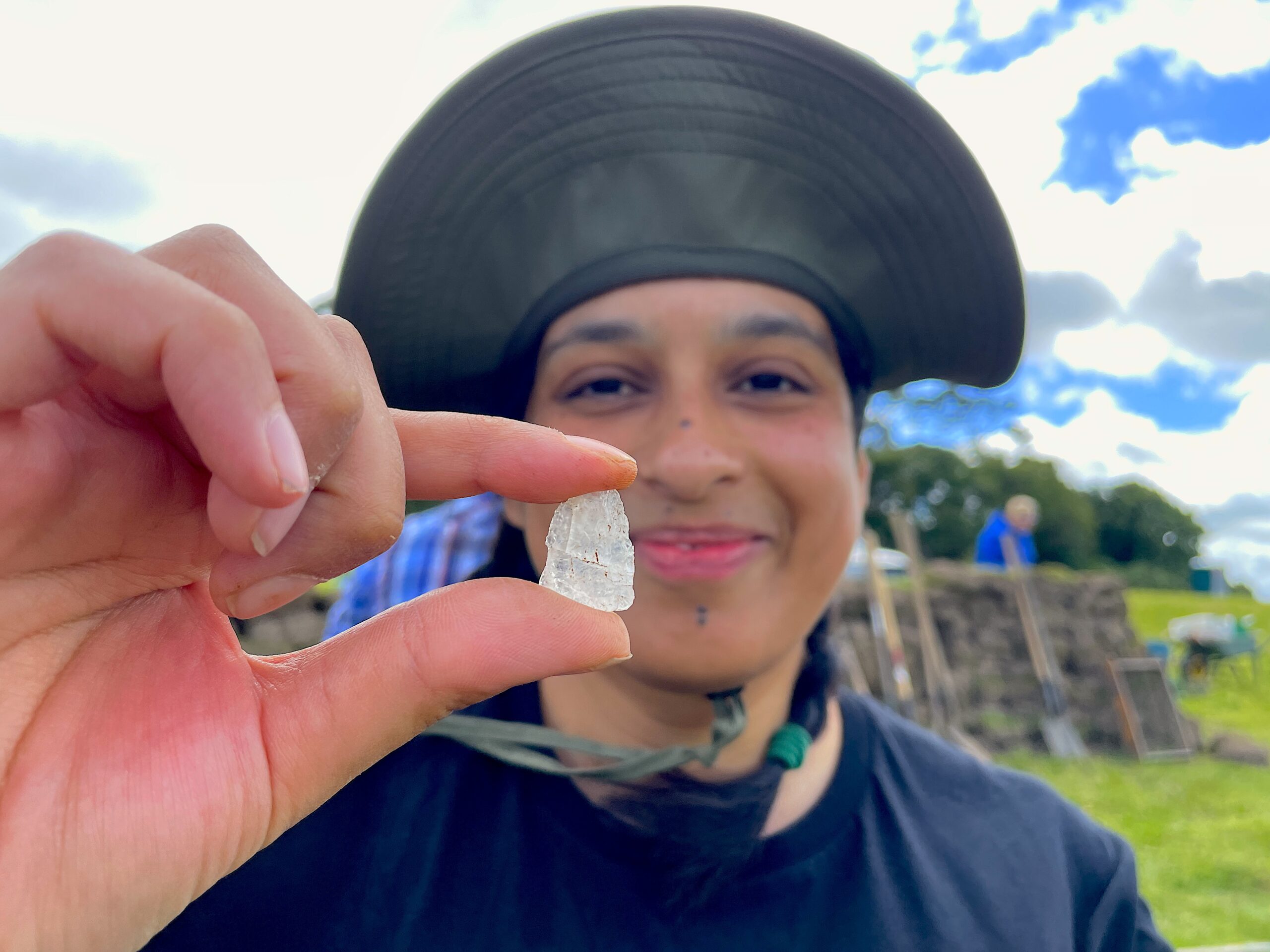
2. A crystal arrowhead near Brú na Bóinne, Ireland
Credit: DigVentures
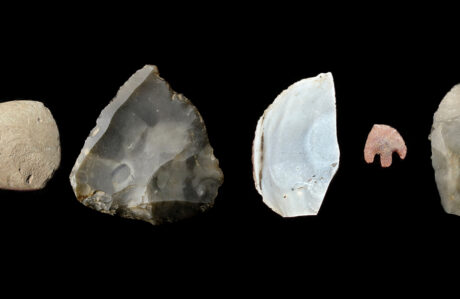
Prehistoric tools are usually made from flint or chert, but every now and then archaeologists uncover something rare and unique – like this stunning crystal arrowhead found while we were investigating a vast Neolithic monument in Ireland’s famous Boyne Valley. Clearly, this little tool had more than just a practical use – probably a symbolic one too. Other significant discoveries include a Neolithic bead, and a decorated pot. More news about these discoveries will be announced soon.
This dig was crowdfunded by our community. See more finds | Support the dig
3. A trio of Bronze Age jars from Somerset
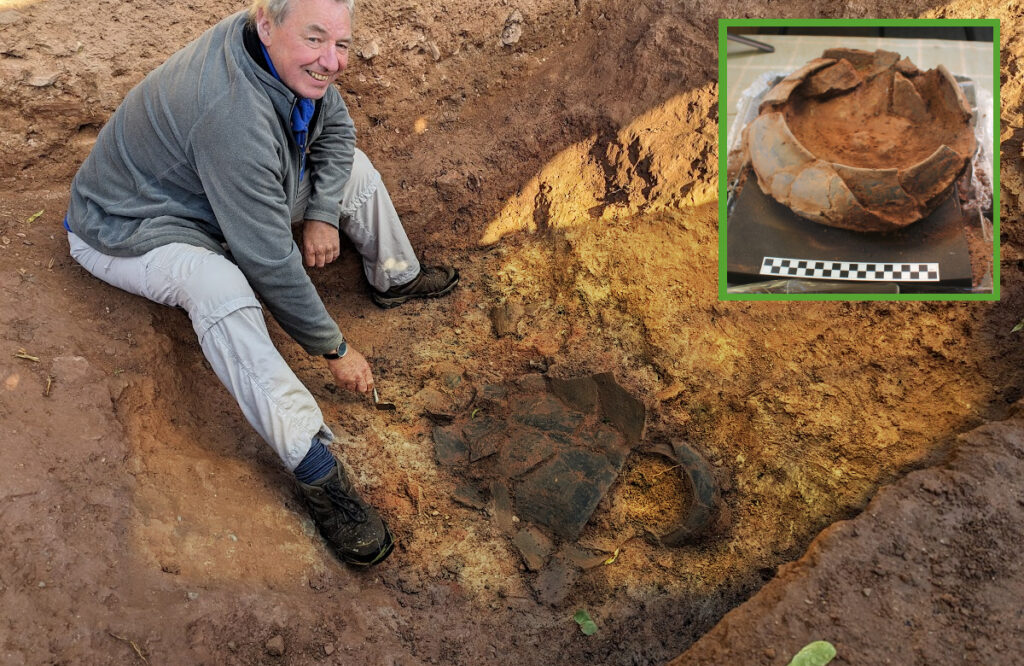
Archaeology doesn’t stop at digging! When we discovered three broken pots buried in the bottom of a circular ditch in Somerset’s Quantock Hills, it gave us the chance to carry out some exciting scientific analysis. The contents of these pots have already been micro-excavated, analysed, and radiocarbon dated. Inside, we found hazelnut shells and burnt bone. Other significant finds include three early medieval knives, and an ancient flint arrowhead. More news about these discoveries will be announced soon.
This dig was made possible by Heritage Fund and Quantock Hills Landscape Partnership. See more finds
4. A villa that’s unique to Roman Britain

Credit: DigVentures
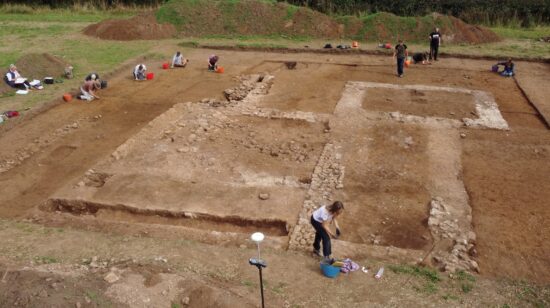
This year we returned to Earth Trust in Oxfordshire to continue our excavation at the site that gave us a tiny Roman dog and an ancient blacksmith. In May, we excavated more of the Roman villa. Previously assumed to have been a standard winged or corridor villa, this year’s dig revealed that it is in fact an aisled villa – a type of early villa that is unique to Roman Britain, and adapted to the particular challenges of life as a Romano-British farmer. Other significant discoveries include domestic artefacts like a double-ended bone needle and a Roman pestle.
This dig was crowdfunded by our community. See more finds | Support the dig
5. Clues to the lost medieval village of Sudeley

Credit: DigVentures
Over 3,000 abandoned medieval villages exist throughout the UK – did we manage to find archaeological evidence for a settlement lost to the ages? At Sudeley Castle in Gloucestershire, our community uncovered a small and unusual medieval building. Square on one side and round on the other, our experts think it could be a well, conduit house, or a grain store – all important resources for a medieval community. This was our first year on the hunt for the lost medieval village of Sudeley, and we can’t wait to head back to explore more. Other significant finds include medieval pottery, medieval coins, and signs of more medieval buildings…
This dig was crowdfunded by our community. See more finds | Support the dig
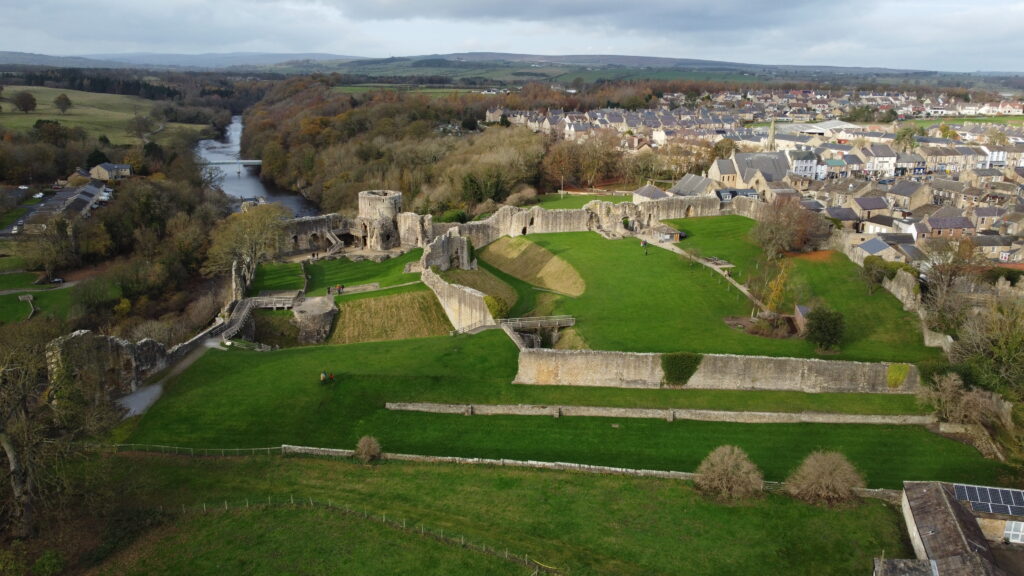
6. A lone musket ball in the grounds of Barnard Castle
Credit: DigVentures
Barnard Castle is no stranger to turmoil in its long history! Records suggest the castle was in a dilapidated condition by the time of the Civil War in the mid-17th century, but this musket ball might suggest that soldiers were stationed here at some poin tin time. Interestingly, this musket ball shows no sign of being fired from a gun. When was this artefact dropped here? And by who? Other significant finds include medieval pottery, clothing buckles, and clues to long-buried buildings in the castle’s outer ward.
This dig was made possible by Historic England. See more finds
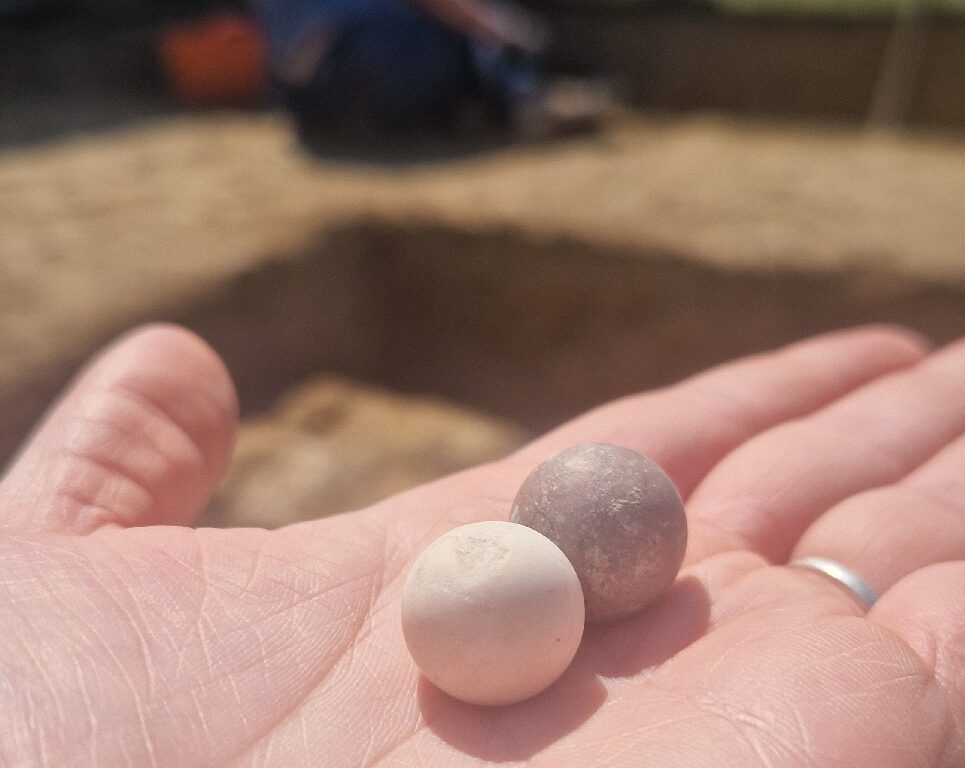
7. Two stone marbles from Petworth House & Gardens
Credit: DigVentures
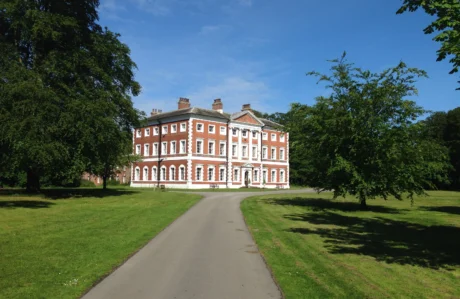
In July, nearly 300 adults and children joined us on a dig to retrace the steps of King Henry VIII through Sussex at National Trust Petworth House & Gardens. While on the hunt for the North Wing of the house, demolished in the 18th century, we found evidence of everyday items that slipped through the cracks during the building’s destruction – including these two stone marbles. Not so much a case of ‘losing your marbles’ as finding them!
This dig was made possible by Historic Royal Palaces. See more finds
8. A complete beaker found near a Roman shrine in East Yorkshire

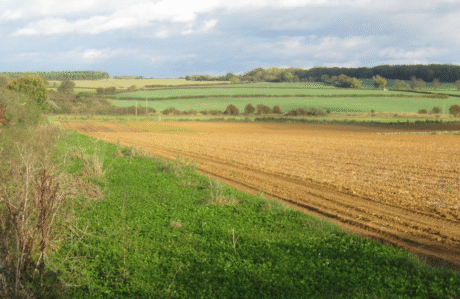
You might remember the Roman ladder settlement uncovered by our community last year. This August, our target was to investigate signs that there was a Roman shrine nearby. During the dig, we uncovered some fascinating artefacts, including this lovely, intact Roman beaker. Beakers are a type of cup –probably used for wine – found in Romano-British sites occupied during the 3rd and 4th centuries. Other significant finds include a number of votive offerings, pottery, a small building, and some engraved stone. Next, we’d love to find the shrine’s exact location and who it might have been dedicated to…
This dig was crowdfunded by our community. See more finds | Support the dig
Which is your favourite?
It’s hard to choose just one discovery when there as so many on each site that grab our attention, and we’re already excited for the fascinating stories our specialists will reveal as they begin to analyse them all over the winter.
Most importantly, it’s thanks to our every-growing community that we’ve found them all in the first place. Whether you dug alongside our archaeologists, sorted artefacts with our finds team, crowdfunded a dig, joined one for free, or simply followed our progress online, this research wouldn’t be possible without you.
Let us know know your favourite in the comments!



Comments (4)
All so good but it’s the crystal arrowhead for me!
As an archer myself, it would have to be the arrowhead!
How can you tell its an arrowhead? Doesn’t look like one to me, I’ve seen similar in my local cemetery that people use to decorate graves.
Due to its structure, flint breaks in particular and distinctive ways when struck. I think the crystal does have the same distinctive surface marks. Also, if you look at the edges, you can see how they have been precisely shaped to make it sharp (looks like it’s been nibbled). Crystal is an uncommon substance in comparison to flint but it is known from several contexts. There are some recent quartz finds from Spain, and obsidian artifacts have been found in regions where that is formed. There can be difficulty distinguishing natural flint from flint tools. In those cases, there have to be enough struck features together to mean that it cannot be natural. The same goes for crystal.