Timeline
Updates from the dig at Cothelstone Farm

Pot luck
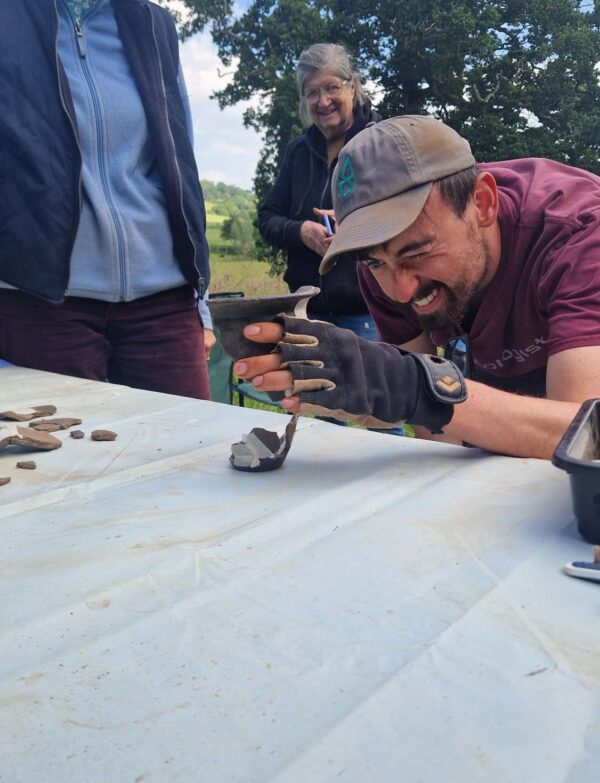
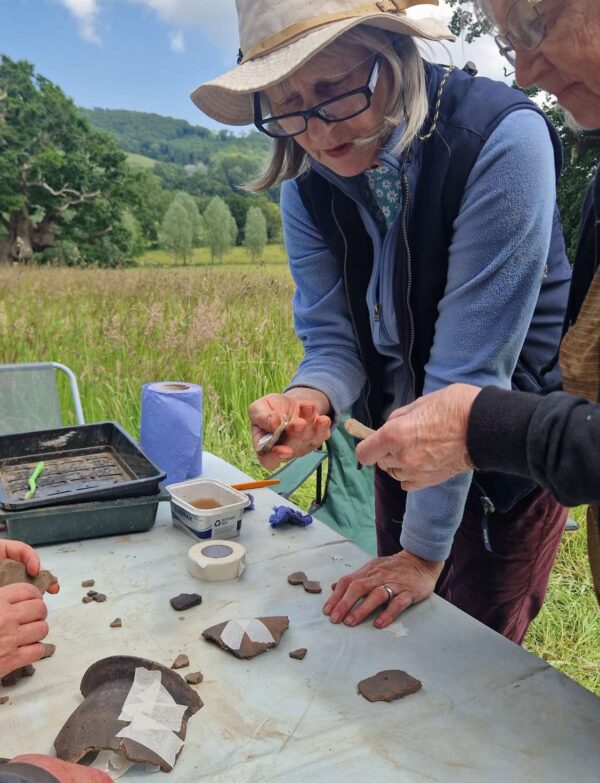
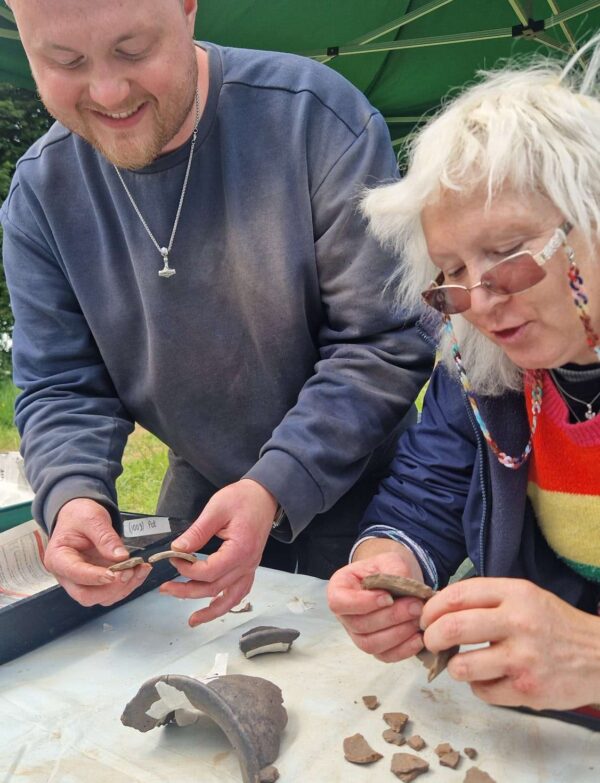
The finds team is hard at work, reconstructing an exciting discovery – approximately half of a Roman black burnishedware pot, lightly decorated and possibly reused by Anglo-Saxons in the early medieval period. Manufactured in Poole on the Dorset coast, this pot was traded inland, adding to its historical intrigue.
Reconstructing a pot is like doing a jigsaw puzzle with no reference image! Our finds team is meticulously checking each individual fragment to piece together how they all fit, building a picture of what this vessel might have looked like. Even site director Ben couldn’t resist getting involved!
A cutting edge find
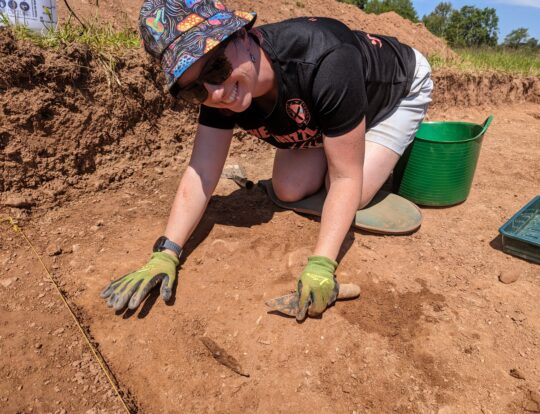
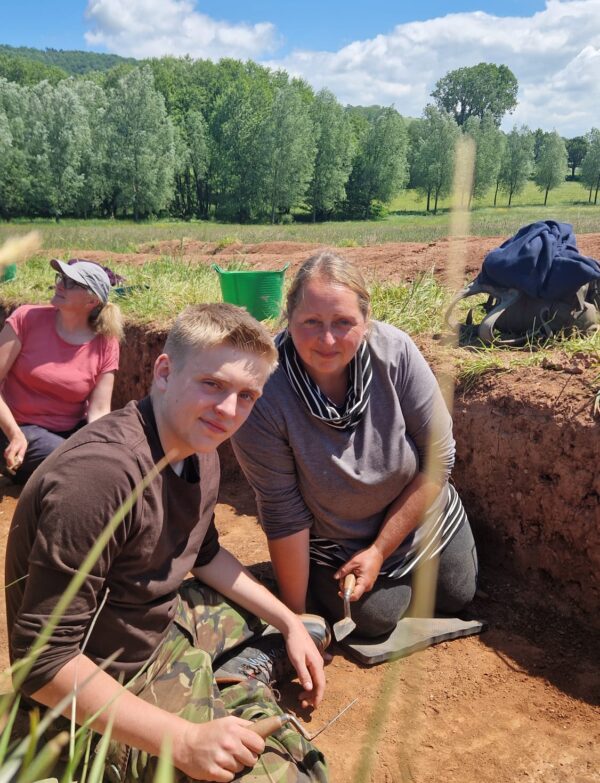
Excitement is in the air as Siobhan has just unearthed a knife in one of our possible graves. Although the bones are missing, likely dissolved by the high acidity of the soil, this find adds a sharp edge to our understanding of the site. She found it where the midsection of the skeleton would usually have been found in a west-east aligned burial.
We’re tentatively dating the knife as early medieval. Could it have had some special meaning to the person buried with it?

Kids dig archaeology!
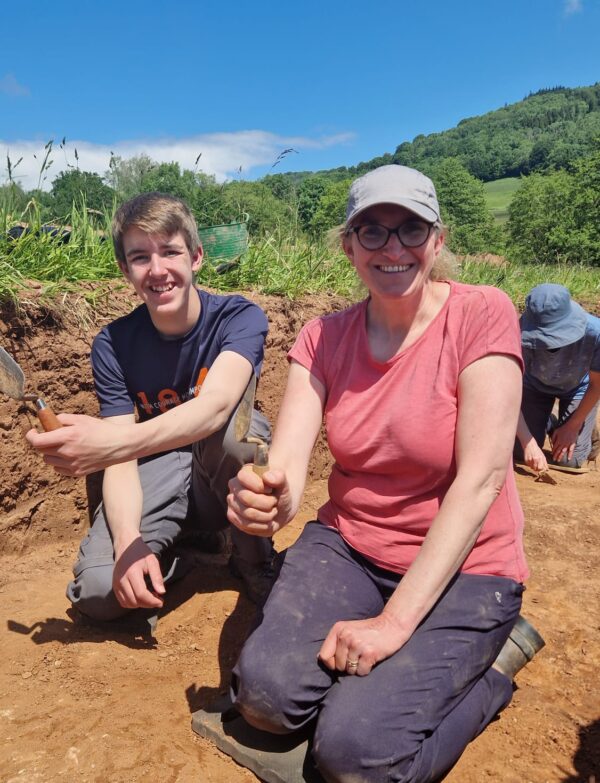
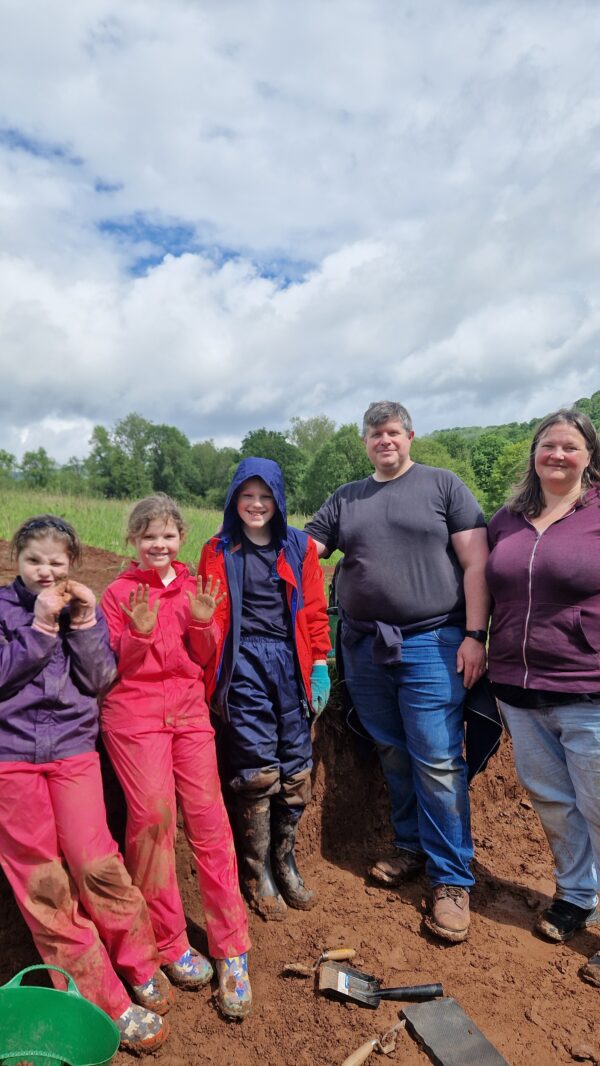
Trench 3 is finally underway, thanks to our enthusiastic DigCampers! These half-term heroes have joined us at Cothelstone to help piece together our archaeological puzzle and solve mystery of our crop marks and geophysical anomalies on the farm. They’re diving into a trench we hadn’t explored before their arrival.
And guess what? They’re already finding fantastic stuff – waste flakes from flint-knapping and even a bit of Bronze Age pottery!


Evidence of a barrow?
One of the theories about our site was that the large ring ditch we saw on our geophysical survey might be part of a barrow. Barrows are burial monuments, first built in Britain in the Neolithic period, but most were constructed during the Bronze Age.
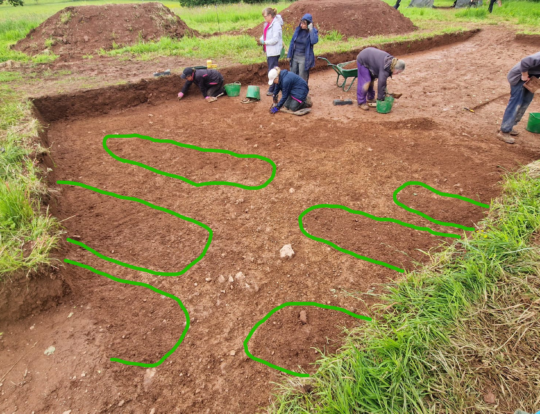
Because our theory was that we had a barrow at Cothelstone Farm, you can imagine we got quite excited when we started seeing features that looked like they could be burials. The only problem, is that these features are all aligned east-west.
What do you think this means? Will they turn out to be burials? We’ll have to wait and see!

Piece by piece
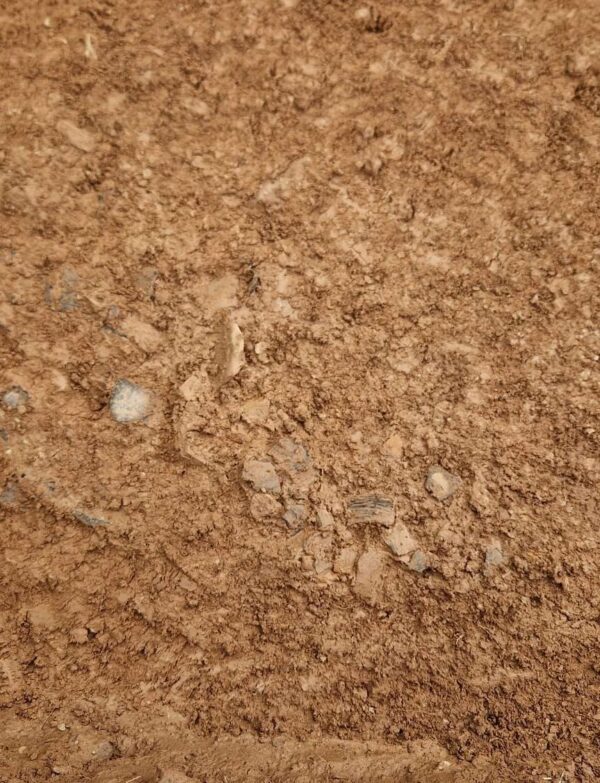
Louise and Sarah are hard at work uncovering the extent of a significant spread of Roman pottery. It looks like we’ve got pieces from at least two, if not three, vessels!
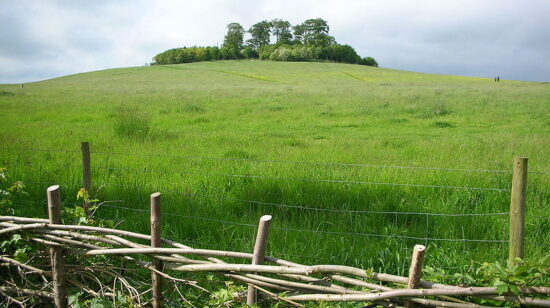
But the real question is what are these Roman pots doing up on the top of this hill in the Quantocks?

Lucy and Chris find Flintstones!
Lucy and Chris have made an exciting discovery in the big circular ring ditch – a late Mesolithic or early Neolithic flint core, which we think is approximately 6,000 years old.
This bladelet core, worked to the point of exhaustion, serves as a toolkit of potential tools. Flint is very rare in this area, so whoever used this would have carried it around, using the core to strike off new blades as and when they needed them. This piece in particular appears to be chalk flint, possibly originating from Devon.
So our ditch is finally giving up some of it’s secrets, with more yet to be discovered!

Sponging up puddles
Anna is mopping up after more heavy downpours, using the time-honoured archaeological tradition of a sponge on a stick. She’s trying to soak up as many puddles as possible to save the hard work of the Venturers who have diligently cleaned the trench surface for a nice aerial photo.
Even more heavy rain is forecast, but we’re hoping we can make it through until the end of the day!

DigCamp get stuck in
We’re joined by some very hardy DigCampers in the trenches today. They’re braving the heavy showers to come and help us dig out another huge ditch further down hill in our field.
They’re hoping that they find pottery, bones or coins that will help us figure out what period this big feature dates to. Is it part of the earthworks for a Bronze Age Barrow? A boundary ditch for the Romans? Or something later?
A big clean on Day 3
Overnight rain in the Quantock Hills has given us a challenging yet exciting start at Cothelstone Farm today. While the wet conditions mean it’s all hands on deck for a big clean, the rainfall is a blessing in disguise, making the archaeology more visible after a couple of days of being baked in the sun.
As we scrape back the waterlogged top layer, we anticipate the colours of the buried structures in the soil to stand out much more vividly. This will show us exactly where our archaeological features begin and end.
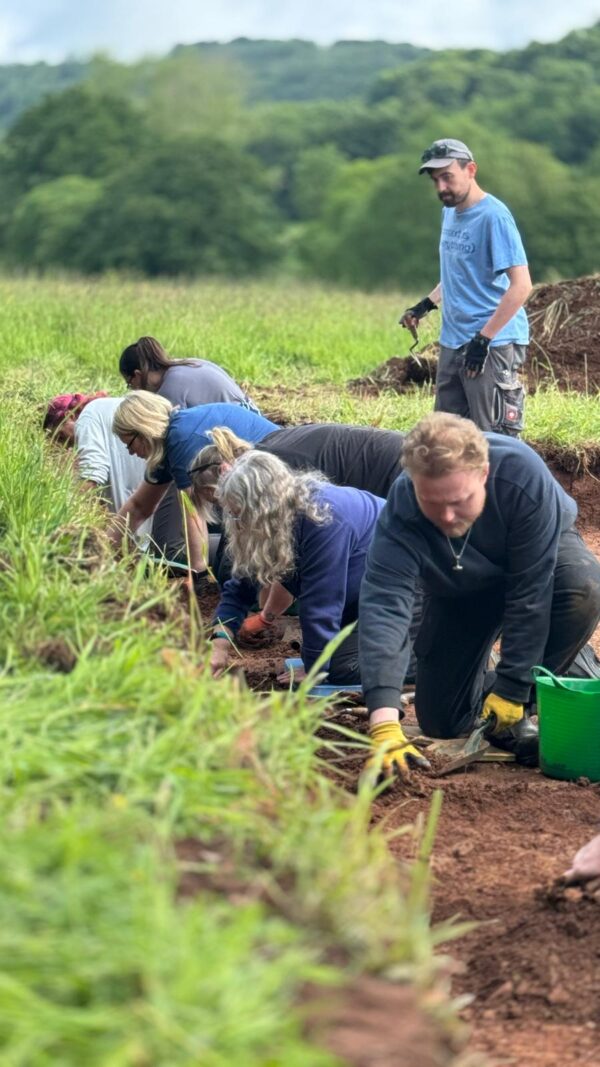
Investigating the huge circular ditch
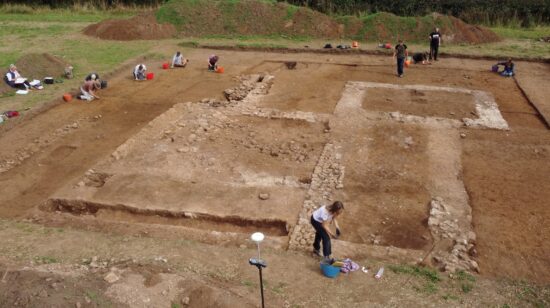
A huge circular shape is visible in the geophysical survey, and as a crop mark in the aerial images. Now that we’ve removed the turf and started digging, we can also see it in the ground, confirming that this is real archaeology!
There are many theories about what it could be – a roundhouse, an enclosure, or even the footprint of a monument.
Lucy and the two Kerry’s are digging deep with the hope of uncovering a Bronze Age barrow.
So far, we’ve found Roman pottery. But will we find anything older?
The excitement is building – what treasures do you think they’ll discover? Every shovel full of earth brings us closer to unlocking the mystery.