What stories can a stone tell us?
As DigVentures embarks on its 10th and final season of fieldwork on the iconic island of Lindisfarne this autumn, we recently invited renowned early medieval specialist, Professor John Hines, to help us learn more about some of our recent discoveries.
With expertise in early medieval art, material culture and literature, Professor Hines offered fascinating insights into two namestones we uncovered in 2024.
Small, lovingly hand-carved and deeply personal, the early medieval namestones of Northumbria are an intriguing enigma. Bearing individual names, they’re intimate monuments bridging art, language, religion and memory that offer a rare glimpse into how people lived, prayed and commemorated their dead more than 1,300 years ago.
They also raise some tantalising questions: Who commissioned them? Exactly why were they made? And what stories do they hold about the people they remember?
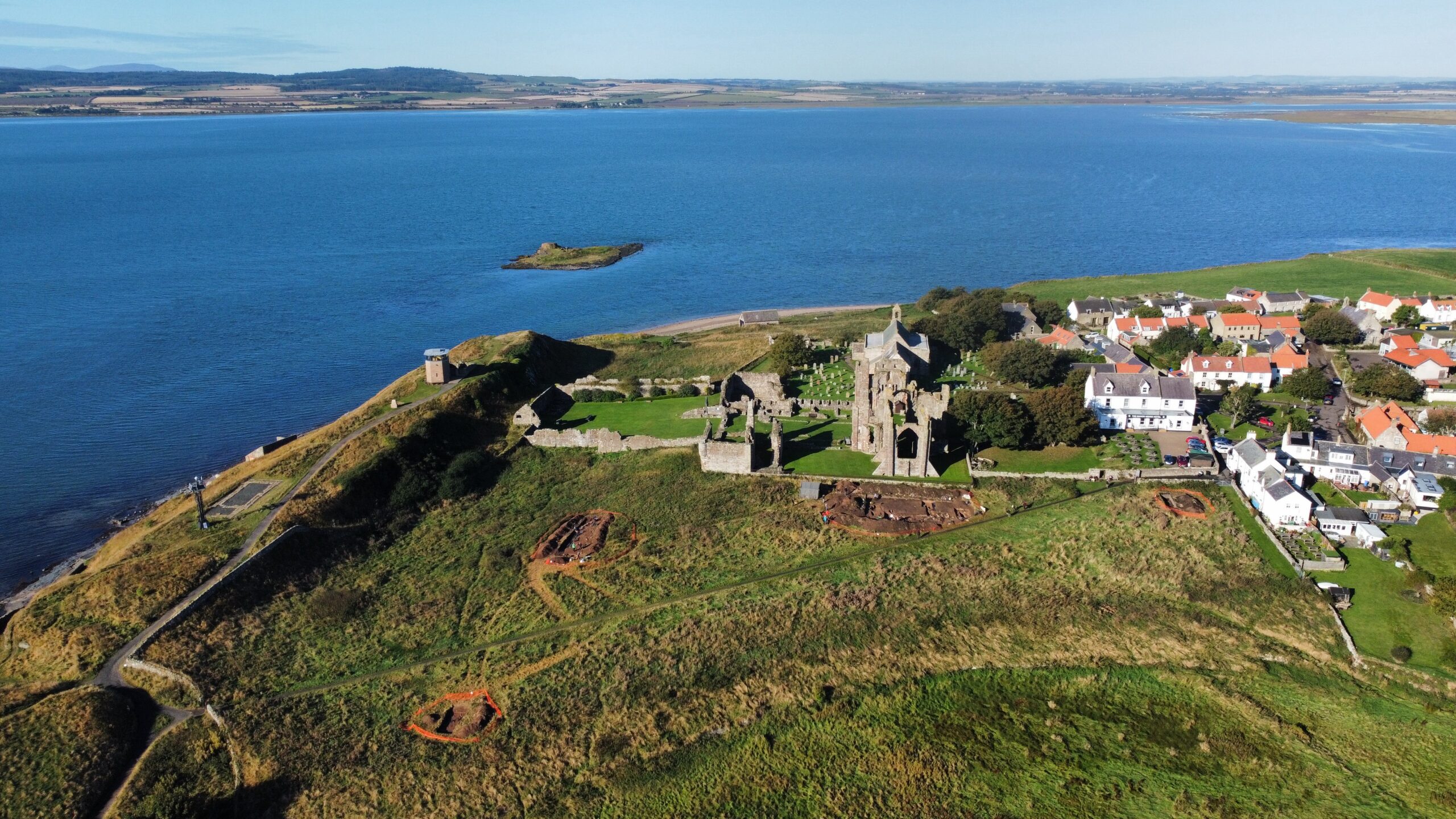
An aerial view of Lindisfarne with all of DigVentures’ trenches from 2024 visible. Credit: DigVentures
Our excavation area lies between the harbour, the rocky ridge known as the Heugh (once used as a lookout) and the ruins of a 12th century Norman priory.
Over the course of our digs, we’ve uncovered indications of early medieval buildings, nearly 100 burials and 13 fragments of worked stone that could be early medieval namestones.
These discoveries add to a growing picture of the community who lived and were buried around Lindisfarne’s small monastery – evidence of lives commemorated in stone, with inscriptions that still speak to us across the centuries.
What are early medieval namestones?
Namestones started to appear in the 7th to 9th centuries, as Christianity spread through Northumbria, following royal conversions from paganism. While often associated with burial sites, these stones are rarely found in the burials themselves, which makes it difficult to link them directly to specific graves. Despite their age, many namestones are well preserved and lacking in weather damage, suggesting that they could’ve been buried near their namesakes, or even kept portable for ritual use.
While we still don’t know exactly what role they played during this time – whether they were grave markers, or used in funerary rituals – we believe they were commissioned by (or for) important people with significant familial or social status. They also reflect a distinctive Northumbrian form of spiritual commemoration, possibly acting as a stone form of “prayer” or memorial for the individuals named on one (or both) of their sides.
What do they look like?
Namestones were usually rectangular or cross-shaped slabs, often featuring rounded tops and decorative borders, with a short Latin or rune inscription and an engraved cross. Some were created with sun-like discs on the ends of the cross, while others bear central cavities that may have once held a jewel, relic, glass or metal. While the decoration on some stones is plain and sparse, many incorporate a fascinating blend of Roman, Celtic and Mediterranean decorative styles.
Many namestones feature intricate, interlaced woven patterns that we know are typical of early medieval manuscript art, at a time when the island of Lindisfarne was well-known for producing renowned manuscripts like the Lindisfarne Gospels.
Studies have also revealed traces of paint on these stones, suggesting that many were once brightly coloured and visually striking.
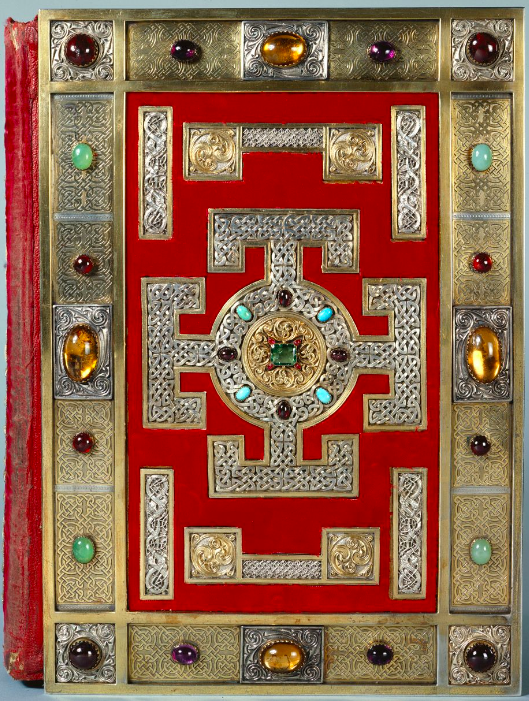
The cover of famous holy illuminated manuscript, the Lindisfarne Gospels. Credit: Lindisfarne.org.uk
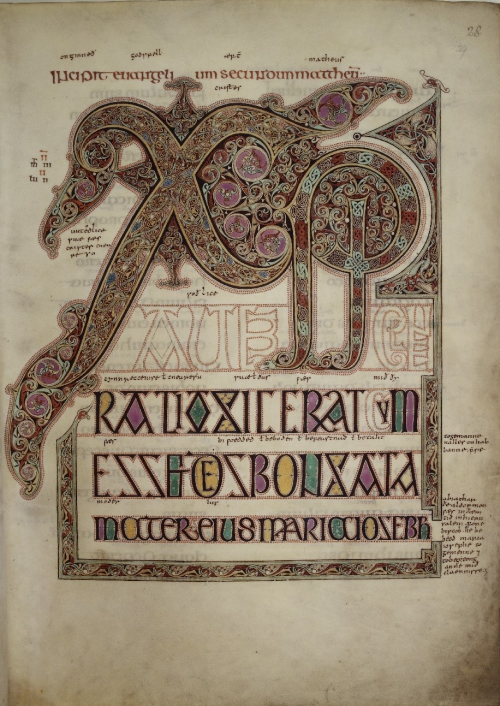
A glimpse inside famous holy illuminated manuscript, the Lindisfarne Gospels. Credit: The British Library
Their unique fusion of style demonstrates the region’s influences from Irish missionaries from Iona, and Roman traditions connected to the Mediterranean world. This includes the use of Latin inscriptions, the language of the Roman Church, and symbols like Alpha and Omega (the first and last letters of the Greek alphabet) representing Christ as the beginning and the end.
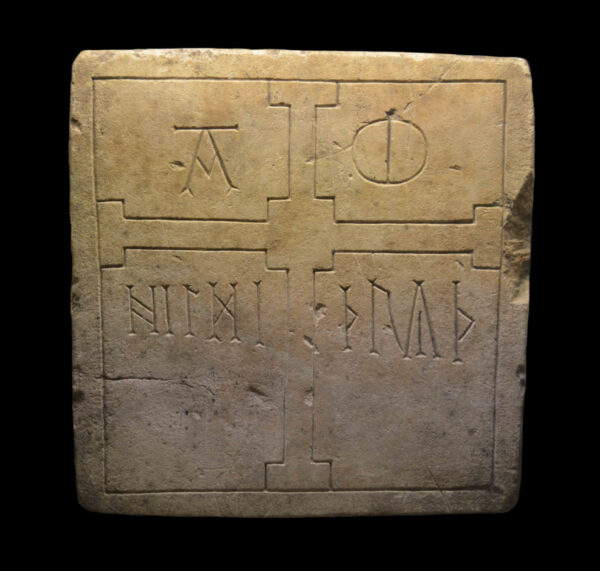
The Hildthryth namestone, on display at St Hilda’s Church.
What can we learn from their inscriptions?
Many namestones from this period include dual inscriptions in both Old English and runic scripts. This could suggest that they were intended to be read by multiple audiences, such as members of the clergy who could read Old English, and local people who may have recognised or valued runes as culturally familiar.
It may also suggest the desire to retain a sense of identity and heritage, bridging identities during the adoption of a new Christian faith. Their lettering, stylistic comparisons to manuscripts and the names they feature are also incredibly valuable for helping us to date them as accurately as possible.
Above is a finely-carved namestone with a cross, curved corner designs and a petal-like centre.
The damaged runes at the top may spell the Old English male names “COINA” or “COENA”, while the lower inscription reads “BEANNAH”, with an unusual ‘E’ carved inside the ‘B’. It’s unclear if this marks two people, or one person who adopted a new name following religious adoption or conversion.
Traces of paint on the stone hint that it was once likely brightly coloured.
What could Professor Hines tell us about our latest discoveries?
Professor Hines’ recent visit to DigVentures HQ gave us an exciting new perspective on the inscriptions carved into the namestones we uncovered at Lindisfarne in 2024. With his help, we were able to piece together some of the stories behind these stones.
Credit: DigVentures
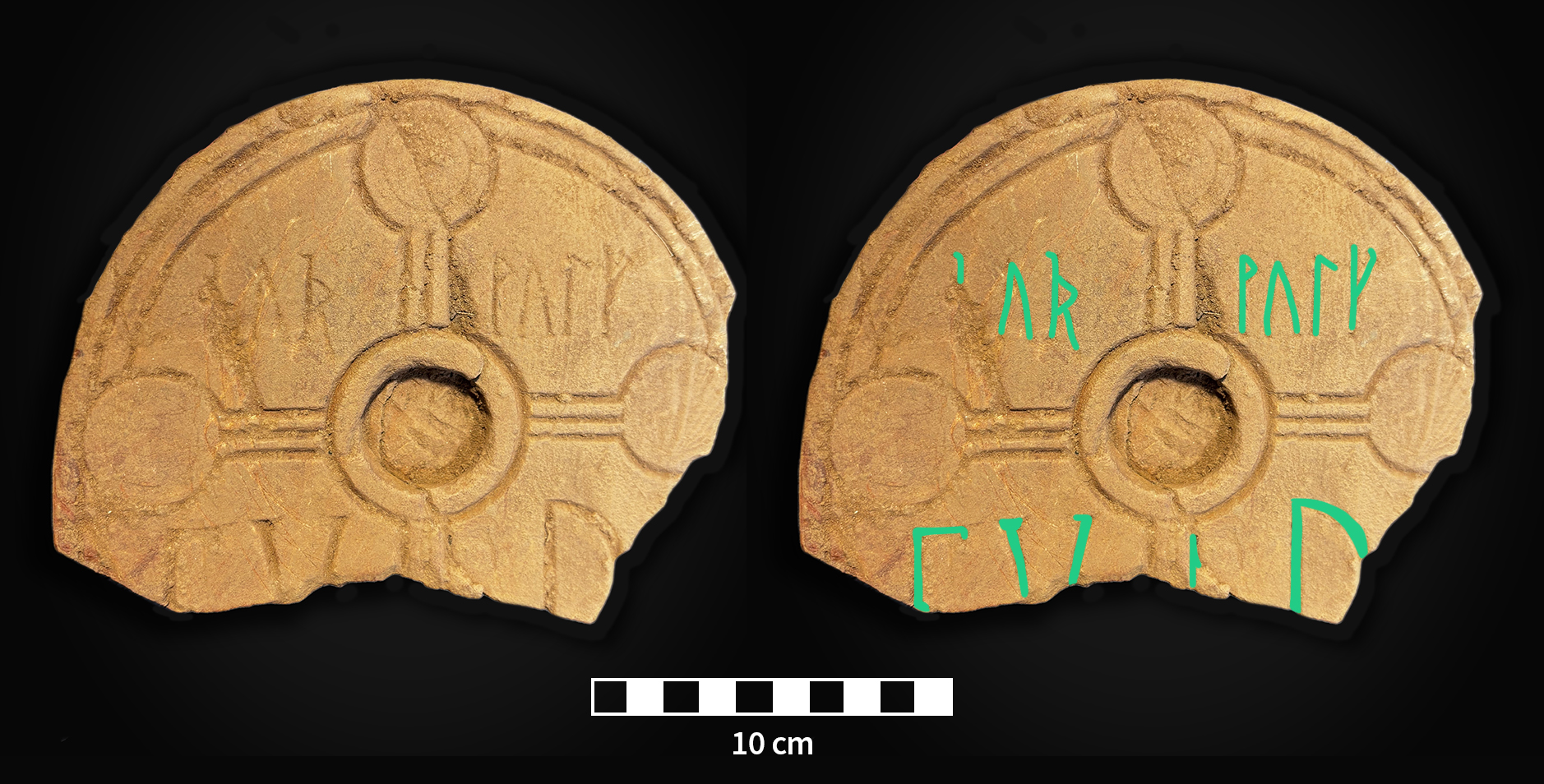
With Professor Hines’ interpretation support, we believe that the smaller stone reads “CUTHWULF”, a masculine Anglo-Saxon name that was relatively common at the time, hinting that this could have been a personal memorial or marker.
This stone is particularly interesting as “CUTHWULF” is carved partly in runes and partly in Roman letters, confirming the use of multiple writing systems side by side.
Credit: DigVentures
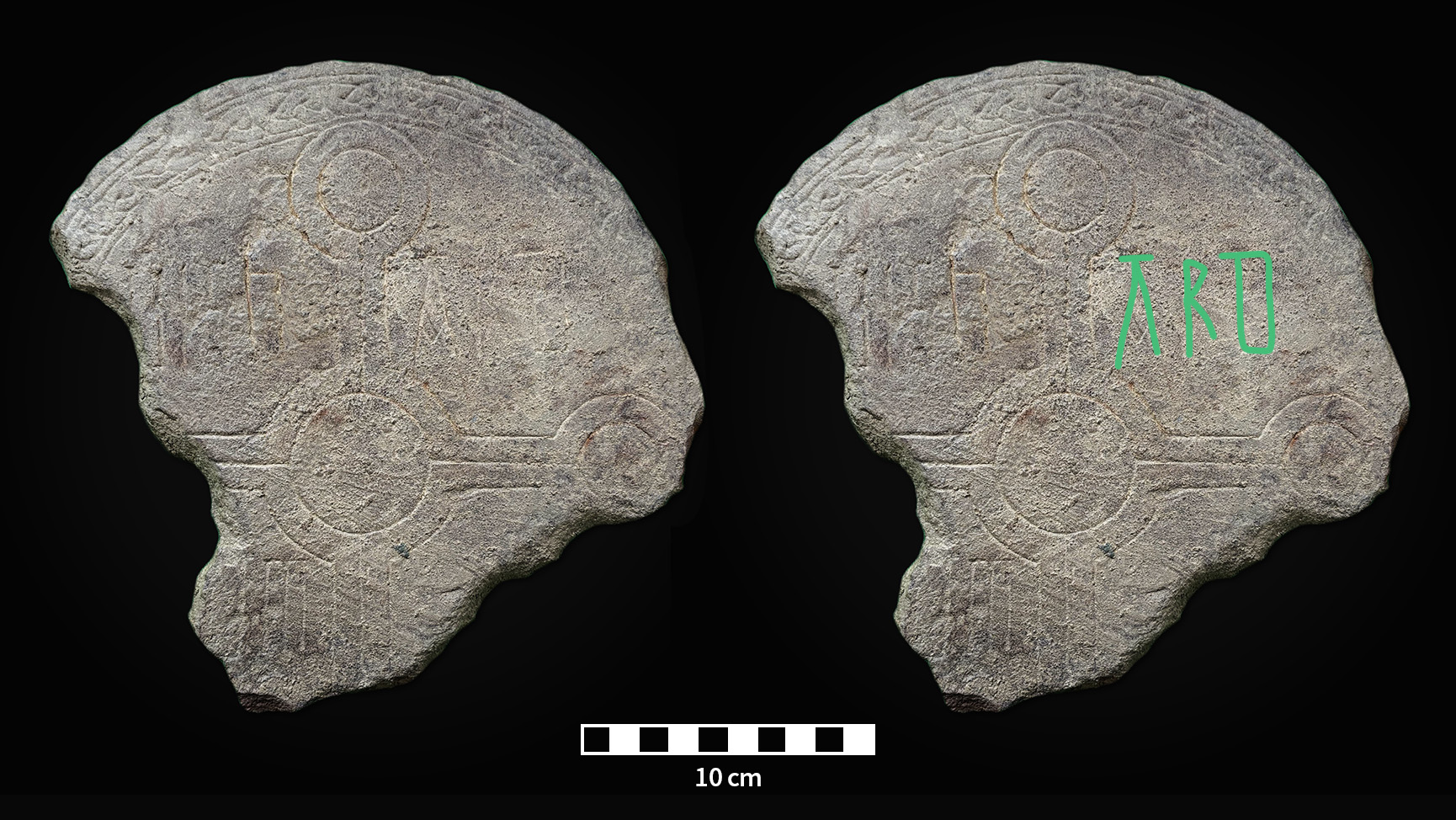
The larger stone fragment is more elaborate, and especially intriguing. Professor Hines believes the inscription ends in “ARD,” possibly as part of the wider, unknown name “OSHARD.” However, centuries of weathering have eroded the rest of the inscription, making clarification difficult without further study.
Additionally, the inscription appears to end in “UM,” a Latin ending unusual for such stones, raising further questions about its grammar.
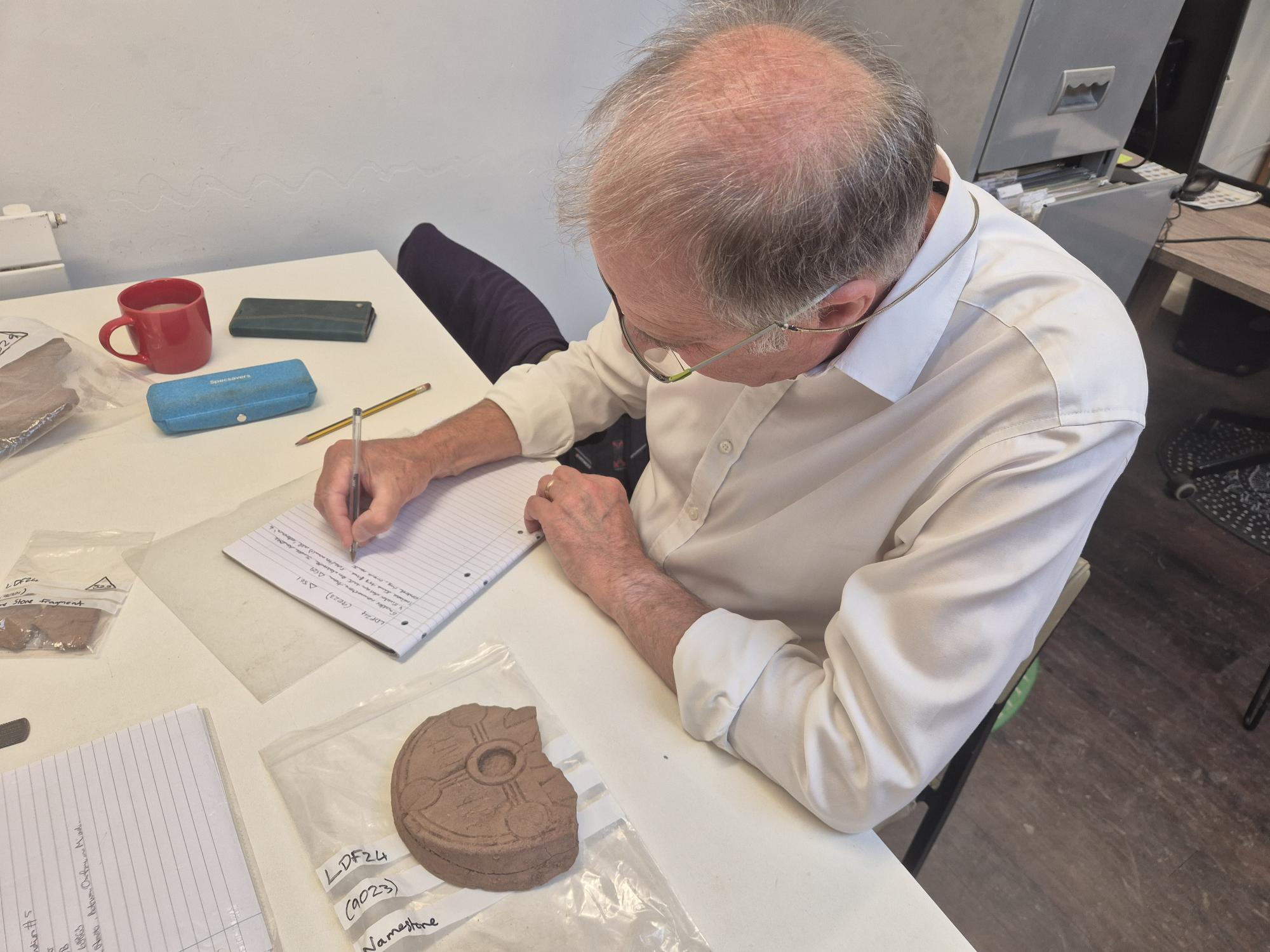
Professor Hines during his interpretation at DVHQ in July. Credit: DigVentures
Reflecting on his work with the namestones discovered at Lindisfarne each year, Professor Hines said:
“Every season turns up real treasures – some are the kind of things we’ve seen before but are still exciting, and others are completely unexpected. It’s fantastic to learn about this period and the community that lived here, including the monks and other residents of Lindisfarne, and we know there is still so much more to find!”
Where have namestones been discovered to date?
Most namestones have been found in Northumberland, but similar examples have been recovered from other key monastic cemeteries in Yorkshire, Durham and Cumbria, with about 40 discovered to date across northeastern England.
Many of these stones are linked to sites associated with King Oswald and the famous St Aidan of Lindisfarne, hinting at a distinctive local tradition within the Northumbrian church.
Explore more in our virtual museum and on YouTube
If you’d like to find out more about the Lindisfarne namestones we’ve discovered, you can watch our video, highlighting some of the most unique namestones found so far:
You can also get up close and personal to some of these finds from the comfort of your own home, by visiting the Lindisfarne collection in our Virtual Museum.
To learn more about the wider collection of namestones uncovered in the Northeast, and some of the other fascinating objects and artefacts unearthed through our excavations, explore the complete “Etched in Stone” Virtual Museum.



There are no comments on this post yet. Be the first!