Through ten years of crowdfunded archaeological excavations, DigVentures, Durham University and our wonderful community of crowdfunders have been privileged to explore the hidden history of Lindisfarne.
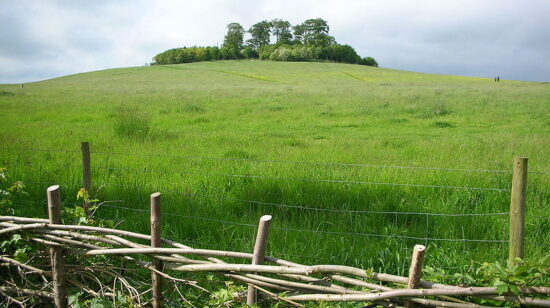
Famous for its early medieval monastery and the Viking raids beginning in 793 AD, the small tidal island off the Northumberland coast has long stood a source of intrigue. Today a scenic and peaceful island accessible only at low tide, it was once a bustling hub of faith and commerce at the heart of the early medieval Kingdom of Northumbria, home to the Lindisfarne Gospels and impressive artistic craftsmanship rooted in devotion.
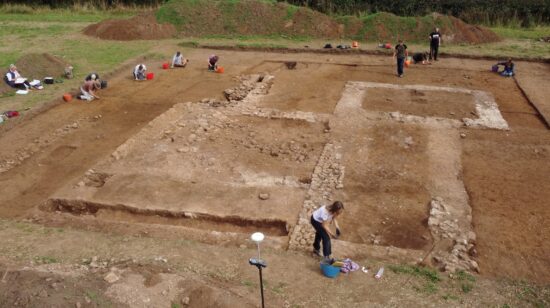
Since 2016, we’ve explored a site between the ruins of the 12th-century Norman priory, the rocky ridge known as the Heugh, and the harbour, in search of the earlier monastery.
A decade of dedication, patience and care in the trenches and post-excavation analysis has uncovered a wealth of long-hidden mysteries, from surprising finds that challenge what we thought we knew about this iconic island, to everyday objects that deepen our understanding of the lives of those who called Lindisfarne home over 1,000 years ago.
As our tenth and final season of crowdfunded excavation begins, we’ve scoured our archives to revisit ten of our most surprising and intriguing discoveries from over the years…
10. Bound against the odds
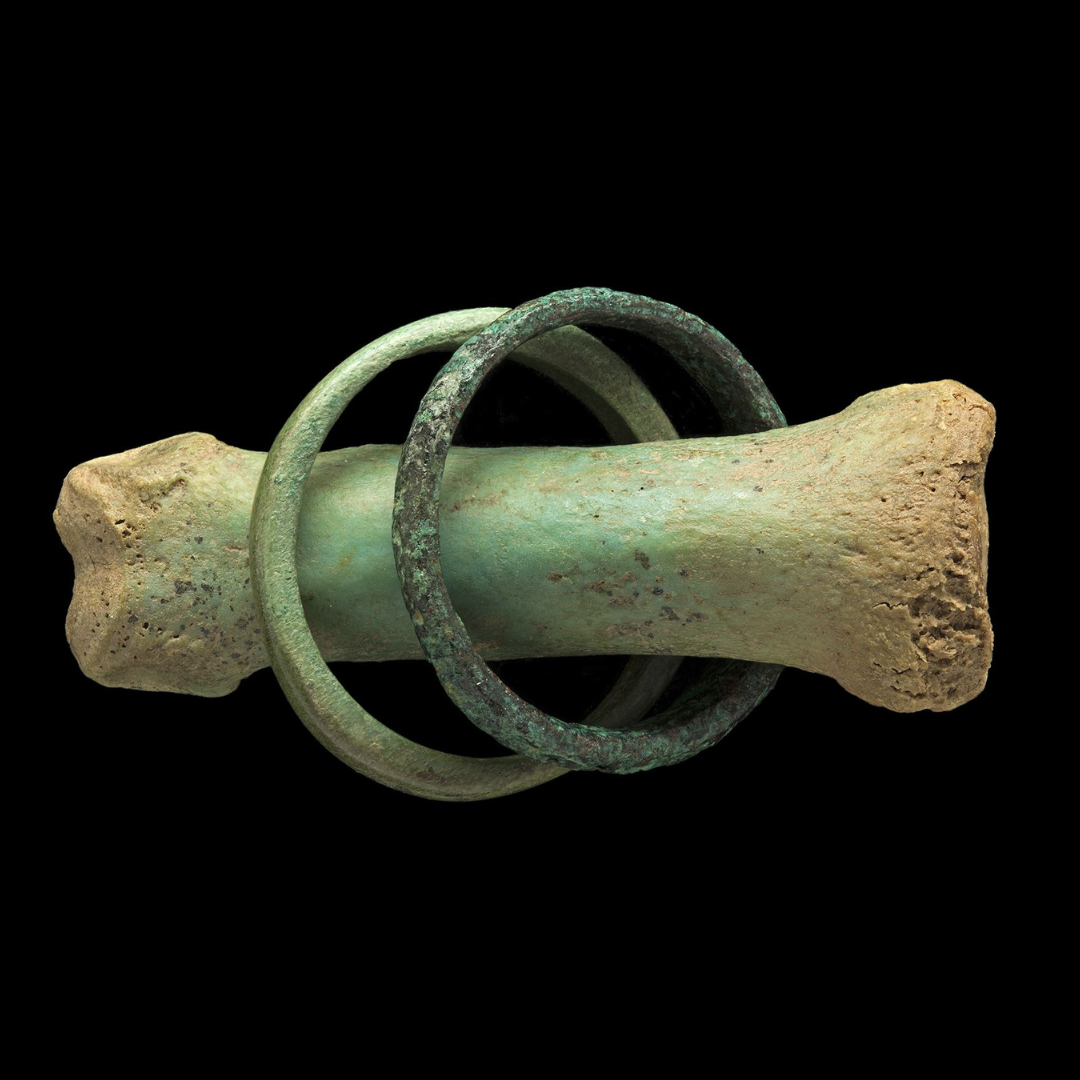
Two early medieval rings on a finger bone, found in 2019. Credit: DigVentures
Two early medieval rings dating to the 8th – 9th century AD were recovered from the cemetery area of our excavation site. One ring is made of copper, the other animal bone – but what makes this find especially striking is that both rings were unearthed together on a single disarticulated finger bone, surviving centuries of disturbance from later burials and modern ploughing.
9. Pebbles with a purpose

A handful of the hundreds of quartz pebbles unearthed in the island’s cemetery site. Credit: DigVentures
Over the past decade, we’ve found hundreds of small quartz pebbles in the cemetery area of Lindisfarne. At first glance, these little white stones might seem unassuming – but they don’t occur naturally in the soil here. Instead, we believe they would’ve been collected from the island’s shoreline at low tide, and deliberately placed on the graves in memoriam, much like we might leave flowers at a graveside today. They’re an especially meaningful find, as the same practice has been found in the cemetery at Iona, the monastery where many of Lindisfarne’s founding monks came from.
8. Monarchy meets mythology
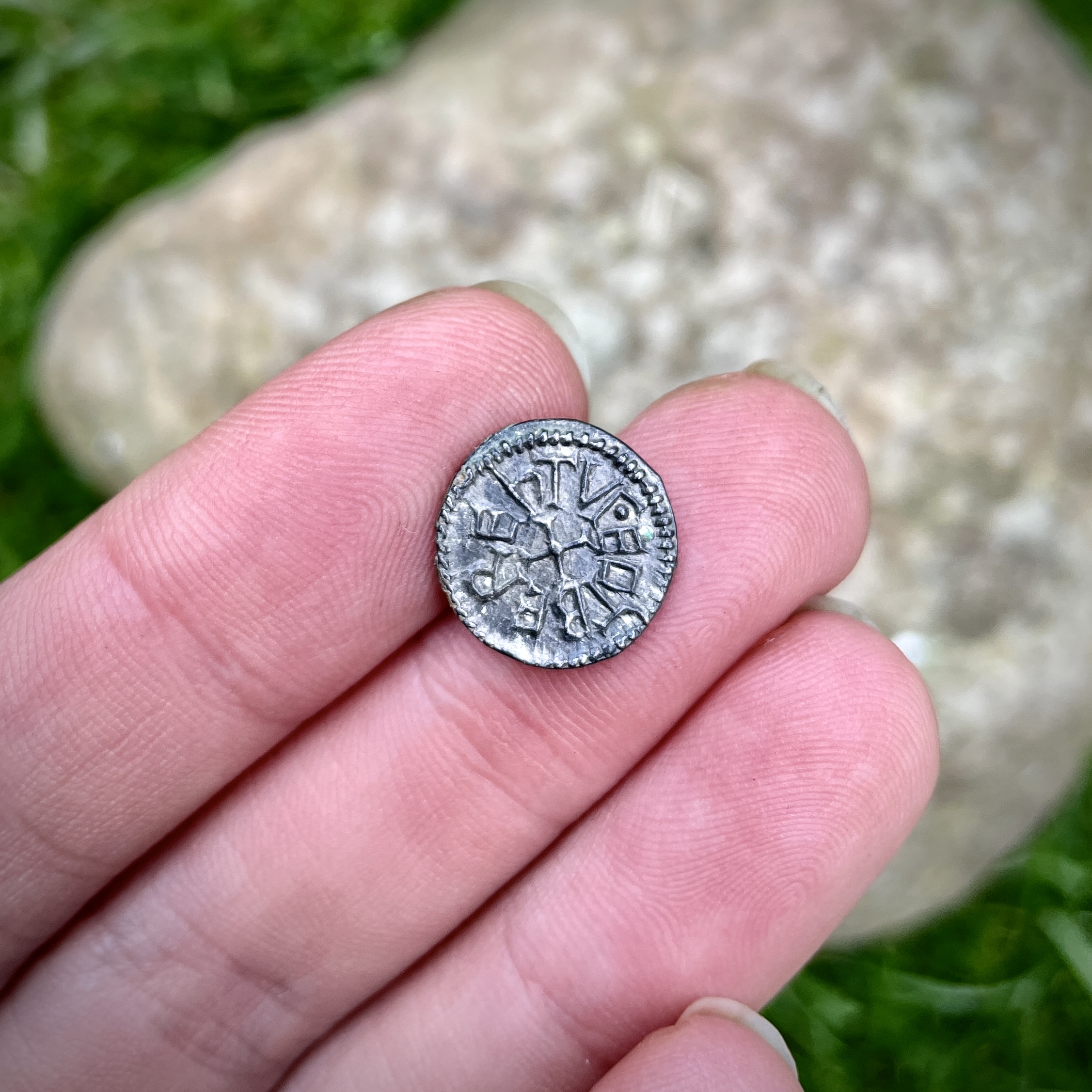
An Anglo-Saxon silver coin, found in 2021. Credit: DigVentures
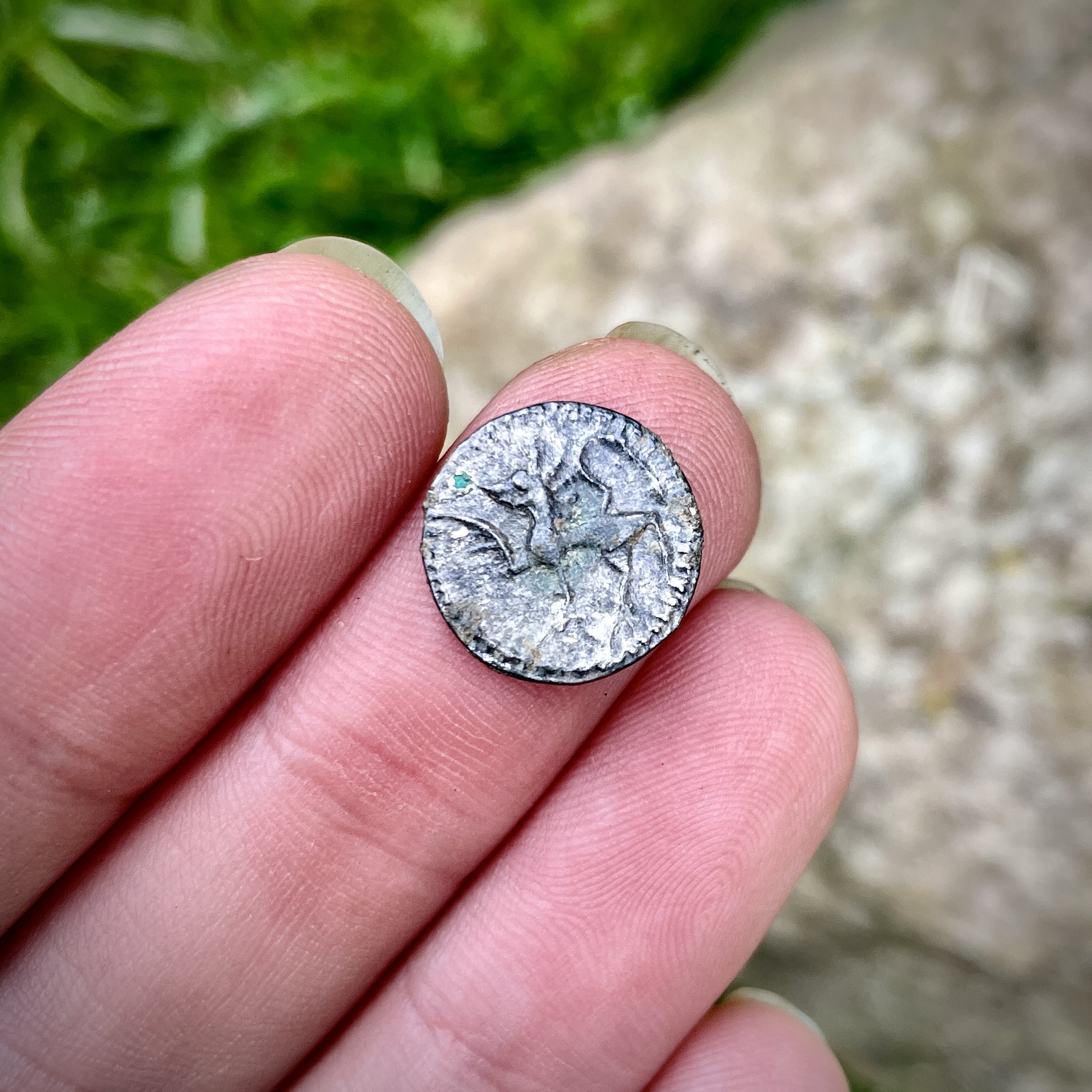
The reverse of the Anglo-Saxon silver coin, found in 2021. Credit: DigVentures
This Anglo-Saxon silver coin (known as a sceat) was found in near-mint condition, and features a mythical four-legged creature. But what excites us most is that it dates to the reign of King Eadberht, who ruled Northumbria from 737 AD, after his cousin Ceolwulf abdicated the throne, later even taking sanctuary at Lindisfarne’s own monastery.
7. The reach of the Romans
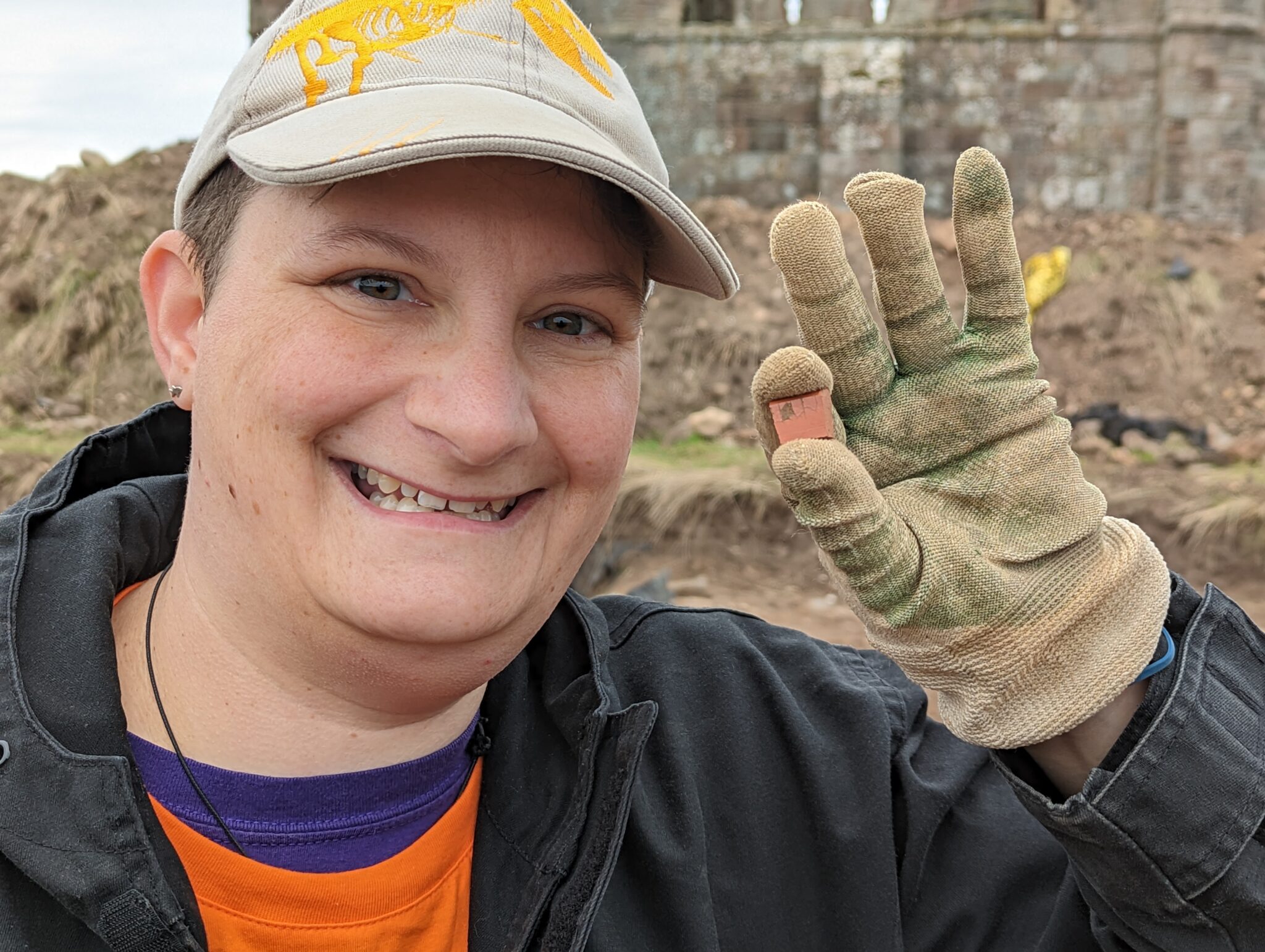
Venturer Alex with a sherd of Samian ware, found in 2022. Credit: DigVentures
Who knew a tiny piece of pottery could rewrite part of Lindisfarne’s story? This small sherd of Samian ware, discovered beneath an early medieval wall by Alex, was the first Roman artefact unearthed during our digs on the island. With a deep red colour and fine detail, Samian ware was reserved for special occasions during the Roman period. While there’s no evidence Romans ever settled on Lindisfarne, this little find shows that their influence somehow reached the island after all.
6. Faith reassembled
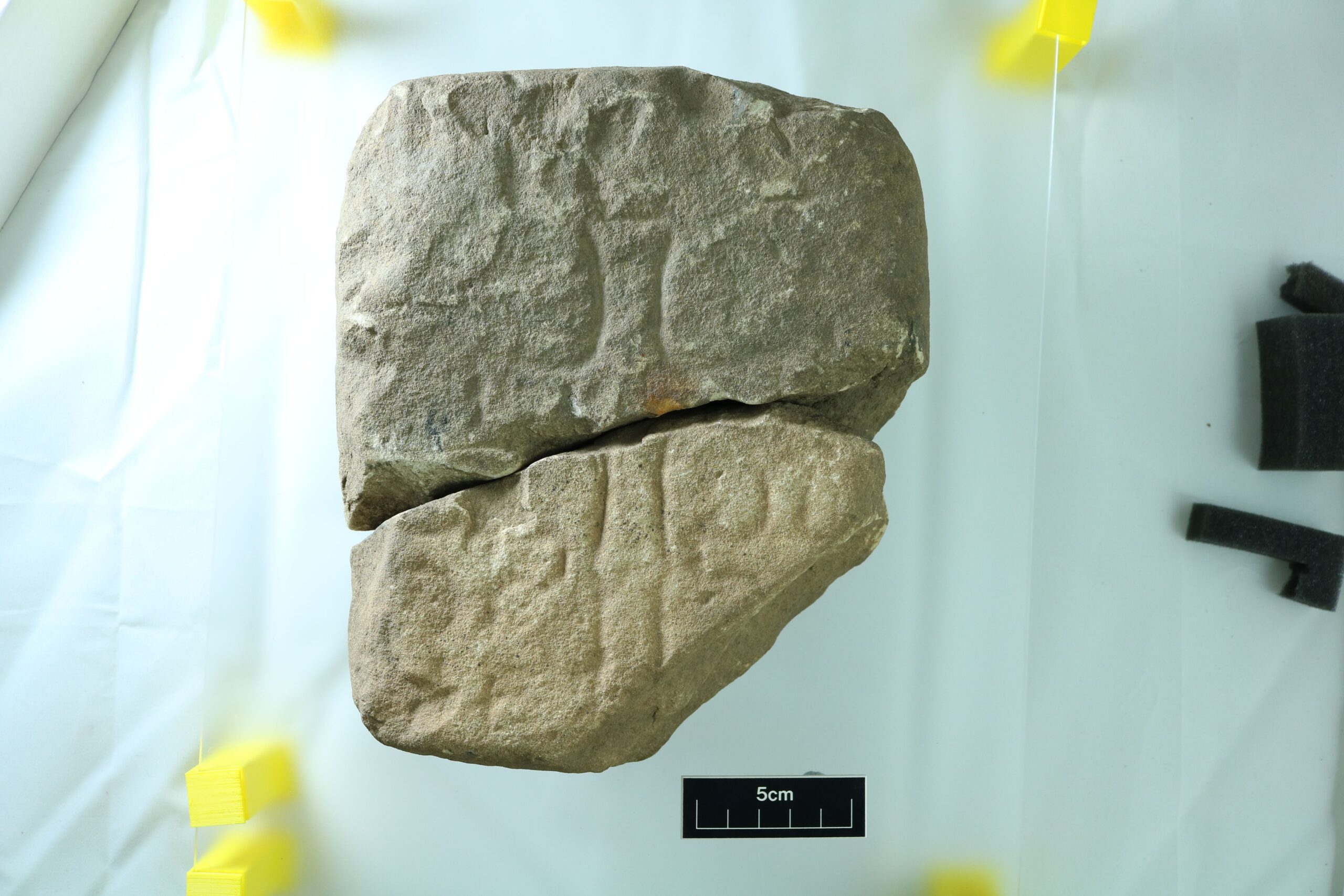
Two fragments of a stone with a cross, found separately in 2016 and 2018. Credit: DigVentures
In 2018, we found a carved fragment that joined up perfectly with another piece we’d found two years earlier. Together, they revealed a cross with rounded ‘Cuthbert-style’ arms and two smaller crosslets. This discovery is unlike anything else found in Northumberland from this period, and bears a striking resemblance to a famous carved stone found in Whithorn, southwest Scotland. This connection hints at shared traditions between Lindisfarne and other important early Christian sites across Britain and Ireland.
5. Coastal devotion
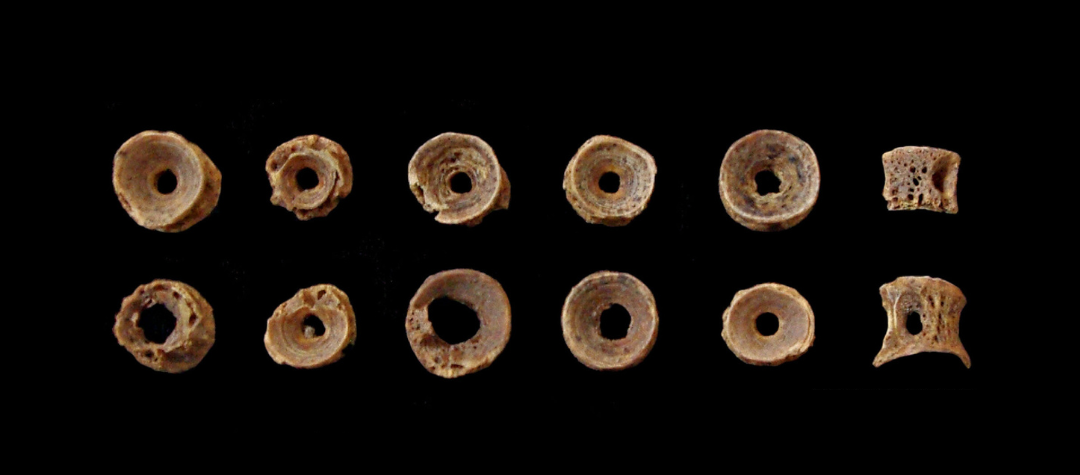
Fishbone prayer beads, found in 2022. Credit: DigVentures
Excavation in the cemetery area of our site revealed a cluster of fish vertebrae found around the neck of a skeleton, thought to be the remains of a monk, or other person associated with Lindisfarne’s early monastery.. Zooarchaeological analysis shows that the naturally occurring holes in the salmon vertebrae had been deliberately widened, either for threading or from years of wear, suggesting they may have been used as prayer beads. Radiocarbon dating placed the skeleton between 1033 – 1164 AD, meaning this could be the earliest known example of fishbone prayer beads in Britain – and offering a fascinating glimpse into how people practiced personal devotion along the coast in early medieval Northumbria.
4. Status in every strand
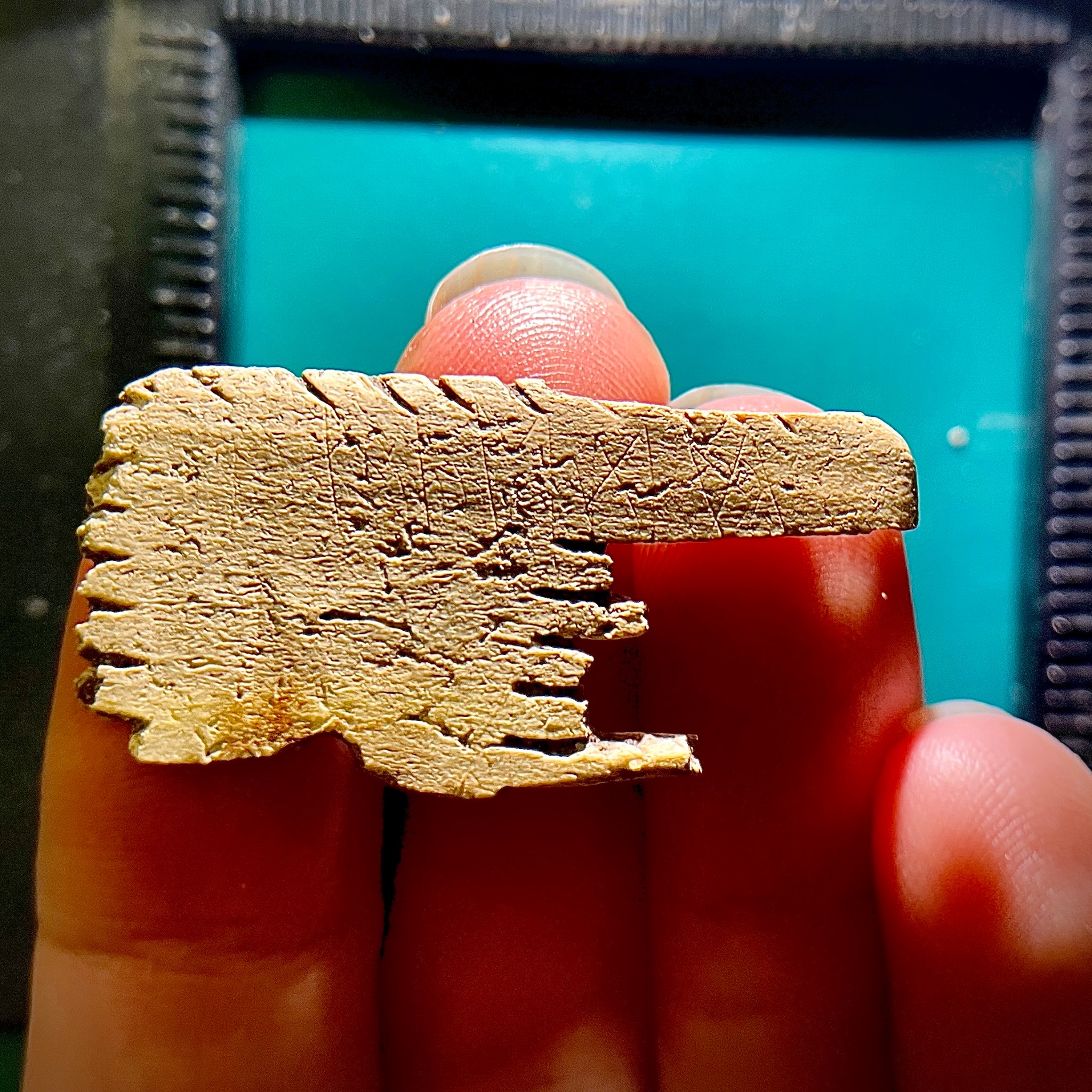
An inscribed comb made from bone, found in 2021. Credit: DigVentures
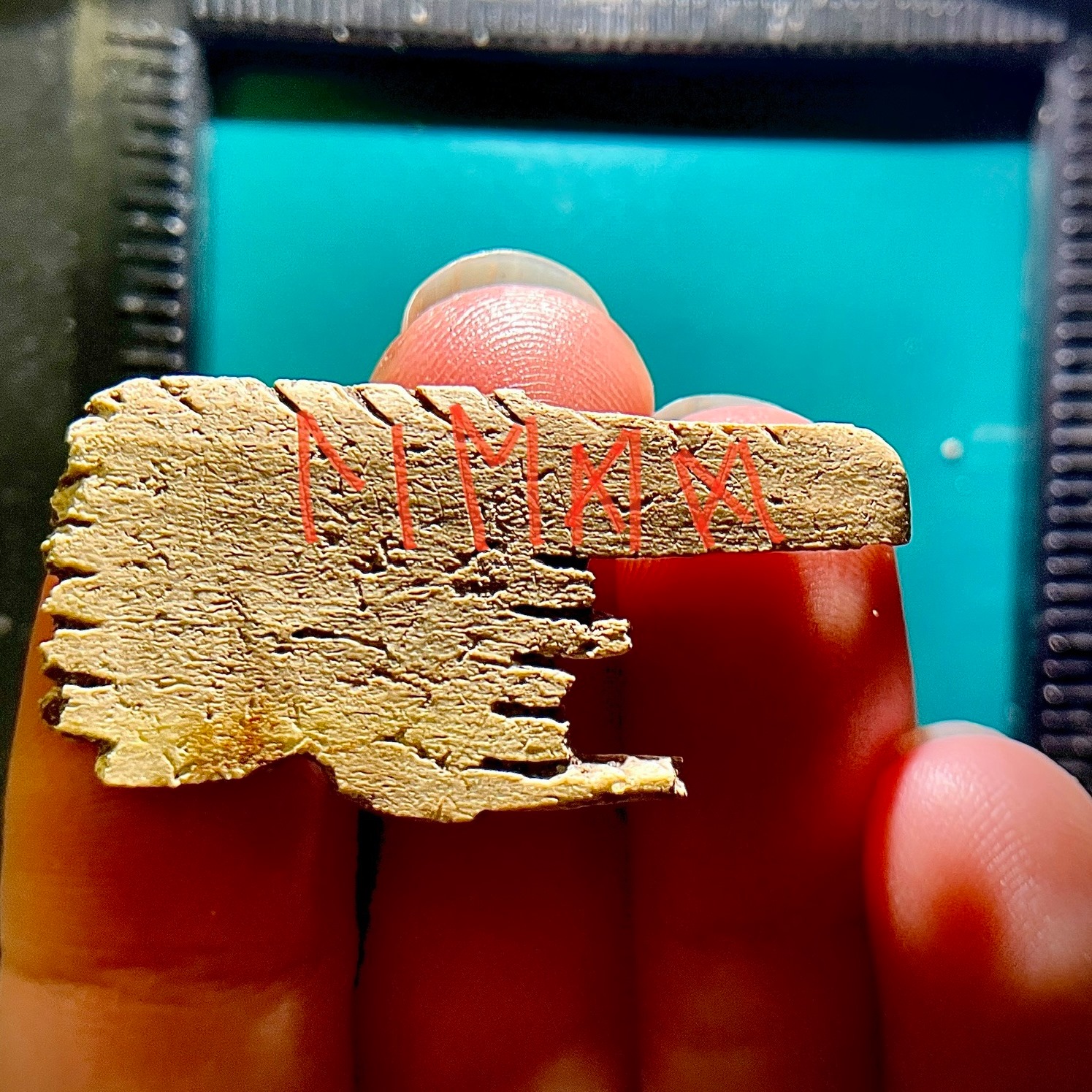
The possibly inscription on this inscribed comb made from bone, found in 2021. Credit: DigVentures
This small bone comb, likely dating to before the 8th century AD, carries an Old English inscription: ‘-EDE’, possibly the ending of a name or even an Old English verb. In the early medieval period, inscribing personal items was a common way to indicate ownership, and could also mark the owner’s status or serve as a form of symbolic personal protection. This little find is especially important because it shows its owner was literate, and offers us rare insight into everyday skills of the time period.
3. Unlocking a tragic mystery

The lock plate from a wooden chest burial, found in 2021. Credit: DigVentures
Early medieval burial practices were more varied than you might expect, with some Northumbrian ecclesiastical sites interring individuals in wooden chests with hinged lids, often made from valuable repurposed domestic furniture. This lock plate comes from a burial that osteoarchaeological analysis suggests belonged to a teenager or young adult, who died between 800 – 1000 AD. Chest burials were rare, and usually reserved for high-status individuals.
2. An unusual name reclaimed
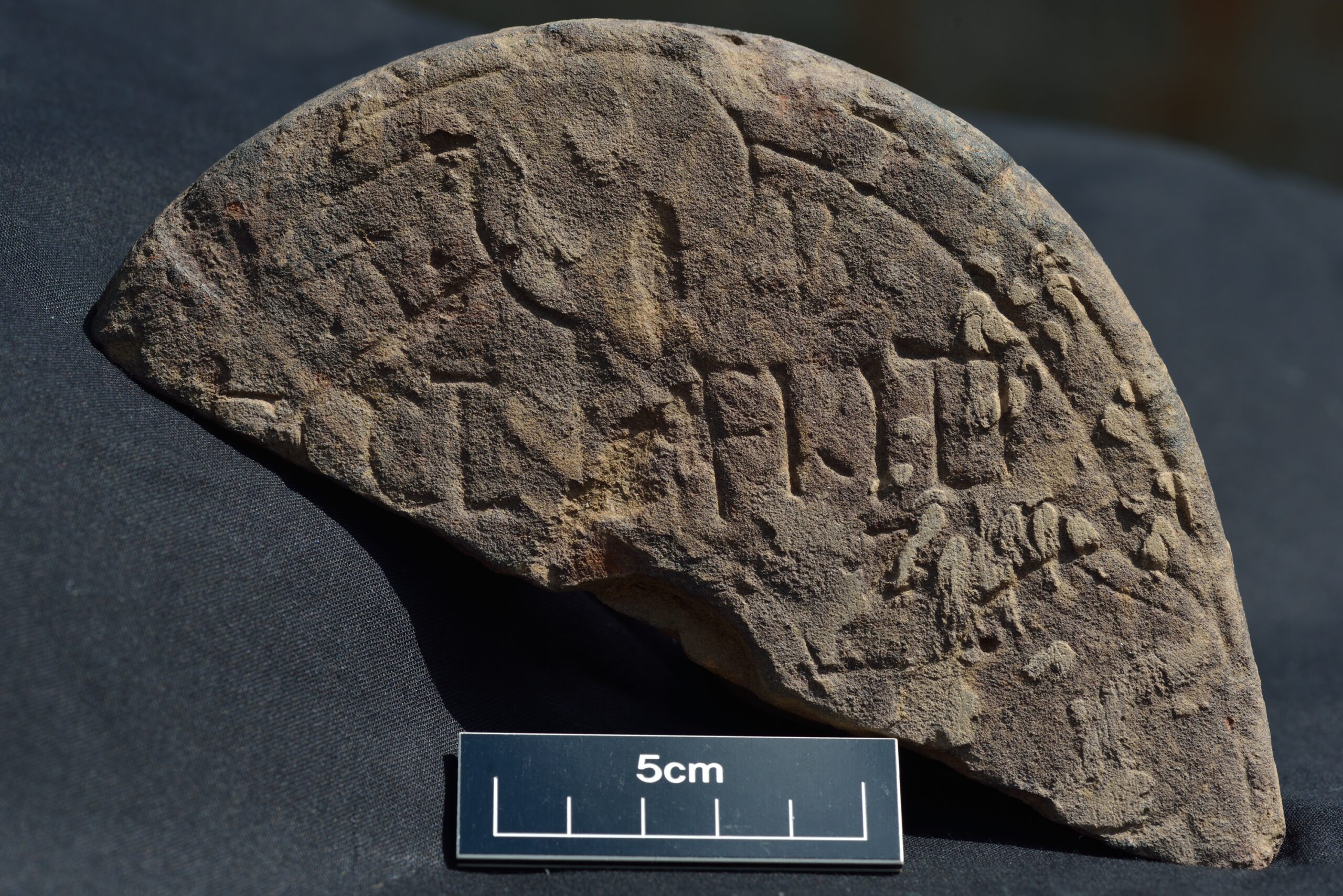
A namestone reading ‘Ythfrith’, found in 2016. Credit: DigVentures
Namestones were small, hand-carved stones inscribed with a person’s name, as a personal memorial, spiritual marker or commemorative object common in Northumbria between the 7th – 9th centuries. This stone revealed a particularly unusual name previously unknown to historians: Ythfrith (pronounced ‘uth-frith’). Its combination of a typically feminine beginning (‘Yth-’) with a masculine ending (‘-frith’) raises interesting questions about naming practices of the period.
1. Preserved pastimes

A king’ gamepiece from a strategic game called ‘tafl’, predating chess, found in 2019.
This 1,200-year-old boardgame piece is one of only two found in the British Isles to date. Crafted from bright blue glass and topped with a crown of five white bobbles, it’s likely the ‘king’ from a strategic game called ‘tafl’ that predates chess. This stunning find offers a playful glimpse into life at the monastery during the early medieval period, suggesting games were as much a part of daily life then as they are today, and highlighting Lindisfarne’s wider cultural connections across Britain, mainland Europe and beyond.
These discoveries help us to build a picture of early medieval Lindisfarne as a thriving community at the edge of the Northumbrian kingdom, with clear trade connections beyond the island. Its residents were deeply invested in their faith and in honouring people’s memory – often in ways uniquely tied to the island itself. Our finds show that Lindisfarne was both shaped by (and a shaper of) faith and trade, reaching across the North Sea and beyond. After all this time, the island continues to surprise and enthral us in equal measure and we can’t wait to see what it has in store for us in our tenth year of discovery.
Archaeology in your inbox?!
Want to join a dig? Learn more about archaeology? Join our email list for a monthly digest of our most popular stories, plus alerts for any digs, events, or courses you can join.
Join the list
Written by Shelby Stapleton
Shelby is DigVentures’ Events and Communications Officer and a Brunel University Journalism graduate. She joined Team DV in 2025 (much to the excitement of her eight-year-old self, who wanted to be an archaeologist), bringing experience across the charity, heritage and cultural sectors, with a background in multi-platform campaigns and audience-facing roles. She especially loves Ancient Egypt and the Tudors, and since joining the team has developed a growing fondness for prehistory. When she’s not sharing stories or supporting community events online or in the field, you’ll find Shelby (halfway) up a climbing wall, at the theatre or chasing views (halfway) up a mountain.


There are no comments on this post yet. Be the first!