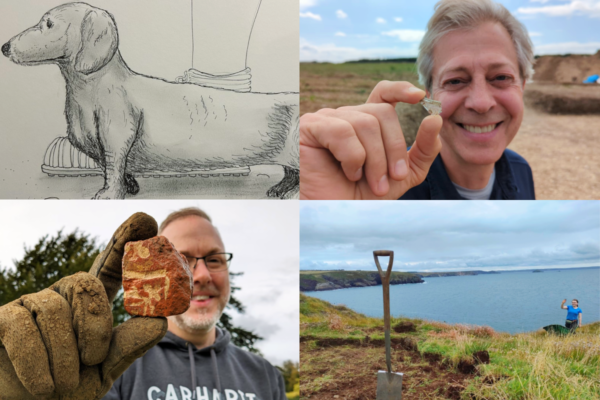
From prehistoric roundhouses, to a spectacular Tudor garden, we’ve made some truly groundbreaking archaeological discoveries this year…
Over 2023, DigVentures welcomed nearly 5,000 people from across the globe to join us – online and in-person – as we explored the incredible heritage of the UK and Ireland. It’s been a monumental year (pardon the pun), but we’ve managed to narrow it down and pick out our very best finds of 2023 for you to enjoy!
1. A hidden landscape of ancient monuments in the Boyne Valley, Ireland
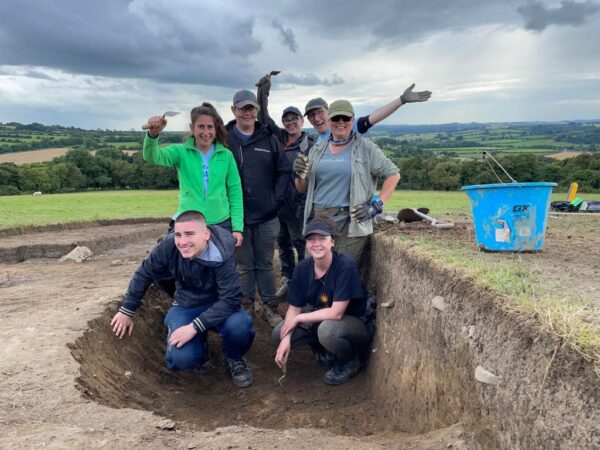
Boyne Valley (Co Meath) This July, we packed up and took a trip overseas to Ireland to begin our first ever dig in the UNESCO World Heritage Site of Brú na Bóinne: an incredible funerary landscape of standing stones, henges, and passage tombs dating to over 5,000 years old. And, thanks to a combination of geophysics and excavation, we now know there’s even more hiding just beneath the surface. With henges, timber enclosures, ceremonial avenues, ritual structures, and palisades – we’re on the tip of an archaeological iceberg, and we can’t wait to return next year to uncover more!
2. One of our most important discoveries on Lindisfarne, ever!

Lindisfarne (Northumberland) Look, we know archaeologists have a tendancy to get oddly excited about ditches – but we mean it when we say this ditch is really cool! For the past eight years, we’ve been searching for evidence of the early medieval monastery on Lindisfarne, famous for being raided by Vikings in 793 AD. But now, it looks like we’ve gone beyond that and uncovered what might be our earliest feature on site – maybe even pre-dating the monastery. This is a new chapter in the story of the island that we’ve been exploring, and could give us some new insight into the evolution of one of the UK’s most iconic sites.
3. A tiny Roman dog in Oxfordshire

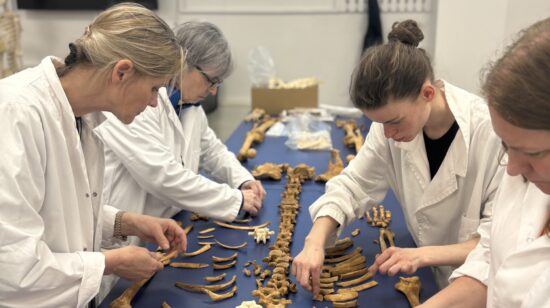
Earth Trust, Wittenham Clumps (Oxfordshire) Easily our most viral find of 2023 – and not to mention the most adorable – would be the tiny Roman dog we uncovered at our site at Earth Trust in Oxfordshire. In-keeping with last year’s theme of cute Roman puppies, the remains of this small pooch (affectionately named ‘Clumpy’ by the people of the internet) were identified from the many animal bones we found at the site of a Romano-British family home – occupied in the 3rd-4th centuries AD. Due to her small size and bowed legs, we think it’s unlikely that Clumpy was a working dog, and was instead a beloved pet. Aww.
4. The final piece of a four-year puzzle at Soulton Hall, Shropshire
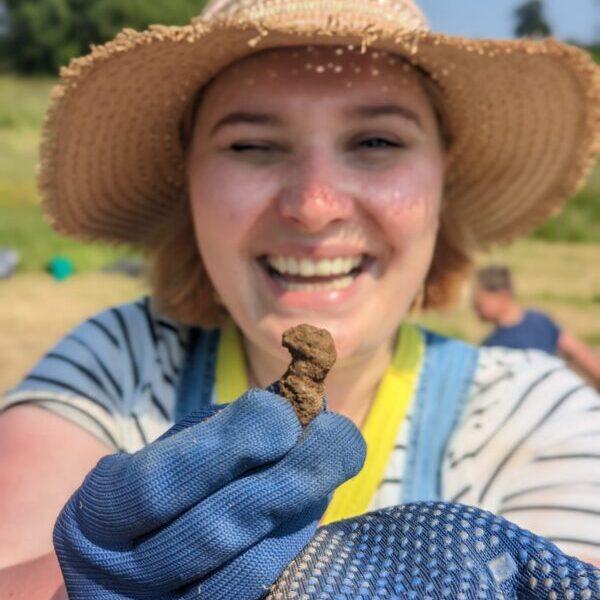
Soulton Hall (Shropshire) This year we returned to Soulton Hall for our final chance to investigate a mysterious medieval mound within the grounds. The question of the year: could we find an answer once and for all to that classic question – what is it? We had some theories, but one thing helped us nail it down. Literally. It was nails. Medieval nails in fact, that helped us to confidently say once and for all that there was likely a large timber structure atop the mound, that was later pushed over during landscaping. Just another reminder that sometimes the most unassuming finds can be the most telling!
5. An ancient settlement in a promontory fort on the Welsh coastline

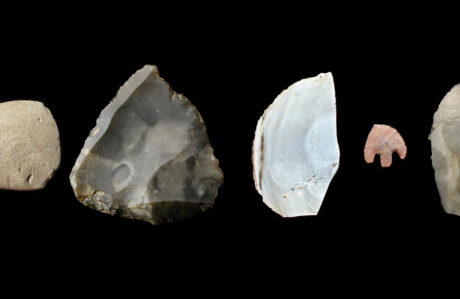
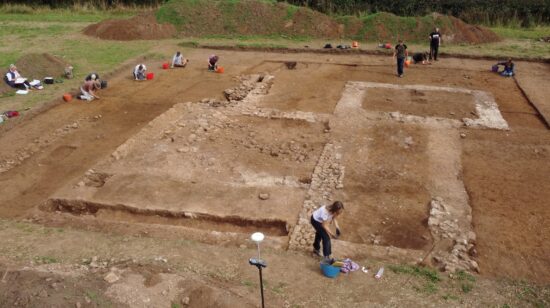
Caerfai (Pembrokeshire) A big year for conclusions: this summer we also said goodbye to Caerfai Promotory Fort after three seasons of digging. Probably one of the most beautiful places we’ve ever had the privilage to dig, and packed with some incredible prehistoric archaeology to boot! While here, we uncovered traces of ancient roundhouses and huge stone ramparts, not to mention some fantastic prehistoric artefacts – including a whetstone and some flints. Check out the lovely digital reconstruction made by the CHERISH Project with Wessex Archaeology. Safe to say, this site is prime prehistoric real estate.
6. A Tudor water feature, designed to impress

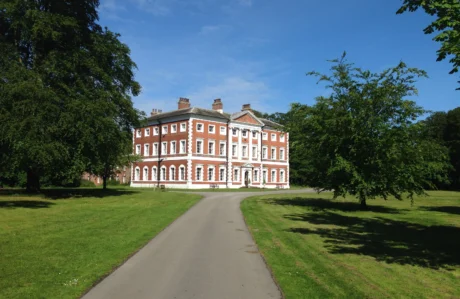
Sudeley Castle (Gloucestershire) This year, we continued uncovering more of the now not-so-lost Tudor garden at Sudeley Castle. Once, this garden would’ve stretched out behind the castle, full of sprawling pathways and intricate plantlife, and designed to enthrall guests. When taking a stroll through the garden, visitors would’ve used viewing platforms to admire the designs from above, like the one at the centre of a large water feature we dug this year. We think this viewing platform was encircled by impressive, deep ponds – meaning those Tudor folk could admire the garden in style.
7. Thousands of lost archaeological features across the UK

Deep Time (Online) In 2021, we launched our first Deep Time mission and invited ‘Pastronauts’ from across the globe to help us survey LiDAR images to help pinpoint potential archaeological sites in County Durham. Now, Deep Time is back again! This time our Pastronauts undertook missions across three National Trust sites in the UK: Purbeck and Studland, the Peak District and Wallington estate. From September to December, our Pastronauts identified thousands of new archaeological sites from the LiDAR, and improved upon many existing records. Not only is that an impressive feat in itself, but all their hard work will help the National Trust encorporate these important sites as they build a plan to combat climate change in these three regions!
8. Medieval floor tiles at Sudeley Castle
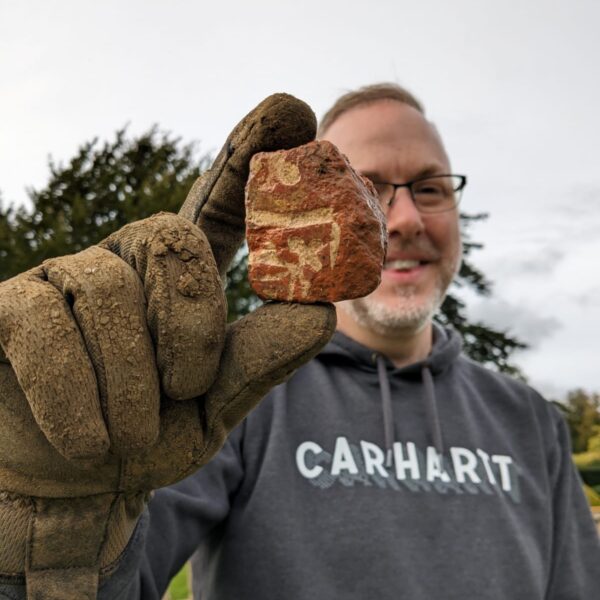
Sudeley Castle (Gloucestershire) We we floored when we found some medieval floor tiles while digging the Tudor garden at Sudeley Castle. What’s most interesting about these beautiful tiles, is where they might have come from. Likely, these were brought over from the nearby Winchcombe Abbey after it was destroyed by Sudeley Castle’s then-owner, Thomas Seymour, in the dissolution of the monasteries. Why? We think Thomas brought over rubble from Sudeley Castle to use for landscaping the garden when he had it refurbished for his new wife, Catherine Parr. Not only is this a big clue for us to work out the chronology of the garden, but pretty cool when you think about the things these tiles have seen – and how many important feet might have stepped on them!
9. Another ancient settlement, in Doncaster

Potteric Carr (Yorkshire) Picture this: you have an aerial image which shows eye-catching outlines of roundhouses, enclosures, field systems and ditches. Who you gonna call? The archaeologists! We headed to Potteric Carr Nature Reserve this year to uncover the remains of a vast ancient settlement, probably dating back to the Iron Age and Roman periods. Amongst the most exciting discoveries, was the waterlogged conditions of the trenches. Why? Well, it looks like this was once a low-lying marshland landscape – which means the site could be a marsh fort. Marsh forts are a relatively rare type of Iron Age site. Only one other has been excavated at Sutton Common just north of Doncaster – not far from Potteric Carr.
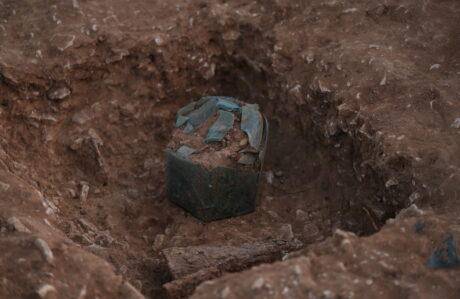
10. Beautiful Roman glass from a ladder settlement
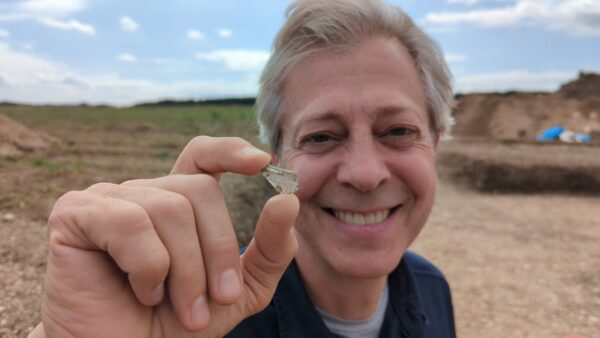
East Yorkshire Finding something ancient is one thing, but finding some as fragile as ancient glass is mindblowing! But, in East Yorkshire this summer, we did just that. We returned to the area to dig the remains of a Roman ladder settlement, not far from the Roman mansio we dug last year. While there, our Venturers found several delicate fragments of Roman glass that had survived the test of time. Who knows what else we might find when we return in 2024?
So there we have it! It’s always hard to narrow down an amazing year of archaeology into just ten finds, but we’ve managed to curb our excitement for now. Thank you so much to our incredible community. Whether you joined us online or in-person, none of this would be possible without all of your support.
We can’t wait to head back out into the field this summer and see what other amazing artefacts, features and surveys we come away with. Fancy joining us? Take a look at our 2024 Dig Calendar today and see what archaeology you can help uncover!
Archaeology in your inbox?!
Want to join a dig? Learn more about archaeology? Join our email list for a monthly digest of our most popular stories, plus alerts for any digs, events, or courses you can join.
Join the list
Written by Georgina Cole
Ginny is a Community Archaeologist with DigVentures and Durham University graduate. She has a passion for speaking to the public and she especially loves gender archaeology and forensics. In keeping with archaeological tradition, when she isn’t in the trenches you can often find her grabbing a pint at the local pub!


There are no comments on this post yet. Be the first!