From a baby mammoth teeth to a Neanderthal hand axe, here are some of the most significant discoveries behind the BBC One documentary.
Can you imagine the thrill of unearthing the fossilised remains of a 200,000 year old mammoth? And of trying to figure out if maybe, just maybe, it was killed by a Neanderthal?
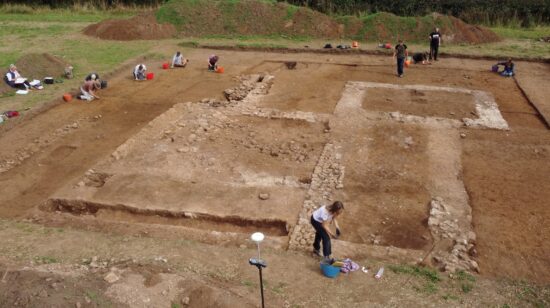
Attenborough And The Mammoth Graveyard is this year’s must-see Christmas TV highlight for archaeology fans; the documentary follows Sir David Attenborough and biologist Prof. Ben Garrod as they join a team of archaeologists to investigate a 200,000 year old mammoth graveyard after it was spotted by two fossil hunters in an old gravel quarry near Swindon.
In case you were wondering who this lucky team of archaeologists are, it’s us – DigVentures!
It is extremely rare to find any evidence of Neanderthals in Britain, especially in association with mammoth remains, and even rarer to find ones that are as old as this. You can imagine just how excited we were to spend two seasons excavating this incredible site and collaborating on a documentary with Sir David Attenborough.
From the smallest and most delicate remains, to the biggest and most robust, here are some of the most significant discoveries behind the documentary:
1. Mammoth bones (and lots of them!)
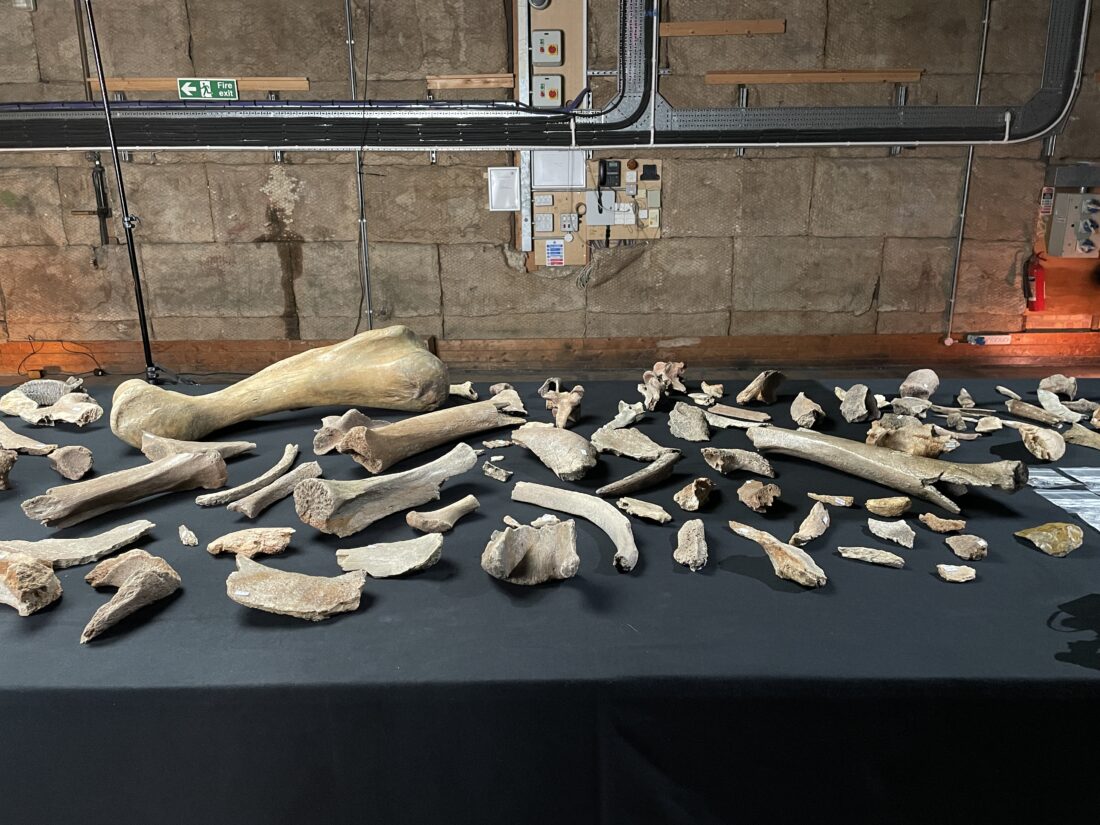
So far, investigation of the site has revealed the remains of at least five different mammoths, including two adults, two juveniles, and an infant. They all belong to a species of Steppe mammoth, an ancestor of the iconic Woolly mammoth. Although early Steppe mammoths could stand up to 4m at the shoulder, analysis shows that our mammoths were smaller than you might expect, suggesting that the species shrank as the climate got colder. Why were so many mammoths here? And what can their diminutive size reveal about the impact of climate change on mammoth evolution and the emergence of the new Woolly mammoth?

Sir David Attenborough and Prof. Ben Garrod examine the mammoth bones from the site
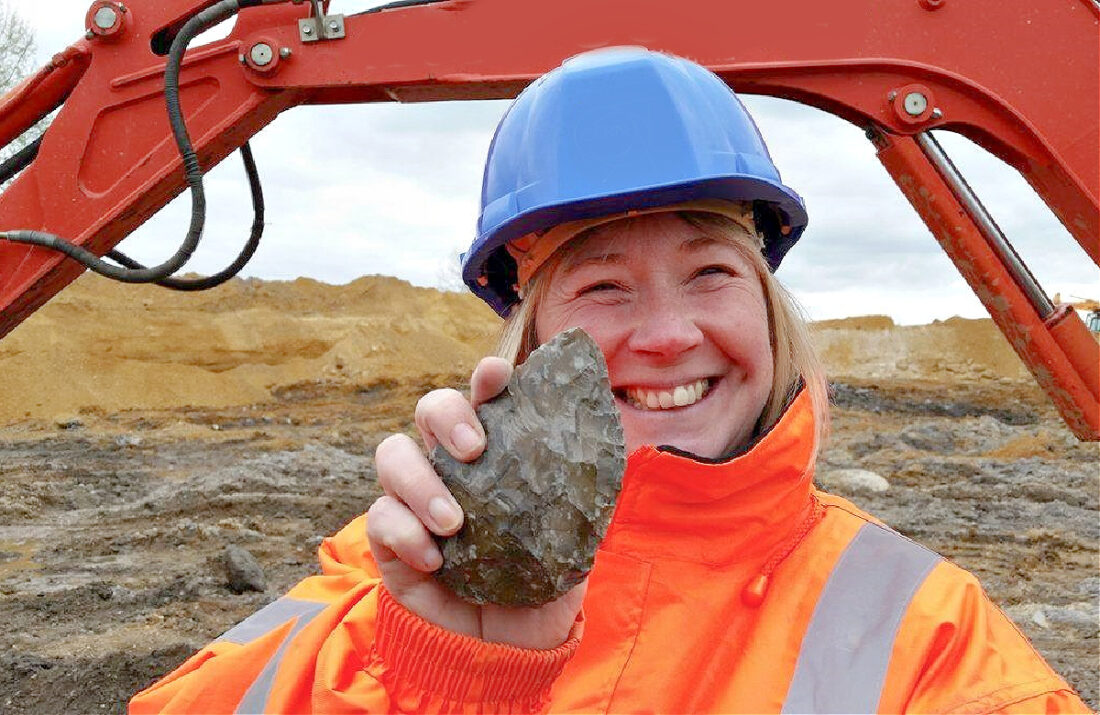
2. A flint handaxe made by Neanderthals
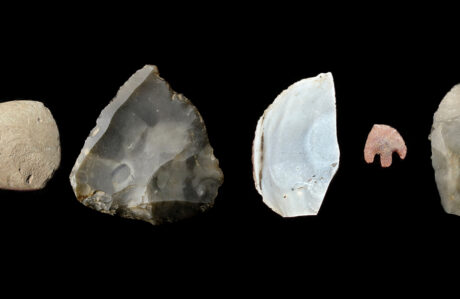
It is extremely rare to find any evidence of Neanderthals, and even rarer to find it in association with mammoth remains, especially ones that are 200,000 years old. The discovery of this flint handaxe, as well as other stone tools, so close to the animal remains is very suggestive, and gives us good reason to speculate that this was a place that Neanderthals came either to butcher or process food, or because they knew they would find prey.
3. The shoreline of an ancient river
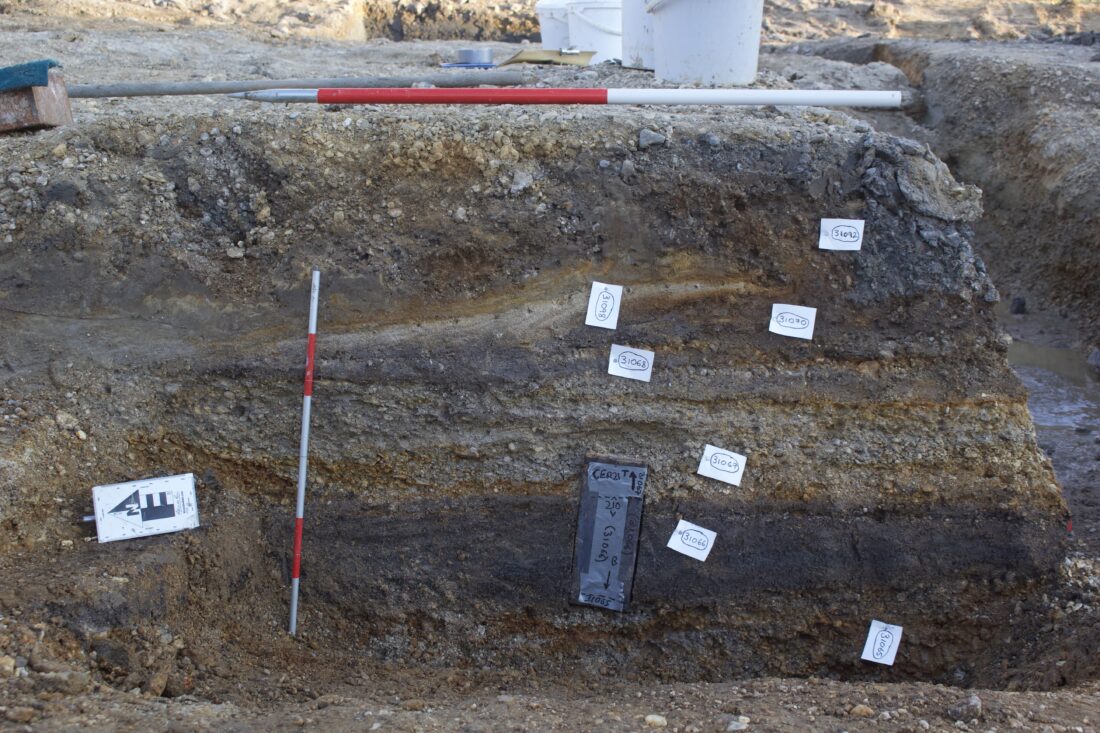
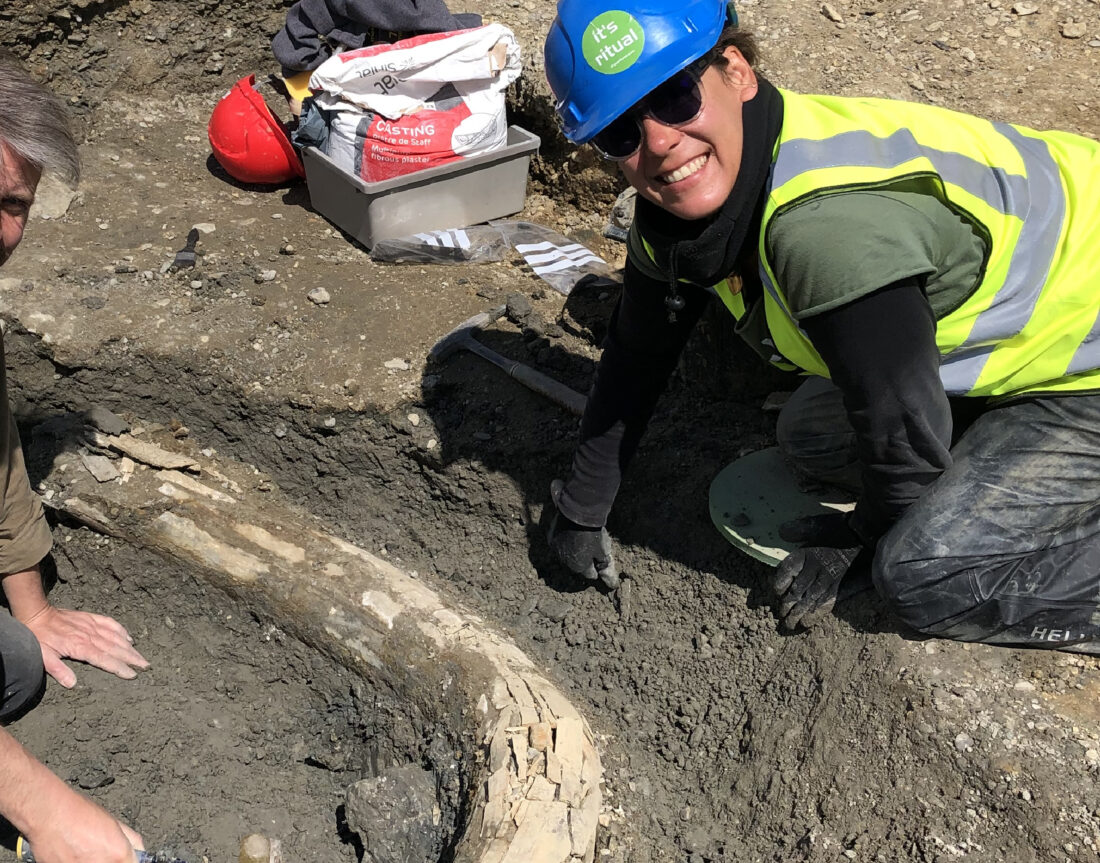
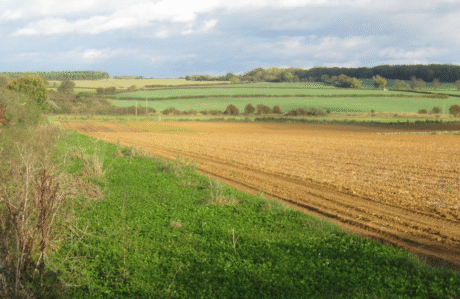
Why were so many mammoths found in this spot? Did something draw them here, like a source of fresh drinking water? Working with a team of geologists and climate scientists from five different universities, our excavations revealed that this mammoth graveyard lay buried within the shoreline of an ancient river in the Upper Thames. Environmental samples from the different layers of sediment contained the remains of plants and insects that only live in or near fresh water.
4. A variety of other Neanderthal stone tools
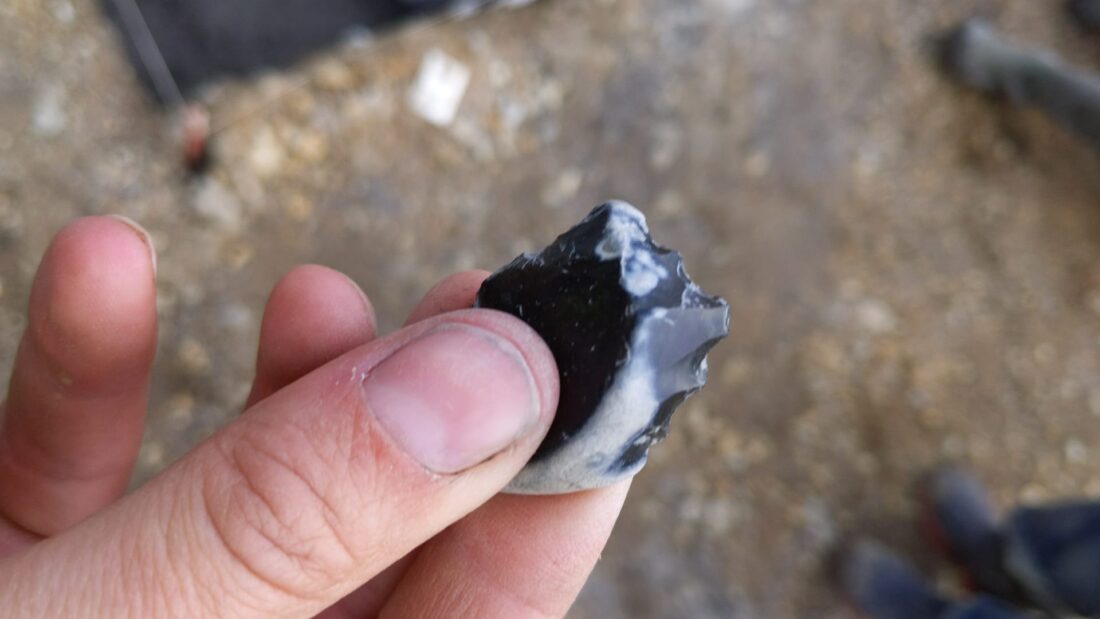
It’s big brother, the hand axe, might be more visually impressive, but this humble flint scraping tool that fits perfectly between a thumb and a forefinger is even more evidence that there was human activity at the site. A small tool like this would probably have been used for scraping hides which could then be used for clothing or shelter. This one would have been made by Neanderthals in the Early Middle Palaeolithic period, and lends weight to the idea that the tools weren’t here by chance – this was a place that Neanderthals came regularly.
5. Possible signs of butchery
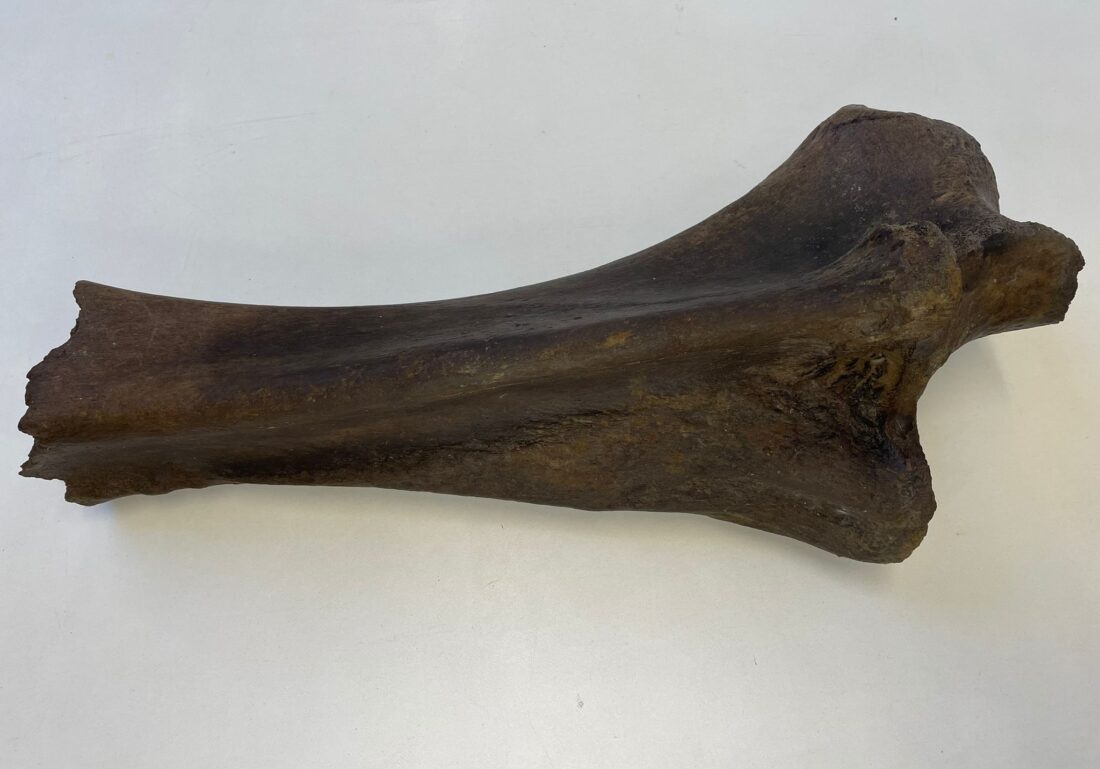
Some of the mammoth bones recovered during the excavation have lines scored across the surface. These bones are currently being examined under the microscope in forensic detail to establish whether they were are incidental (e.g., caused after the bones had been deposited by natural processes) or intentional (i.e., caused by a deliberate action such as a Neanderthal using a sharp stone tool to cut meat, flesh, and sinews away from the bone). So, do these lines provide conclusive evidence of Neanderthal butchery? We’ll have to leave you on a cliffhanger for the final results…
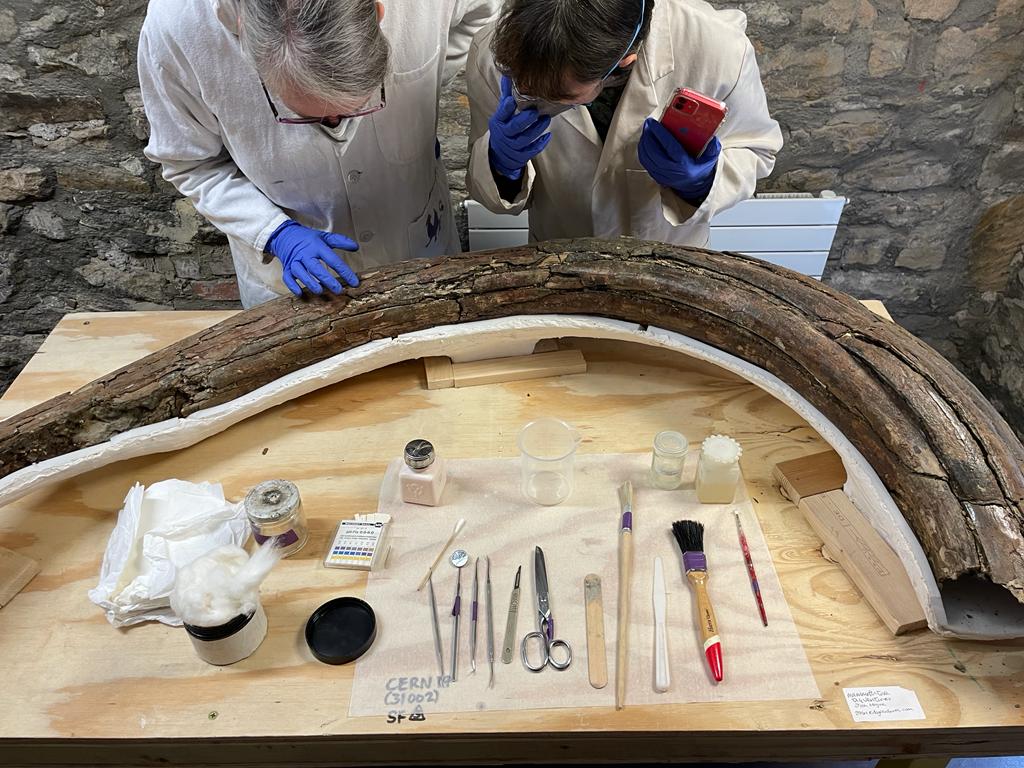
6. Mammoth tusks
Mammoth bones can help us learn more about the mammoths themselves. Mammoth ivory was a useful material for ancient people who used it for making everything from pendants to musical instruments, but it’s also a useful material for archaeologists too: they can be used to estimate the age of a mammoth, just like you can count the rings of a tree. Both male and female Steppe mammoths had tusks: males’ were slightly thicker with a more spiral shape, while females were thinner with only a slight curve.
7. Mammoth teeth (including a baby mammoth tooth)
Big animals have big teeth, and a mammoth’s tooth can easily be bigger than a human head! Beyond their impressive size, mammoth teeth are a great way to learn more about these Ice Age giants: mammoths grew up to six sets of teeth during their lifetime. As the plates wore down due to their herbivorous diet, they would be replaced by a new set. By analysing the size, shape, and number of tooth plates, we can tell which species of mammoth it belonged to, and even how old the individual was when it died.
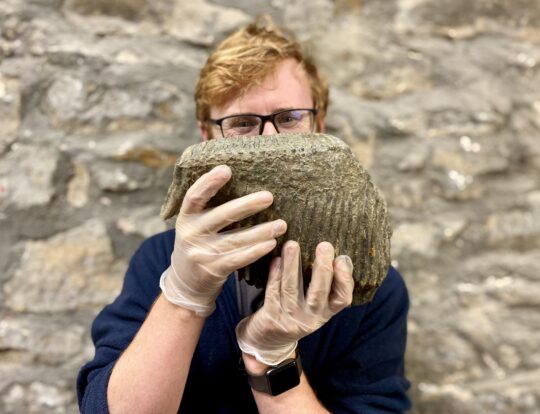
Mammoth tooth
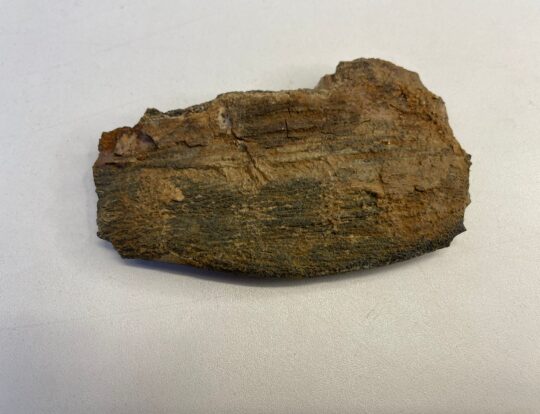
Baby mammoth tooth
8. OSL dating evidence
Neanderthals disappeared from the fossil record around 40,000 years ago, but evidence from our site, like the type of mammoth and the particular kind of tools, quickly made it clear that our site was much, much older. Concrete proof came from a powerful technique called Optically Stimulated Luminescence dating, which can be used to date sediments. The results pretty conclusively shows that both the tools and the bones are as much as 204,000 years old.
9. A snapshot of a long-lost ecosystem (including mammoth dung?!)
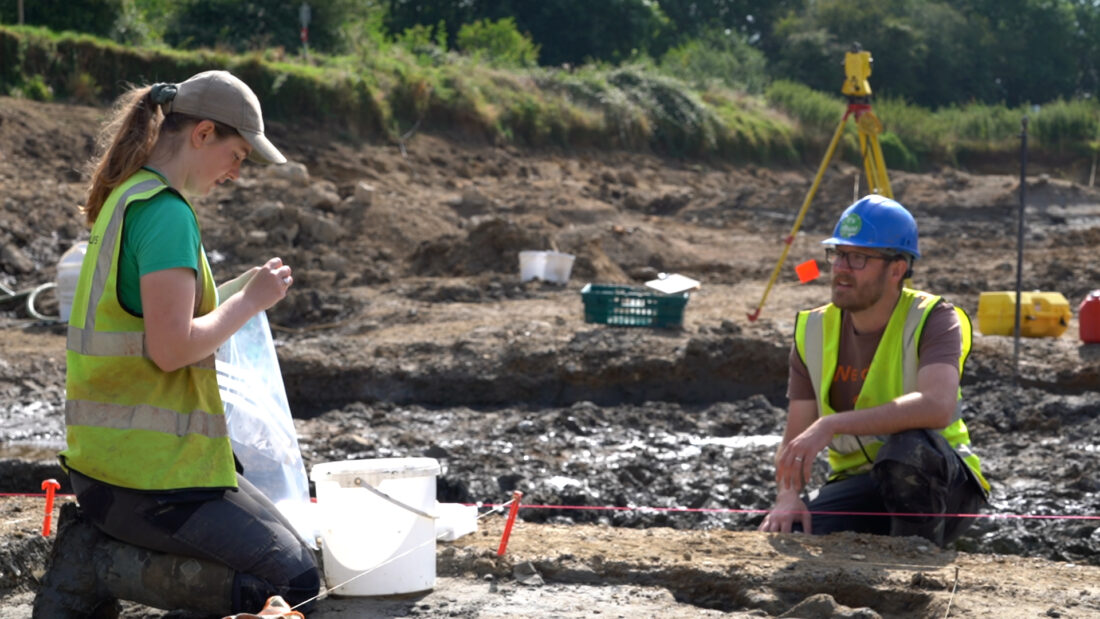
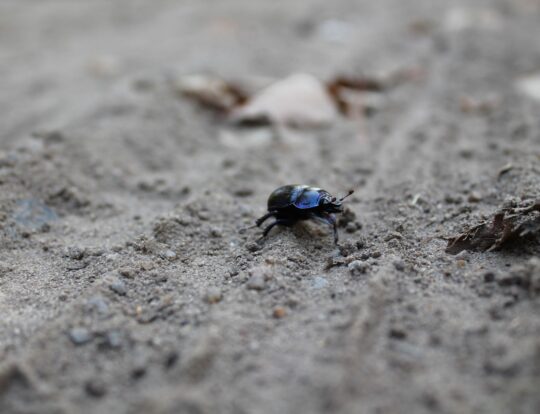
OSL dating showed that both our mammoths and Neanderthals live around 200,000 years ago – towards the end of a climatic period known as MIS7, when Britain was still temperate enough for Neanderthals to live here, but would soon be forced to leave by the onset of another icy period. The incredible preservation of this site has enabled us to create an incredibly detailed snapshot of their habitat from evidence like freshwater snail shells, seeds, pollen, and insect remains. Our samples have shown that extinct types of trees and beetles lived around the site as well as trees like hornbeam which we’re still familiar with today. They also included the remains of dung beetles, which implies a fresh supply of steaming mammoth poop! In all scientific seriousness, this is a great discovery showing the extent to which the landscape was shaped by grazing herbivores. By reconstructing this ancient ecosystem, we can draw conclusions about what made this place attractive to both mammoths and Neanderthals, and what environmental pressures they were under.

10. Other Ice Age animals
Steppe mammoths weren’t the only animals discovered on the site. As well as the microscopic remains of insects and beetles, the site also attracted a variety of other mammals such as Steppe auroch, as well as carnivores like hyena and brown bear. These can all add to our snapshot of this long-lost habitat, capturing a moment in time when Britain was on the brink of dramatic climate change.
11. And finally, how much more there is still to be uncovered…
As is so often the case with scientific discoveries, there is still plenty of further research to be done in the lab. Plus, with the vast majority of the site still to be thoroughly excavated, who knows how much more is yet to be revealed. We’re already planning the next phase of research and are exploring different ways that you can be involved. So, watch the documentary, and watch this space!



Comments (1)
Great finds Must have been great to see them for first time after all this time,
Our diving group have found Bronze Age artefacts from three area’s in south Devon, we also found many gold coins and jewellery from 1640,
Well done to you as first finders of these great items.