
Crackling, sizzling, succulent bacon. A delicacy that’s so delicious there’s bacon ice cream, bacon deodorant and even a bacon festival! But where did our love affair with bacon start, and just how recently did bacon become the go-to meat of the early morning cook?
In its current incarnation, bacon is a slice of cured pork from the side, back or belly of a pig, but this wasn’t always the case. In fact, it wasn’t until the (relatively) recent roaring 1920s that pre-sliced bacon sold in plastic packets became a ‘thing’. This change is widely credited to the Oscar Mayer Company of Wisconsin, whose marketing and branding turned bacon into the thing we know and love today. Before that, bacon was sold just like any other cut of meat at the butchers.
In late 18th century Wiltshire, a pioneer (or visionary, if you REALLY love bacon) by the name of John Harris started to mass-produce bacon by breeding pigs to be as fat as possible, and opened the first commercial bacon processing plant. If there was a Baron of Bacon, Harris would surely be it.
It’s bacon Jim, but not as we know it…
Our journey through the history of bacon doesn’t stop there. The word “bacoun” entered England in the 12th century and is derived from the French “bako”, which in term comes from the Germanic “bakkon”.
Bacon originally meant “back of an animal”, and it’s in the 14th century that we find it being applied specifically to cured pork. Before that, the Anglo-Saxons loved to use the fat from bacon in their food and as a dressing for vegetables. Keep that in mind for the next time you run out of salad dressing!
I could keep going (all the way back to 1500BC China, where archaeologists found evidence that the Chinese had been salting pork), but we have to end it somewhere – and it just wouldn’t be right if the Romans didn’t make an appearance.
The famed epicurean Marcus Gavius Apicius includes a recipe in his cookbook called Petaso, which calls for a cured shoulder of pork with figs in a wine and pepper sauce.
Bacon has changed so much over the centuries, from shoulder to back to belly – and from big fat chunk to thin packaged slices, but the evolution of what we eat is amazing to see. If there’s one thing that does stay constant, it’s that bacon is an inexpensive cut of meat that’s incredibly versatile and super tasty!
This week’s recipe is a rich, thick sauce from the book Roman Cookery by Mark Grant, and it smells incredible. The recipe also suggests trying it with bread, and it goes great with a glass or two of red wine!
Fabo cum Lardo (Bacon and Haricot Beans)
What you need:
200g dried haricot beans, 1 large onion, 2tbsp olive oil, 200g sliced bacon, 1 small glass red wine, 1 bay leaf, 1 tsp thyme, black pepper, sea salt (optional)
How to make it:
Soak the haricot beans overnight in a pan of water
Finely chop the onion and fry it gently in the olive oil until soft
Cut the bacon into 1cm cubes and add to the onion. Stirring occasionally, cook for 5 minutes
Add the red wine, bay leaf, thyme and pepper
Drain and rinse the beans, and then add them to the sauce
Cover with water, bring to the boil, then reduce the heat and simmer for an hour or until the beans are cooked
The bacon should add enough saltiness to the sauce, but if it’s not salty enough for your taste then add the sea salt
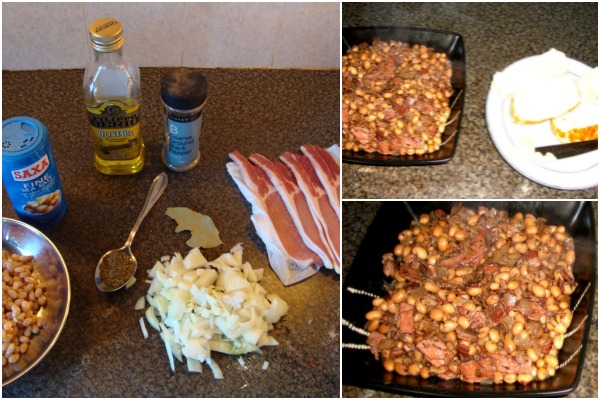
Try it yourself, and let me know what you think!
Next week, I’ll expect you to have your goblets at the ready as I bravely quaff copious amounts of mead (the things I do for research…).
Archaeology in your inbox?!
Want to join a dig? Learn more about archaeology? Join our email list for a monthly digest of our most popular stories, plus alerts for any digs, events, or courses you can join.
Join the list
Written by Jamie Skuse
Jamie is a recent(ish) archaeology graduate from the University of Manchester. He loves playing with new gadgets (old and new) and one day wants to have his own archaeo-drone and be known as the flying archaeologist. Twitter: @supertrowel




Comments (2)
Wonder what beans the Romans used? Afaik haricot beans are a 16thC introduction from the Americas.
P.s. To answer my own question, the Romans used Broad beans which are Europe’s natives or peas, just found my copy of Ken Albala’s ‘Beans, a history’.
Thanks for letting me know! Sounds like a handy book, if I tackle another recipe with beans in I’ll pick a copy up.