What if the single most important thing funders could do for culture was to stop asking organisations to prove their worth in advance, and start investing in their capacity to learn?
Funding is often treated as a technical backdrop to cultural production, rather than as one of its most powerful design forces. The reality is that funding is not neutral infrastructure: it is an active force shaping what culture can become, carrying within it assumptions about what matters, what counts as success, and who gets to define value.
Over time, compliance-based funding has narrowed our options. Systems designed to manage risk through specification and control have left little room for experimentation, continuity, or work whose value emerges over time. As the demands placed on culture and creativity have expanded, the capacity of these funding models has not. It’s no longer a question of needing a much bigger boat – we need to change the water we’re sailing in.
My perspective comes from working in an area of the culture sector where funding options (beyond commercial activities) have historically been narrow and highly conditional, reliant on academic adjacency and a small number of dominant funders. As co-founder of an independent organisation that had to find alternative ways to support core innovation, I have seen first-hand how funding expectations shape not just priorities but ambition itself. Over time, the challenge became impossible to ignore: a fundamental misfit between how cultural work actually happens, and how it is resourced. We could not do the work we believed was necessary within that system, and that friction revealed something larger than our own circumstances.
Trust Issues
Across the cultural and creative sectors, we have become accustomed to a funding environment built on compliance. Value must be specified in advance, outcomes must be predicted, measured, and reported against fixed criteria, and risk is treated as something to be fought and eliminated rather than navigated. Creativity and cultural expression are shaped not by artistic or social need, but by what can be made legible to funding frameworks.
The main problem is around how accountability is now performed. Resources that could be spent on experimentation, collaboration, or deepening engagement are redirected into managing forms, forecasts, and reports.
Compliance is the work and creative actions happen in whatever gaps are left over.
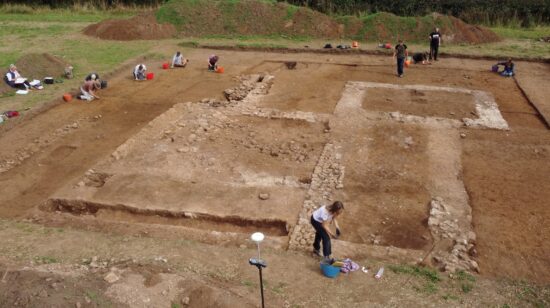
In archaeology’s small corner of the world, ‘compliance’ restricts us to technical processes. We cannot mature our experimental, engaged practice (which the overwhelming majority of archaeologists deeply care about) because there is simply no proper space for it in how the sector pays for itself or quantifies its own value.
When I co-founded DV in 2012, our community-backed and hybrid funding model was not initially an ideological choice; it was the only way to create space for experimentation when the existing system had no room for it. What that experience revealed is something that now seems obvious: innovation does not thrive under conditions of tick-box hegemony and constant justification. It requires time, flexibility, and the freedom to fail productively – and then iterate.
Compliance-based funding makes this continuity almost impossible. Learning from one cycle is lost before the next begins; relationships and communities that take years to build are abandoned when the funding ends. Everyone lurches from project to project, mistaking activity for progress, adopting buzzwords as missions, and mistaking those for purpose-driven, ‘good’ work.
Funder’s priorities should not be the determining factor of how a sector sees and defines the value of its intrinsic contribution, but that’s where we’ve all ended up.
Belief Built In
Full disclosure: this house feels very strongly that the survival of UK culture depends on funding systems designed around trust, learning, and long-term value.
Trust-based philanthropy begins by recognising that value is often emergent rather than predictable, and that innovation rarely follows a linear path. Rather than asking organisations to prove their worth in advance, it invests in their capacity to learn, adapt, and respond over time. What I love about this model is that the funder, and the funded organisation, focus their resources on the work. No time is wasted on disproportionate amounts of oversight.
Trust-based funding, supported by mechanisms such as flow funding and place-based investment, allows work to develop as a continuum rather than a series of disconnected episodes. Funders are asked to engage with and appreciate complexity rather than manage it away, and funded organisations are rewarded for honesty about what they are learning, including when things don’t work.







There are no comments on this post yet. Be the first!