This blog previously appeared as an article in The Archaeologist Magazine, Issue 125 | Summer 2025, pg 20-23
Archaeology stands at a crossroads, evolving from a discipline valued for research excellence to one increasingly judged by its societal impact. Brendon Wilkins introduces a practical framework that addresses this shift, delivering outcomes that simultaneously advance knowledge, engage participants, and strengthen communities.
In Simon Petherick’s memoir about working in the Central Office of Information during the 1980s – a ‘strangely dysfunctional government department’ tasked with explaining policy to the public – he describes a moment that perfectly captures the organisational angst wrought by a sudden change in professional purpose.
Attempting to motivate her dispirited colleagues, Sara, ‘a garrulous and talented arrival from ad-land,’ tells what would prove to be an explosive story:
‘A young man who worked in advertising in New York walked through Central Park every day,’ she began. ‘Each morning, he would pass a beggar sitting on the ground with a hat in front of him and a sign that read ‘I am blind’. The hat never contained more than a few bucks.’ One spring morning, the young man asked to make a slight change to the beggar’s sign. The next day, the hat was filled to the brim. ‘And what do you think the sign now read?’ Sara asked, with a triumphant glint in her eye. ‘It read: ‘It is spring, and I am blind’’.
The reaction from her colleagues was explosive. ‘Oh, the Scenes!’ writes Petherick, describing how the normally quiet Nicholas, the ‘least communicative and most reserved of the team’, erupted with anger:
‘The use of the English language to manipulate other people’s behaviour is abhorrent to me. There is absolutely nothing to commend in that story.’ As Petherick notes, ‘Here was the crux of the matter. Sara’s definition of effective writing implied a mission to create change. Nicholas and others felt that words should explain, not affect.’

Checking our live impact data dashboard in the field. Credit: DigVentures
Archaeology stands at a similar crossroads, evolving from a discipline defined by research excellence toward one that measures its worth through societal change. This shift mirrors how professional organisations position themselves on a spectrum between knowledge and creativity. Knowledge organisations (libraries, research institutions, and consulting firms) excel at systematically managing information to enhance efficiency and decision-making.
By contrast, creative organisations (design agencies, arts collectives, and innovation labs) thrive by developing novel approaches that capture new audiences, address unmet needs, or generate cultural impact. The archaeological profession must increasingly navigate between these identities, balancing traditional scholarly rigour with the imperative to demonstrate meaningful public engagement and social value.
But what if archaeology’s entire economic output could (and should) be both? Rather than choosing between scholarly rigor and public engagement, what if we could unite these organisational imperatives to simultaneously advance research, involve participants, and strengthen communities?
The first step would be to develop a social impact methodology anchored in empirical frameworks enabling practitioners to design and measure the full spectrum of their work – embracing creative programming without compromising scholarly integrity. Such a methodology demands clarity about fundamentals: why we exist, what change we’re creating, and who benefits. Unlike financial assessments with their standardised approaches, there is no ready-made framework archaeology can simply adopt from adjacent disciplines. The social value of archaeology often gets forced into ill-fitting models like ‘contingent valuation,’ which awkwardly asks citizens to assign monetary values to historic assets. According to this econometric approach, people would pay £7.80 per household annually to maintain pre-industrial high streets, and £6.31 for industrial-era ones. Clearly, something essential has been lost in translation.
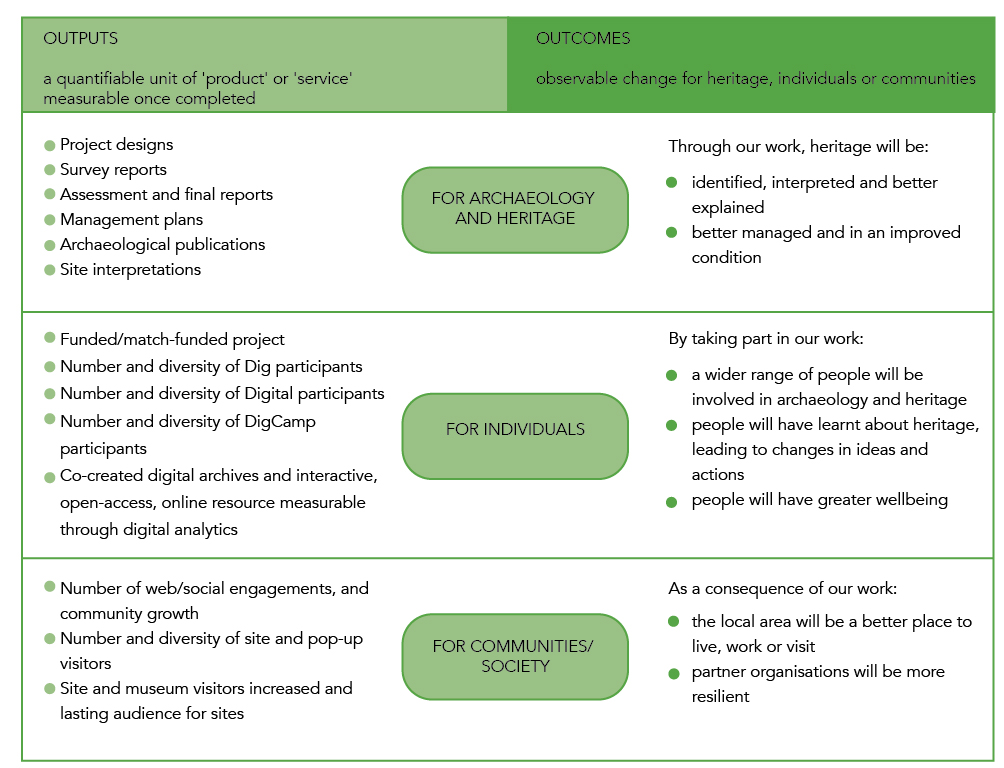
An excerpt from our Theory of Change, showing the links between outputs and outcomes, untangling intrinsic knowledge work (for archaeology and heritage) from instrumental creative work (for individuals, communities and society). Credit: DigVentures (with thanks to Fredheim and Watson 2023)
At DigVentures, we’ve drawn on innovative thinking from social impact investing to explicitly identify this essential something, devising a model that distinguishes between outputs (tangible products or services, like a field survey or public event) and outcomes (observable changes for individuals or communities). True impact measures the effect attributable to our work – evaluated by both breadth (how many people reached) and depth (how significantly their lives changed). These concepts form an operational framework capturing three dimensions: intrinsic outcomes for heritage (creating new knowledge), and instrumental outcomes for people (developing skills or improving wellbeing), and communities (revitalising sites and places).
Organised as a Theory of Change, this approach maps the full spectrum of potential impacts from archaeology, guiding project evaluation strategies with a five-level framework that progressively builds confidence in our claimed impacts. At Level One, projects outline anticipated benefits through a Theory of Change – a logical hypothesis connecting activities to outcomes. Level Two begins evidence collection, documenting positive differences for participants without necessarily proving causation, but confirming constructive contributions without negative side-effects.
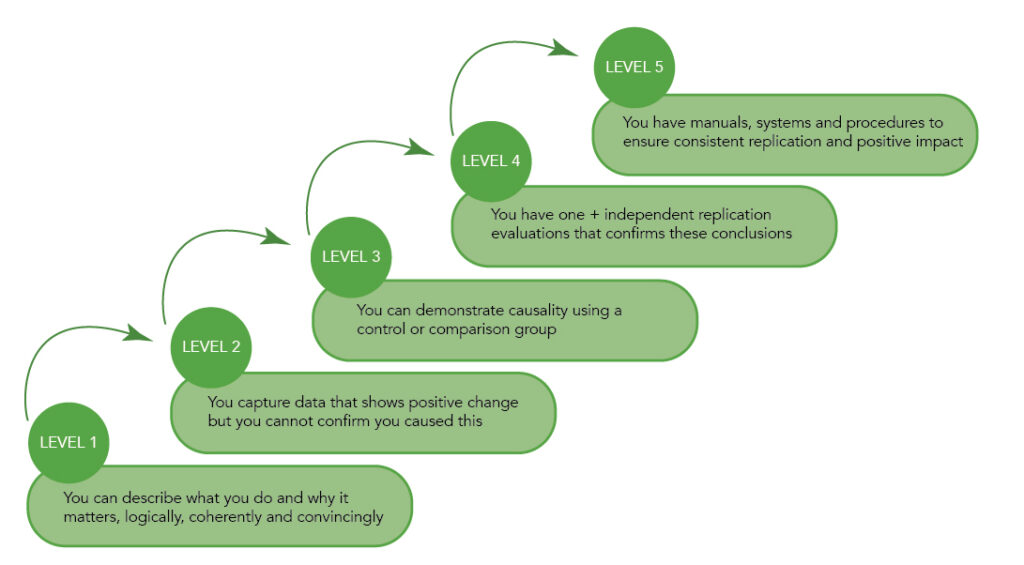
A five-level evidential framework guiding project evaluation strategies progressively building confidence inclaimed impacts. Credit: DigVentures (with thanks to Fredheim and Watson 2023)
As evaluation becomes more rigorous at Level Three, we demonstrate that positive changes occur specifically because of the project by comparing results with similar initiatives. Level Four introduces independent verification, ensuring observed benefits aren’t the result of confirmation bias or overly optimistic interpretations. Finally, at Level Five, the project becomes a replicable model with robust documentation and procedures, allowing others to implement it with confidence of consistent positive impact. What makes this approach powerful is its built-in feedback loop. By measuring each outcome against our five evidential steps, we prove that positive changes result from our work, not coincidence.
This framework came to life in our ‘Unloved Heritage?’ project in Wales, working with teenagers from Valley Kids Youth Group in Treherbert, Rhondda Valley. Living in the shadow of the former Fernhill Colliery, these young people connected with their industrial heritage through multiple creative channels – filmmaking, 3D modelling, archival research, and digital mapping – ultimately producing a Minecraft reconstruction of the demolished colliery. The project revealed how social impact operates on two dimensions: scale (how many people reached) and depth (how profoundly lives changed). By interweaving deep community engagement with rigorous archaeological documentation and participatory programming, we demonstrated that archaeological practice can simultaneously serve both knowledge creation and creative impact, successfully embodying both organisational imperatives without compromising either.
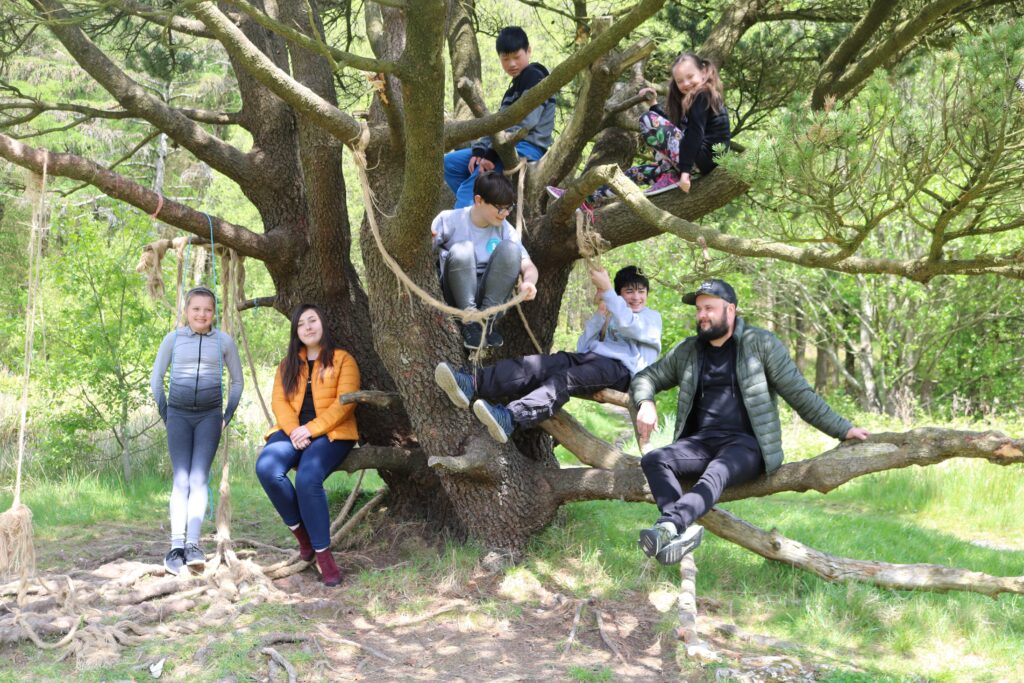
‘Unloved Heritage?’ Teenage participants from Valleys Kids youth group in Treherbert, Rhondda Valley. Credit: DigVentures
While small-scale initiatives like the Rhondda Valley project demonstrate what’s possible in focused settings, what about major infrastructure developments where millions are invested in archaeological programs? As part of the Access+ post-excavation team working with HS2, we’re addressing this challenge by adapting our methodology to align archaeological work with broader goals for national growth. Our approach begins with a comprehensive baseline review, mapping archaeological activities to strategic objectives through a customised impact matrix. This creates clear pathways between specific archaeological work and broader societal outcomes.
This dynamic framework enables us to design post-excavation initiatives that deliver both intrinsic and instrumental benefits. Live data dashboards identify what’s working, allowing teams to adapt strategies for different communities and scale successful interventions while work is still underway. Perhaps most valuable is the continuous learning cycle this creates across partner organisations. Rather than waiting until project completion to assess effectiveness, we make evidence-based improvements throughout the project lifecycle. Each intervention becomes informed by previous results, helping us progressively climb the evidential impact ladder and maximise the social value of archaeological work at every stage.
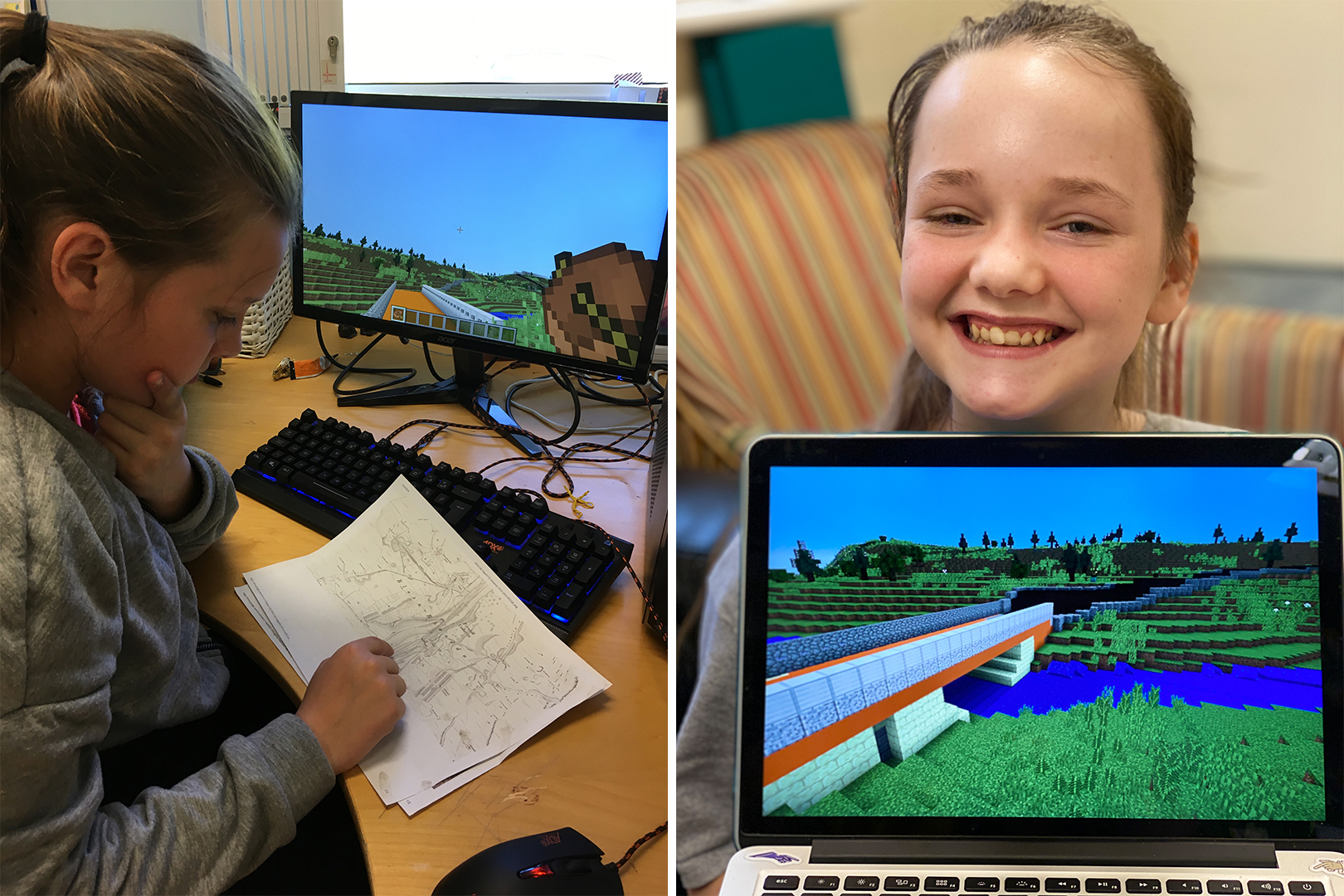
Valleys Kids used historic maps and documents to accurately recreate the houses, roads, mineshafts and colliery buildings in Minecraft. Credit: DigVentures
Which brings us to the ultimate ‘why’ of impactful archaeology. With increasing pressure on public expenditure and escalating demand for landscape transformation, evidencing our impact is becoming an existential necessity. A clearly articulated process for measuring social value allows us to get ahead of this debate – building on established frameworks to demonstrate both immediate and long-term benefits of archaeological investment. This approach means we’re not just documenting what we do; we’re actively shaping and maximising the value we create for society. It connects our work with government priorities through iterative steps that link policy objectives to our daily practice, whether that’s traditional knowledge work like analysing a pot sherd or creative engagement like producing a televised interview.
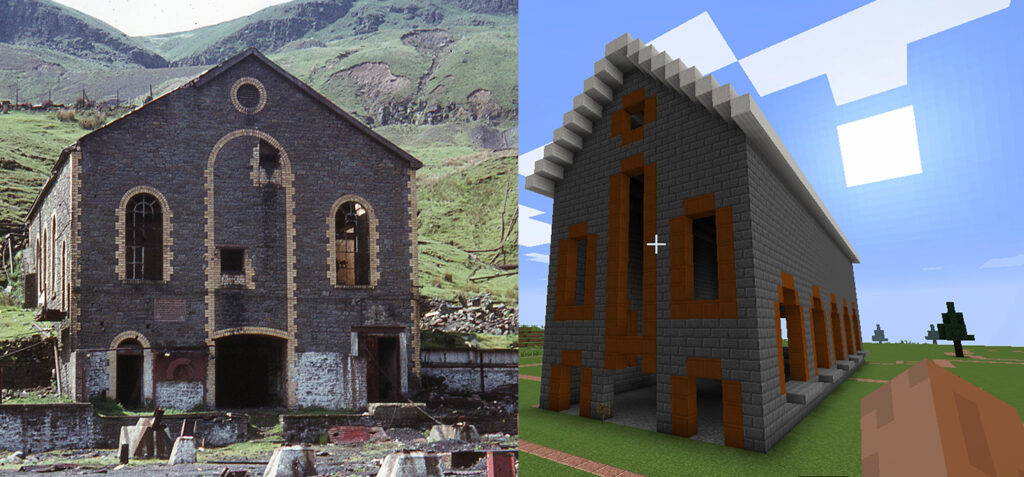
Fernhill Colliery’s winding house as it once stood (left), and reconstructed brick bybrick in Minecraft (right). Credit: DigVentures
In light of this insight, and returning to where we began, what should we now make of the tale of the apocryphal Adman? Whether you identify as a mild-mannered Nicolas, driven to distraction by an apparent war on scholarly discipline, or a garrulous Sara, whose creative flair seems unencumbered by scientific process, the objective ‘view from nowhere’ – personified perhaps by the blind man – simply doesn’t exist. Designing and evaluating for impact demands that we bridge these two worlds, delivering substantive public benefits that match the quality of our scientific practice. By embracing both knowledge and creative imperatives, we enhance archaeology’s capacity to resiliently serve individuals, communities, and our own institutions. It is spring, after all. And I’m an archaeologist.
For references and further reading, search Digging the Crowd.




There are no comments on this post yet. Be the first!