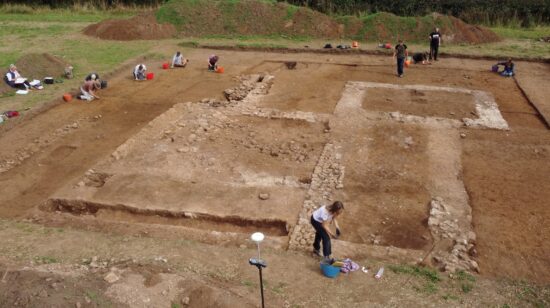
Social Impact Archaeology unites research rigour, work quality and knowledge creation with public participation
Since we launched in 2012, DV has pioneered a collaborative approach we call Social Impact Archaeology. Grounded by sophisticated evaluation and evidence, 'social impact archaeology' is the change we make for beneficiaries of our work, including people, places and the historic environment. Often these changes are outcomes desired by our project partners, such as businesses, organisations or government.
Archaeology can do more than answer a planning condition
Engaging with archaeology has transformational power in people’s everyday lives, and is a vector for front-line outputs including knowledge creation, protecting the historic environment, individual health and well-being, and community cohesion. To date, understanding these impacts has been difficult because evaluation of social value public benefit from archaeology has not been rigorously pursued by the sector.
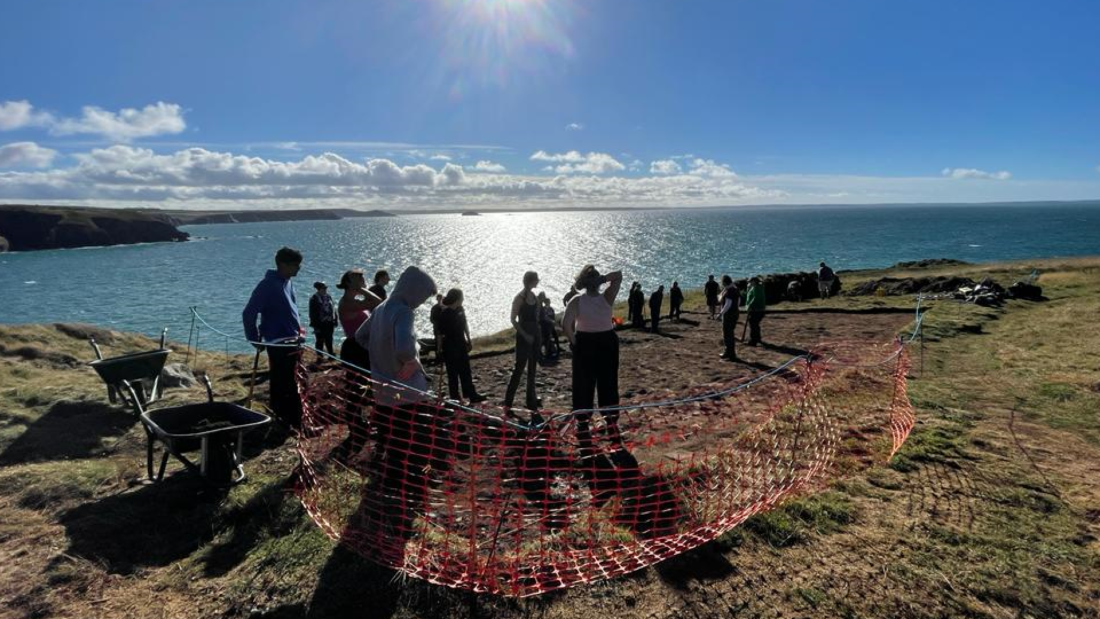
Archaeology can change lives, improve communities, and move places towards a more sustainable future
DV has designed a sophistcated evaluation model that answers this challenge: evidencing the change we make through our work, grounding results in real time whilst projects are in motion, ensuring that activities can meet demand and achieve the best possible outcomes.
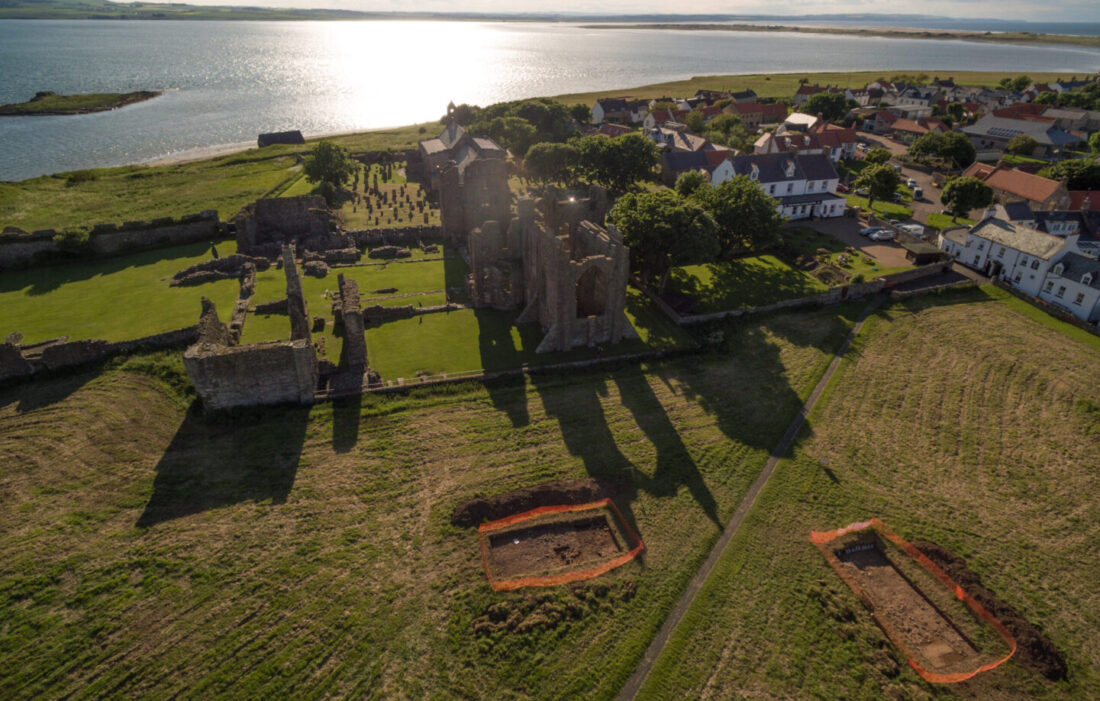
How We Evaluate Social Impact
We’ve developed a model with three important pieces: a Spectrum of Engagement, Theory of Change and Standards of Evidence framework. Rapid feedback of these results, drawing on rich quantitative and qualitative data, helps us understand our impact in real time and ensures that ‘community’ and ‘archaeology’ are equally important.
Spectrum of Engagement
Understanding audiences and how to build them is at the core of our work. Having multiple channels, or ‘ways in’ for people is essential to impact-driven work, because the spectrum promotes increasing levels of participation and empowerment from passively consuming, spectating, or ‘being told’, through to active collaboration, co-production, or ownership. We map out the different ways both digital and ‘in person’ audiences can be involved with our work as a first step.
Theory of Change
Our theory of change joins the dots between activities, outputs and outcomes, collecting these into three impact pillars linking outcomes for heritage, participants, and communities. Social impact archaeology can therefore be seen as a logic model or process built to improve our knowledge of the historic environment through outcomes for heritage; benefit the communities and individuals who take part as outcomes for participants; and increasing the awareness and amenity of sites and visitor attractions as outcomes for communities.
Standards of Evidence
Our Standards of Evidence framework provides the surety that we are achieving the best possible outcomes for people, places, and the historic environment. This can be thought of as ladder with five ascending levels measuring whether projects are responsible for observable changes. This helps with collecting the correct evidence to determine how much change can be attributed to project activities specifically, giving practitioners, as well as clients, confidence that their efforts have been successful.
A Roadmap for Better Social Impact and Public Value in Archaeology
Our model is the first methodology of its type ever to be published in archaeology, as part of the 'Digging the Crowd: the Future of Archaeology in the Digital and Collaborative Economies' research project