
How to eat like a Roman this holiday season
One of the best things about holiday season is the food. And for history lovers, it’s a chance to get a taste of the past – because December was party season for the Romans too.
Around the same time of year, ancient Rome came alive for Saturnalia, a raucous mid-winter festival filled with food, drink, song, dancing, games.
Originating as a farmers’ festival on 17th December, it grew in duration to become a seven-day event culminating on December 23rd with Sigillaria – a day of gift-giving.
This was followed by the celebration of the winter solstice and birth of the the sun god, Sol Invictus, on December 25th – marked by chariot races.
As the Roman Empire converted to Christianity, these festivities changed too: 25 December became a holy day, and from AD 336 Christ’s birthday was commemorated on 6 January. That was until AD 354–60, when the first reference is made to it being celebrated on 25 December, and parts of the winter festivals were brought together into a new celebration: Christmas Day.
While we don’t know of specific dishes unique to Saturnalia, we can make a pretty good guess about what is likely to have featured on the menu based on knowledge of the festival, the Roman winter diet, and popular recipes recorded by Roman writers, including wheat bread, pork, winter vegetables, and honeyed desserts or seasonal fruit. Oh, and of course, wine.
So, for anyone who wants to add a little bit of history to their holiday feast, we’ve rounded up some of our favourite Roman recipes for you to try this Christmas.
1. Cato’s Sweet Roman Globi
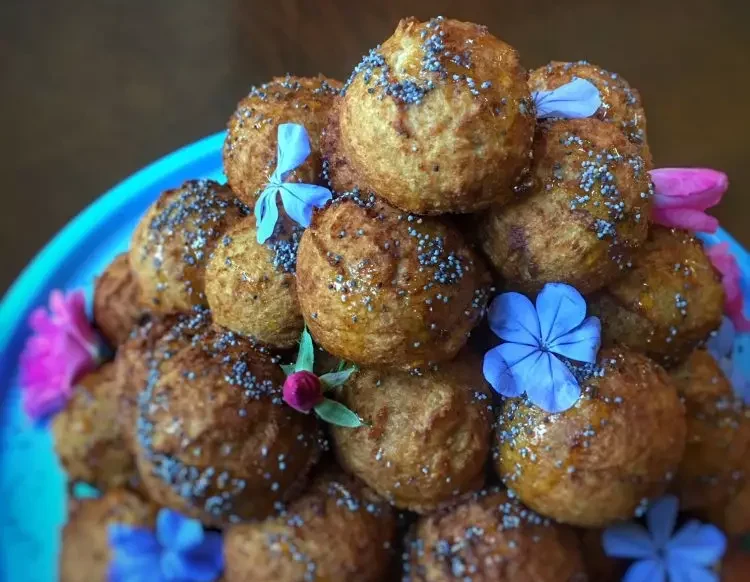
Source // Tavola Mediterranea
These deep-fried, honey-soaked, ricotta-filled doughnuts are mouth-wateringly good. To make them, you’ll need to make a dough using ricotta, wheat flour, and eggs. Once it has risen, roll them into 1 inch balls, deep fry until golden, and drizzle with honey and poppy seeds.
A full translation of the recipe is given by Farrell Monaco in Tavola Mediterranea.
You can also try a spelt flour version suggested by Historical Italian Cooking, or get creative and add other toppings inspired by ancient Rome, such as cardamom, cinnamon, and more.
2. Roman mulled wine
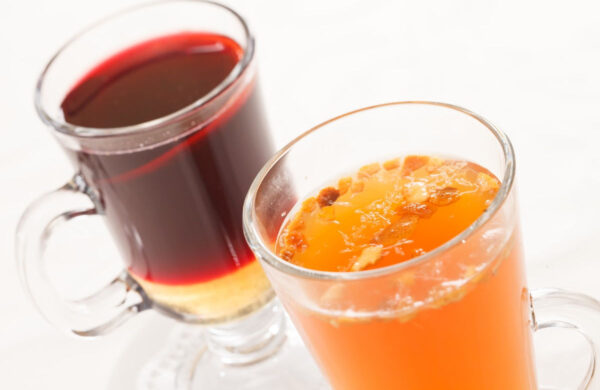
Like a festive glass of mulled wine? Make it Roman by trying Conditum Paradixum – an incredibly sweet, luxurious wine flavoured with pepper, saffron, and bay. To make it, you’ll need white wine, honey, bay leaves, fennel seeds, black pepper, saffron, and raisins or dates.
While it can be drunk straight, Romans would usually dilute their wine, but we’ll leave that decision to you!
A full translation of the recipe and testing notes is given in Pass the Garum.
3. Catius’ saffron sauce
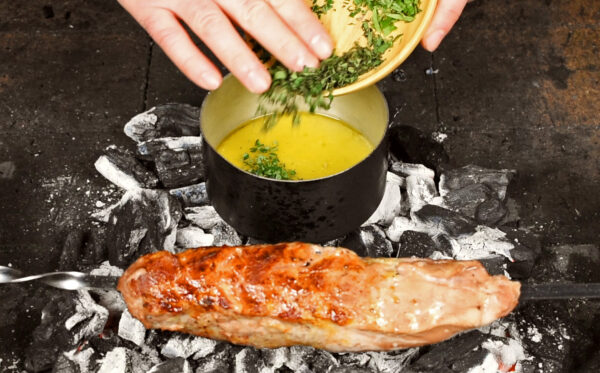
Source // Historical Italian Cooking
This sauce would most likely have been poured over pork – a typical dish enjoyed during Saturnalia. However, it’s so delicious you could pour it over any of your favourite thing to roast, be it meat, fish, or vegetable.
Taken from a poem in Horace’s Satires, in which the cook Catius describes a fantastic sauce that he invented, it’s silky, rich, and it’s deep yellow colour has the capacity to turn pretty much any dish to proverbial gold.
To make it, you’ll need: virgin olive oil, saffron, merum (sweet white wine), minced aromatic herbs (celery tops, coriander, dill, or parsley were all commonly used in ancient Rome), and muria (brine or fish sauce). Mix all the ingredients except the saffron together and bring to a boil. As soon as it bubbles, add the saffron, remove from the heat and allow to cool. Finish by stirring in more virgin olive oil.
A full translation of the recipe and testing notes is given by Historical Italian Cooking.
Let us know if you enjoy any of the recipes – and feel free to recommend more Roman recipes you’ve tried in the comments!








There are no comments on this post yet. Be the first!