This year, DigVentures has busy been helping communities all over Britain to investigate the incredible history on their doorstep. From the prehistoric to the Tudors, together we’ve made some remarkable discoveries. Here are some of our top moments…
This year, nearly 10,000 people joined us, in-person and online, to share the love for archaeology! From the Cotswolds to North Ayrshire, DigVentures has been helping to connect communities across the UK with the archaeology lying below their feet. We’ve seen prehistoric promontory forts, early medieval monasteries, Tudor castles and more, but we’ve managed to narrow down our BEST finds into this handy list, just for you.
1. A Mammoth Graveyard
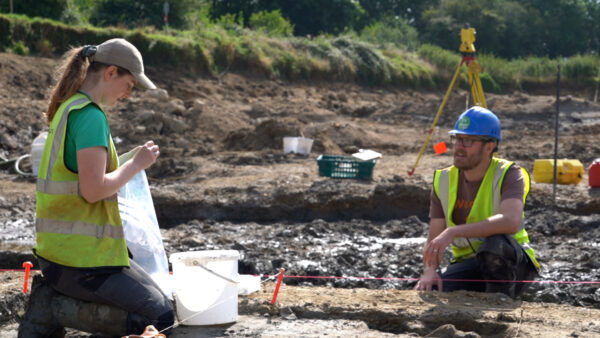
News about our secret ‘mammoth project’ has finally been announced by the BBC, which means we can finally spill the beans: for the last two years we’ve been excavating an extraordinary site near Swindon, where we found the remains of multiple Ice Age mammoths. What’s really exciting is that these 200,000 year old Mammoth remains were found side-by-side with stone tools, which proves these animals were interacting with Neanderthals. It’s super rare to find any evidence of Neanderthals in Britain, especially in association with mammoth remains, and even rarer to find ones that are as old as this. So naturally, we’ll be buzzing about this for years to come!
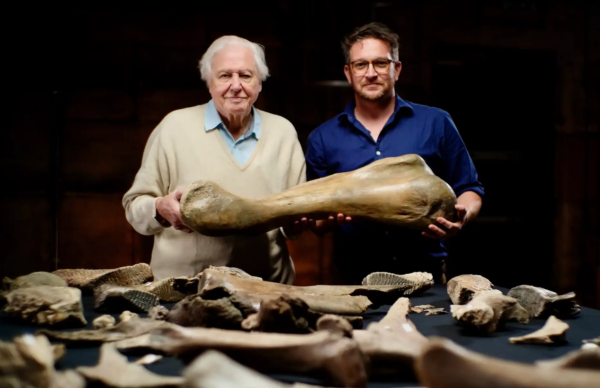
Don’t forget to check out ‘Attenborough and the Mammoth Graveyard’ on BBC1, 30th December 2021.
2. A series of high-status burials on Lindisfarne

Lindisfarne is probably most famous as the place where Vikings raided an early medieval monastery in AD 793. In September, our community came out to help us to trace the remains of this raided monastery. Our excavation area includes part of a cemetery that was used during the 8th, 9th and 10th centuries, which we’ve been digging over the past 5 years. But this year, we found some very unique burials that caught our attention. Two such burials were a chest burial and a possible shrine burial, found directly next to each other. The fact that these two individuals were awarded special burial rites suggests that they were important to the monastic community. But who were they? And what role did they play?
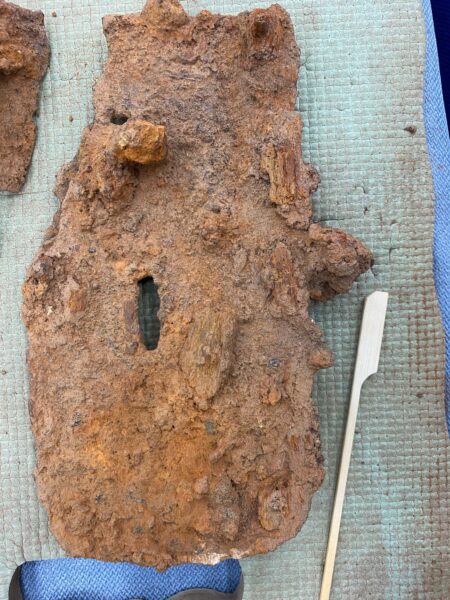
This lock plate, and dozens of iron nails, are all that’s left of what would once have been an impressive wooden chest. Only time and some proper archaeological investigation will tell us more about these extraordinary finds…
3. A massive promontory fort in Wales
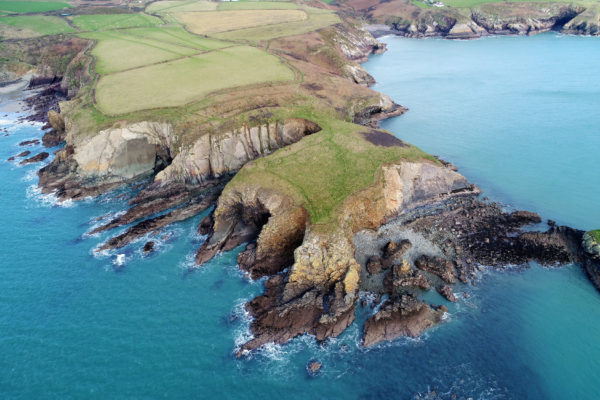
We added a new site to our roster this year when the team headed out to Pembrokeshire, Wales. It’s got sand, it’s got sea, and it’s got some sweet archaeology. The scheduled site of Caerfai Camp / Penpleidiau Promontory Fort sits proudly on the headland near St Davids, and while the date of the site is as yet unknown, it’s thought that it was first constructed during prehistoric times and used by past people as an agricultural resource, settlement, and place refuge in times of need. We headed over to investigate after the site came under serious threat from coastal erosion, and found some incredible things. Including evidence of metalworking!
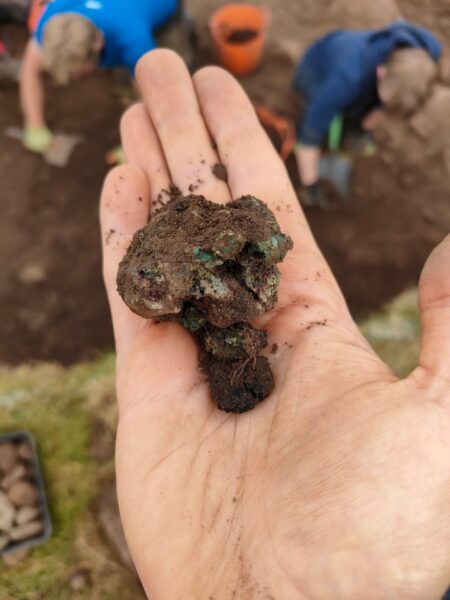
One man’s piece of copper slag is another man’s treasure, and the discovery of this lovely example at Caerfai tells us about what the people here might have been up to thousands of years ago. What archaeologist doesn’t love a bit of metalworking?
4. Some curious stone balls at Sudeley Castle

This year at Sudeley Castle, the team got to work investigating the remains of a rare Tudor garden that played host to some of England’s most famous monarchs. During our excavation, we found a series of decorative stone balls which are actually something called ballflowers. Ballflowers are a decorative feature used to embellish medieval buildings. You can sometimes see them carved into the mouldings around windows, arches, and mullions. If you like your English Gothic architecture, you’ll like these.
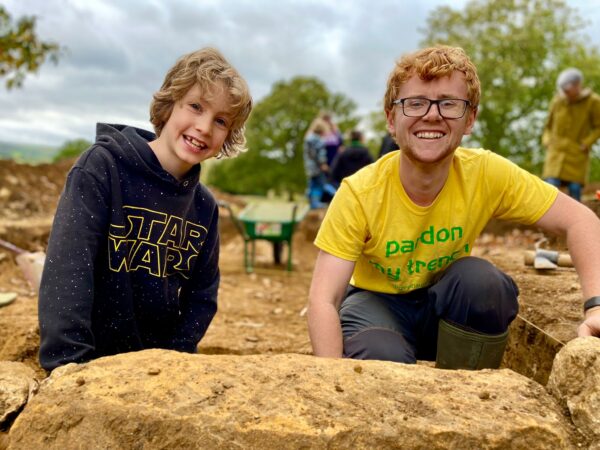
We see some great examples on standing medieval buildings, like Salisbury Cathedral. But what are were they doing in our trench? As you might know, the nearby Winchcombe Abbey was destroyed during the dissolution. This suggests that the walls we’ve found on our dig might actually be built from the ruins of Winchombe Abbey! Finding these balls has opened up a whole new aspect to our dig. Plus, they’re rather lovely to hold…
5. A surprising medieval castle in Shropshire
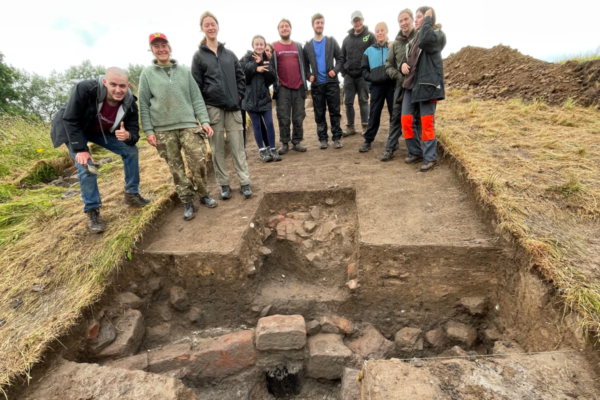
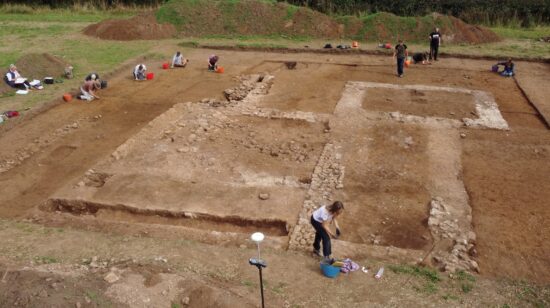
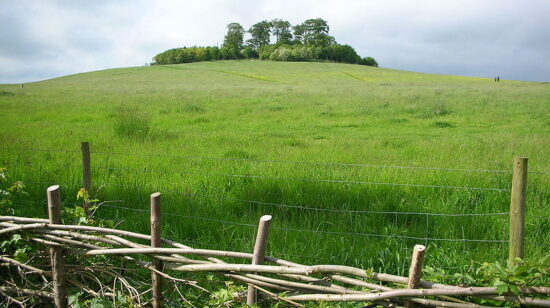
This July we were joined by both Venturers and students from Cardiff University to investigate an intriguing mound at Soulton Hall in Shropshire. As the dig progressed, the evidence was mounting. We found a substantial wall, some very nicely preserved wood and a plethora of medieval artefacts that added up to one thing: we were looking at a medieval castle. Potentially dating as far back as 1250 and nestled in-between Wren and Shrewsbury, this fortification sits perfectly in a strategic position.
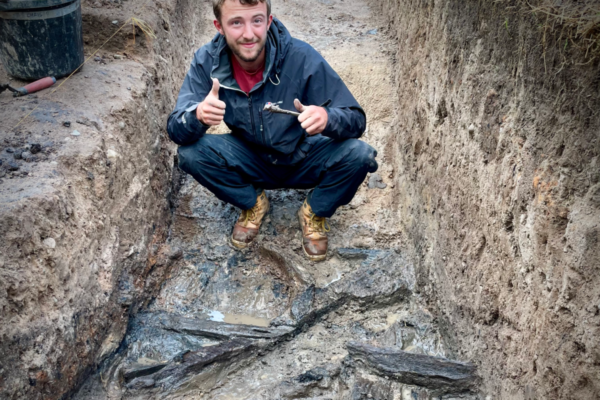
This castle might be small in size, but the implications are massive. We can’t wait to head back next year and find out more!
6. Two interlocked Roman brooches in East Yorkshire
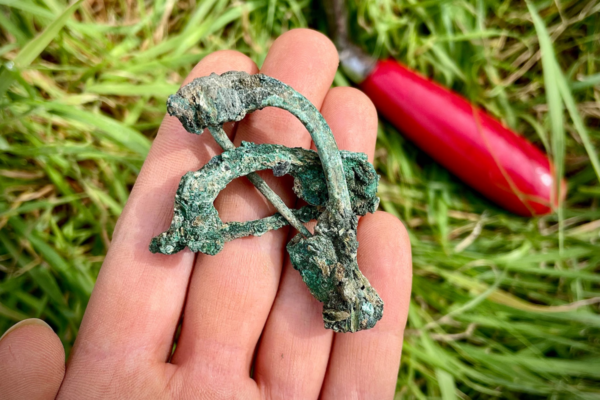
While digging through a Roman rubbish pit in East Yorkshire, Bill and Caroline came across this surprising find. What’s better than one Roman brooch? Two! After a bit of a clean in the finds room, it became clear these two brooches had been deliberately pinned together. The question on everyone’s mind is why? And why would they throw them out?
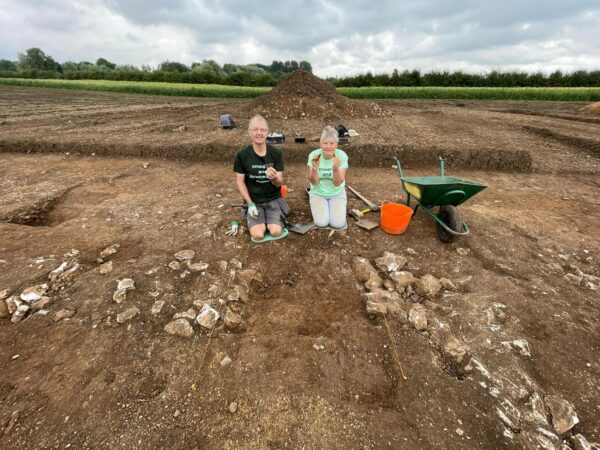
We’ll add it to the list of intriguing finds we’ve uncovered at this site over the years.
7. A slightly squashed medieval ampulla
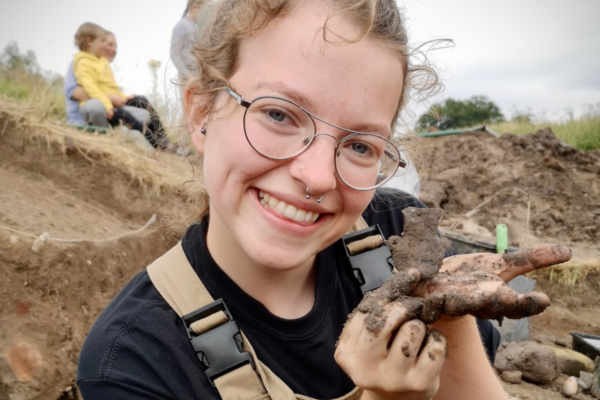
At Soulton Hall this summer, Emily found this squashed medieval ampulla! An ampulla is a little vessel that would have been used by pilgrims for carrying holy water, and could usually be purchased when visiting shrines of saints. While varied in design, these objects were all believed to carry the sanctity of whichever saint they were associated with. So, they were very precious to their owners.

We think this particular example dates to the 1300s, and when you look closely you can just about see a crossed shield on it. While it’s a shame for someone to have lost it so long ago, we can’t help but be grateful they dropped it for us to find!
8. An interesting doodle at Lindisfarne

Christina gave a shout of joy when she uncovered this unique find on Lindisfarne this year. Over the last few years, we’ve found some amazing early medieval carvings here, but this little carving captured the hearts of everyone on site with it’s simplicity. The simplicity makes it feel so human, casual, and yet somehow urgent, compared to some of the more decorative pieces we’ve found.

So what does it mean? Is it a practice piece, made by an apprentice artist? A personal dedication to one of the island’s past residents? A piece of medieval graffiti? Or something else entirely! To be honest, we don’t yet know! We’re eagerly waiting to hear back from our experts, and gather more evidence.
9. Nearly 4000 sites in County Durham

This year we combined the powers of Artificial Intelligence and Crowd Intelligence as part of our new project, Deep Time. This innovative project, led by DV with partner ArchAI, aimed to explore the identification of archaeology at a massive scale, using LiDAR data and crowd intelligence to examine landscapes for archaeological features. Our crowd helped us train the AI to ‘see’ archaeology, and in turn we fed back cleaned-up data to help the AI learn.
So, how did it go? Well, overall the combined power of our Pastronauts and the AI uncovered a whopping 3670 sites in the Discover Brightwater study area, of which 2361 are potentially undiscovered new sites! We’re all super excited to see where this might go in future…
10. The boundaries of a medieval Scottish Castle
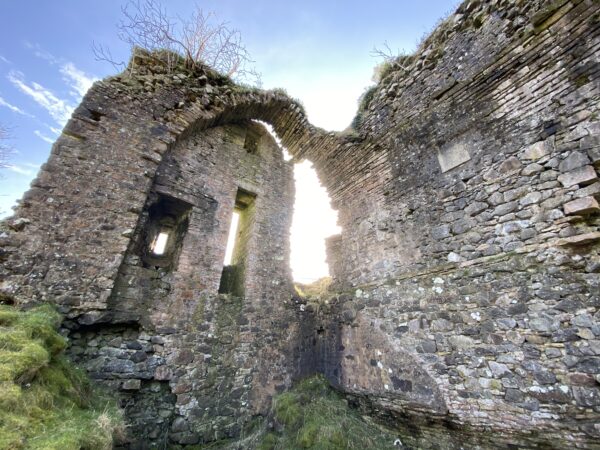
We took a brief trip to Scotland this year and spent a weekend excavating Glengarnock Castle in North Ayrshire as part of the Garnock Conections Project. This castle might have mysterious origins, but our test pits helped us understand more about the full extent of the site. Plus, we managed to squeeze in an online sword fighting lesson!

Targeting areas with potential earthworks or building remains, the team found some evidence of walls and ditches plus a scattering of interesting artefacts, including a lead musket ball and possible worked stone. We’re looking forward to finding out more about this hidden gem in time.
11. A carved bone comb from Lindisfarne

The third and final artefact from Lindisfarne to make our list is this incredible bone comb found by Cathy! Is this a cool find in itself? Completely. Does it get better? Totally. We noticed a series of tiny runic letters scratched along the edge that firm up this object as one of our most personal finds on Lindisfarne. These letters may be small, but they inspired some big questions: could this be someone’s name? Who were they? Did they use this to brush their hair? Their beard? One thing’s for sure, little finds like these really help bring the people of the past back to life.
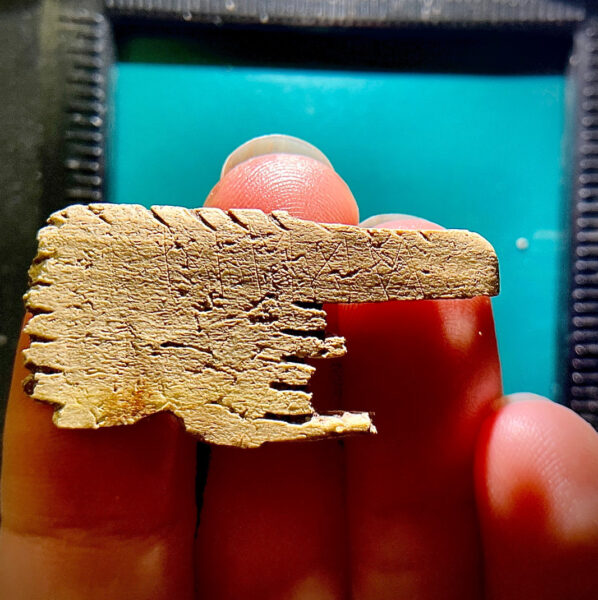
Have a go at reading the runes for yourself!



Comments (3)
A massive well done and thank you to the DV team for keeping us sane and entertained through what has been another unusual year! I particularly enjoyed the many interesting online lectures that you held and the DV dig updates particularly as I, like numerous others, couldn’t travel to attend the digs personally. Can’t wait to see the Mammoth Graveyard programme tomorrow ! Here’s to even more exciting discoveries and adventures next year!
Some great finds….certainly sparks my desire to join another dig in 2022!
Amazing year and many congratulations for doing so much during such a difficult year!!