In the past, life was ‘nasty, brutish and short’ and people rarely lived beyond the age of 40. It’s time to call out that nonsense, because it’s simply not true.
How long did people live in the past? If you hazard a guess, it’s probably somewhere into the early 40s. But that’s because we’ve all been raised on notions of the past being brutish, disease ridden and violent. Oh, and a bunch of quirky statistics. Seriously.
An archaeologist from The Australian National University (ANU) is set to redefine what we know about elderly people in cultures throughout history, and dispel the myth that most people didn’t live much past 40 prior to modern medicine.
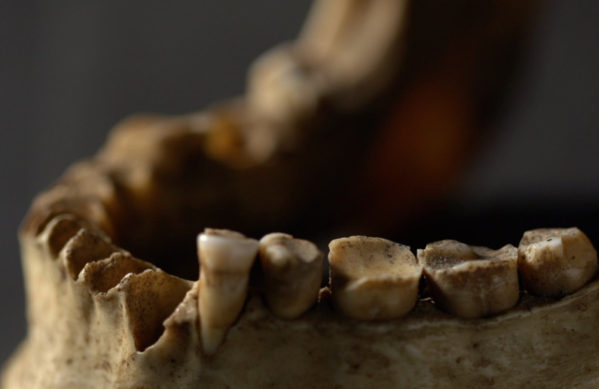
Christine Cave, a PhD Scholar with the ANU School of Archaeology and Anthropology, has developed a new method for determining the age-of-death for skeletal remains based on how worn the teeth are.
Using her method, which she developed by analysing the wear on teeth and comparing with living populations of comparable cultures, she examined the skeletal remains of three Anglo-Saxon English cemeteries for people buried between the years 475 and 625.
Her research determined that it was not uncommon for people to live to old age.
“People sometimes think that in those days if you lived to 40 that was about as good as it got. But that’s not true.
“For people living traditional lives without modern medicine or markets the most common age of death is about 70, and that is remarkably similar across all different cultures.”
Ms Cave said the myth has been built up due to deficiencies in the way older people are categorised in archaeological studies.
“Older people have been very much ignored in archaeological studies and part of the reason for that has been the inability to identify them,” she said.
“When you are determining the age of children you use developmental points like tooth eruption or the fusion of bones that all happen at a certain age.
“Once people are fully grown it becomes increasingly difficult to determine their age from skeletal remains, which is why most studies just have a highest age category of 40 plus or 45 plus.
“So effectively they don’t distinguish between a fit and healthy 40 year old and a frail 95 year old.
“It’s meaningless if you are trying to study elderly people.”
Ms Cave said the new method will give archaeologists a more accurate view of past societies and what life was like for older people.
For those in the three cemeteries she studied, which were Greater Chesterford in Essex, Mill Hill in Kent, and Worthy Park in Hampshire, she found a marked difference in the way male and female people of old age were buried.
“Women were more likely to be given prominent burials if they died young, but were much less likely to be given one if they were old,” she said.
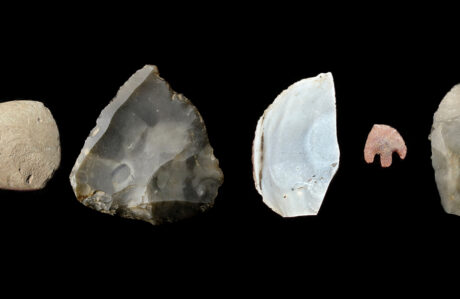
“The higher status men are generally buried with weapons, like a spear and a shield or occasionally a sword.
“Women were buried with jewellery, like brooches, beads and pins. This highlights their beauty which helps explain why most of the high-status burials for women were for those who were quite young.”
Ms Cave’s study Sex and the Elderly was published in the Journal of Anthropological Archaeology.
Archaeology in your inbox?!
Want to join a dig? Learn more about archaeology? Join our email list for a monthly digest of our most popular stories, plus alerts for any digs, events, or courses you can join.
Join the list
Written by Maiya Pina-Dacier
Director of Engagement at DigVentures, Maiya digs with a trowel in one hand, and a Twitter feed in the other. She loves finding new ways to get people involved in archaeology - online and in the field.


Comments (1)
I must admit that I always took the around forty death age with a large pinch of salt but for entirely the wrong reasons. I have traced my family history back to the early C17 and found my relatives on the whole, who survived infancy, lived pretty much the same length of time as they do now, so I assumed the around forty was an average, made lower by the higher rate of infant mortality. Just goes to show its never safe to assume!