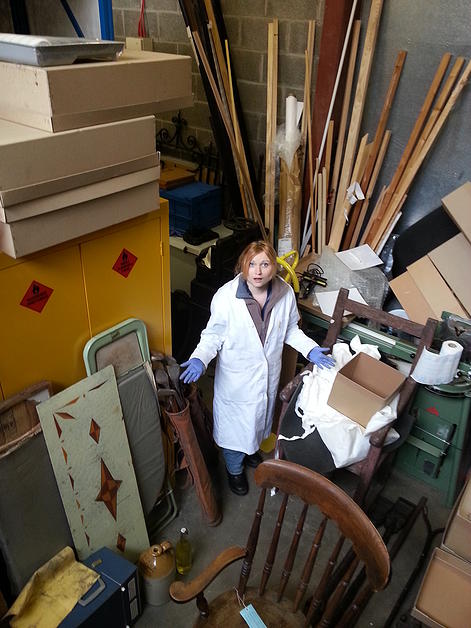
When an artefact is dug up after hundreds, or even thousands, of years, they often need immediate treatment to stabilize their condition and stop them falling apart.
Sara Brown is an archaeological conservator. She spends her life nursing ancient objects back to health and getting them ready for display in museums, long-term storage or for more in-depth research.
In this DigVentures mashup of Desert Island Discs and ‘A History of the World in 100 Objects’, we ask Sara to pick out her favourite artefacts and what they mean to her… Here we go!
1. My childhood fossil collection
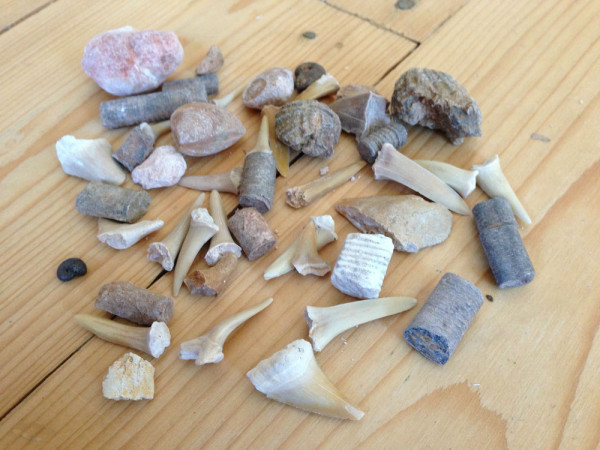
As a young child, I loved going fossil hunting with my father and my brother. The excitement of looking down and finding the remains of animals that lived millions of years ago at your feet compelled me to learn about the past – a passion stayed with me into adulthood.
I had already built a career as a legal secretary, but my heart stayed with history and museums. I completed a Certificate in archaeology at Bristol University, but quickly learned during my first excavation that digging wasn’t for me – it was the objects I wanted to work with. I discovered the world of conservation and have never looked back.
2. This porcupine quill
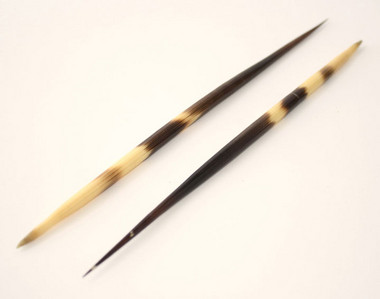
It sounds strange, but we conservators use a lot of different tools to get the job done, including porcupine quills. They’re perfect for removing soil and other burial matter from hard to reach places and they’re much softer than the dental tools and scalpels that I also often use, which reduces the risk of physical damage to the objects I’m working on.
3. A Roman curse tablet
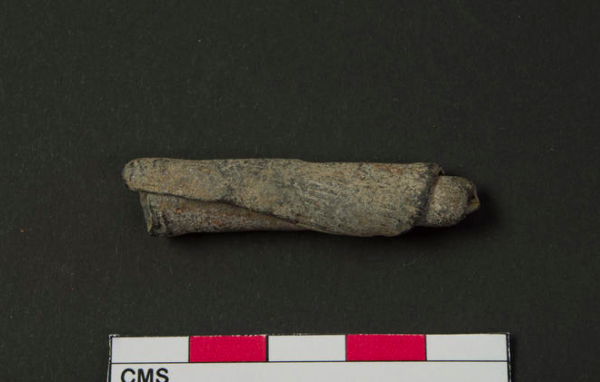
Opening and manipulating archaeological Roman lead scrolls is my speciality and I often get asked to do this in the hunt for potential curses. Each scroll I’ve opened has been unique in its shape and form. On some you can see evidence of tools that have been used to force the scrolls shut. Inside one lead scroll I found the number “14” written over and over again in Roman numerals. Was this some ancient curse? I couldn’t say…
4. A microscope
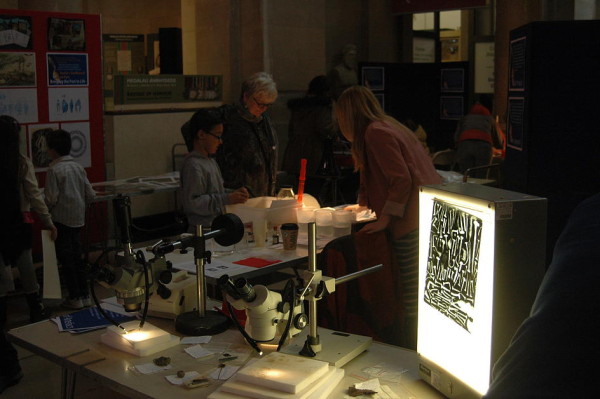
Most of my work is about revealing an object’s true shape and form, which gets hidden by corrosion and soil. It’s an integral past of the investigative process.
As a conservator, I count myself lucky that I get to work on all manner of objects from all different time periods, so choosing the one object I’ve most enjoyed working on is tough. Every object is unique and has it’s own challenges – there is no one thing I enjoy more than any other! For me, the object that has given me the most pleasure has got to be my microscope – it’s what lets me get up close and personal with them all.
5. This book

If I could only pass on one object from my life to my descendents, it would have to be my copy of Materials for Conservation by Velson Horie (2010). As a conservator, it’s my bible. There are many fundamental texts that conservators use, but this book has been a useful companion to me throughout my academic and professional career. It’s packed with loads of proper geeky information on polymer science and principals of conservation – essential knowledge for any conservator.
6. My desert island object would be…

It’s got to be the book, Materials for Conservation. If nothing else, I may finally get to read it all!
Always want to try archaeology? Now’s your chance? Our next dig is in July 2015 and you can join us!
You can find Sara Brown on Twitter @Sara__Brown_
Archaeology in your inbox?!
Want to join a dig? Learn more about archaeology? Join our email list for a monthly digest of our most popular stories, plus alerts for any digs, events, or courses you can join.
Join the list
Written by Maiya Pina-Dacier
Director of Engagement at DigVentures, Maiya digs with a trowel in one hand, and a Twitter feed in the other. She loves finding new ways to get people involved in archaeology - online and in the field.


There are no comments on this post yet. Be the first!