
Back in the days when archaeology was a developing discipline, it was – like so many things – dominated by men. Or so you would think if you only looked at Wikipedia’s archaeology page.
In fact, some of the discipline’s most significant early developments were forged by women. These are just a handful of some of the boldest, most kickass women from the early days of archaeology who were determined to push things forward in new and important ways.
Jane rigorously deployed new field recording techniques… this is a science people!
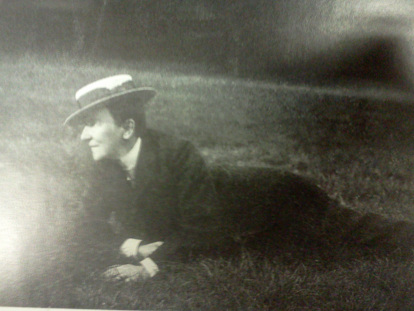
Jane Dieulafoy (1851-1916) was far from the typical vision of a French Victorian lady. She fought in the Franco-Prussian War along with her husband, traveled the world, and supervised their excavation at Susa, Persia, while labeling, mapping and reconstructing their finds – all brand new field recording methods back then.
Gertrude argued that heritage should not just be taken out of its country of origin willy nilly
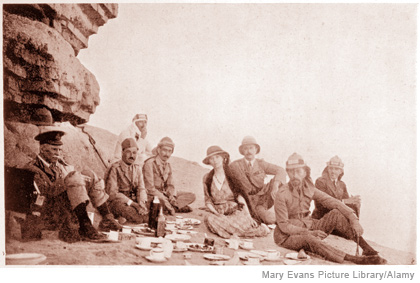
Often referred to as the ‘Mother of Mesopotamian Archaeology’, Gertrude Bell (1868-1926) excavated several sites in Turkey, Syria and Iraq. She became a political officer that helped shape the future of Iraq. As a Director of Antiquities in Iraq, she founded the Iraq Archaeological Museum in Baghdad in 1926 and was a pioneer in the movement to keep national heritage in its country of origin.
Harriet would not be stopped from going to fieldschool just because she was a girl

As an archaeology student, American Harriet Boyd Hawes’ (1871-1945) professors refused to support her joining the field school in Athens. But Harriet gave not a single f**k and went to Crete instead, which paid off when (among other sites) she later discovered Gournia, the first Minoan settlement ever unearthed. On site, Harriet supervised a hundred local workmen and women, and published her findings in an exemplary report that is still consulted today.
Maria applied maths to archaeology and brought the Nazca Lines to the attention of people all around the world
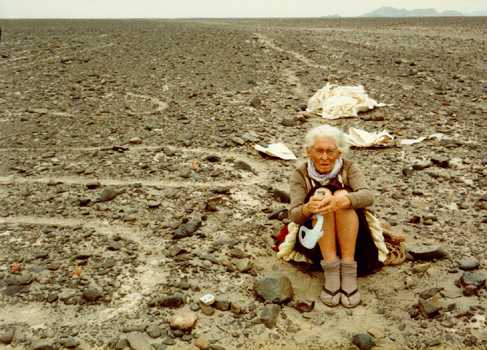
Maria Reiche (1903-1998) was a German mathematician, which came in handy when she began researching Peru’s Nazca Lines in 1940. After demonstrating their sophisticated mathematical accuracy, she published the theory that they related to astronomy. And she didn’t just bring them to Western scholarly attention – Maria helped protect them by getting them preserved and communicating their significance to people all around the world.
Kathleen became the leading archaeologist of the Neolithic Near East of her time

Starting out as the first female president of the Oxford University Archaeological Society, Kathleen Kenyon (1906-1978) worked in the field with Mortimer Wheeler and became the leading English archaeologist of the Neolithic Near East, and it was her work at Jericho that led to it being recognized as the oldest continuously occupied settlement in history at the time.
Tatiana did some awesome work which led to the Mayan hieroglyphs being decoded
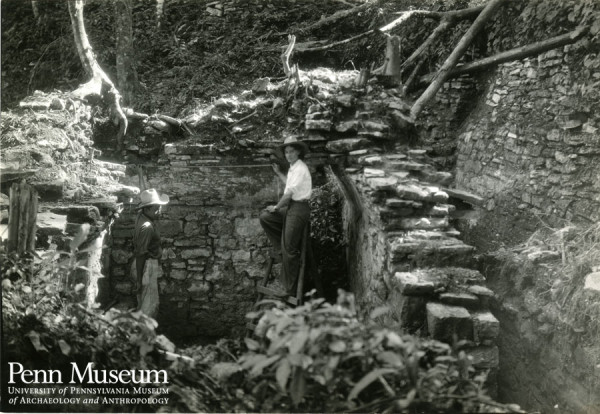
Russian-born Tatiana Proskouriakoff (1909-1985) started as an architect before turning her attention to the Mayan architecture, producing reconstructive plans and drawings. But it was Tatiana’s pioneering suggestion that the Maya hieroglyphs also contained dynastic histories, apart from calendrical information, that enabled the hieroglyphs to be deciphered.
Jacquetta argued that Minoan society was ruled by women… and pioneered a new kind of multi-media public archaeology

After digging in England, Ireland and Palestine, Jacquetta Hawkes (1910-1996) became a pioneering public archaeologist. Not only did she apply a more humanistic interpretation of archaeological evidence, but when she put forward the theory that Minoan society might have been ruled by women, she did it using every medium she could get her hands on – books, newspaper articles, TV interviews and radio.
These and many other women (seriously, there are loads – just check them out on TrowelBlazers) not only made it possible for the next generation to enter the world of archaeology, but changed the way the discipline was practised – stay tuned for more news about today’s pioneering archaeologists!
Archaeology in your inbox?!
Want to join a dig? Learn more about archaeology? Join our email list for a monthly digest of our most popular stories, plus alerts for any digs, events, or courses you can join.
Join the list
Written by Maria Pakholok
Maria loves all things archaeological. Having graduated with an MA in public archaeology, dug a Roman site in Macedonia, fundraised for the historic building of Lauderdale House and excited visitors at the Hands-On Desk at the British Museum, Maria’s true passion is bringing archaeology to the people – in one way or another. Twitter: @mariapakholok




Comments (44)
What about that great centeganarian Beatrice de Cardi!
Or Hetty Goldman!
And the Turkish archaeologist Halet Çambel..
And Jale Inan!
Or Dr. Elsa Schneider!
http://www.diggingthedirt.com/2010/10/11/dr-elsa-schneider/
A shocking oversight!
I would like to remind you about early archaeological excavation of Duchess of Mecklenburg in Slovenia on Magdalenska Gora.
regards
Miran Erič
A Hallstatt grave containing a cuirass, excavated near Stična by the Duchess of Mecklenburg in 1913 : the reliability of grave groups from the Mecklenburg collection by Dragan Božič
http://www.dlib.si/details/URN:NBN:SI:DOC-IF7ONQ9C
take a look at her site portret:
https://www.facebook.com/photo.php?fbid=10205938140548724&set=p.10205938140548724&type=3&theater
Dorothy Garrod.
Do not forget Mrs Katherine Routledge who excavated many of the giant statues laying at the Rano Raraku quarry on Easter Island in 1914
Johanna Mestorf, 1828 – 1909, first director of the Archaeologial Museum in Kiel/Germany in the end of the 19th century.
Elizabeth Wing. Zooarcheology.
Also add to this illustrious list, Gertrude Caton Thompson, excavator at Great Zimbabwe ruins circa 1930
Margit Kohl-Larsen, Mumba Rockshelter, Tanzania, 1934-38
Mary Leakey and Dorothy Garrod
and also Mrs Agatha Christie Mallown herself
. Edwards
@Miran, it is questionable whether Duchess of Mecklenburg should be on this kind of list. Her work in Stična and other sites were very bad, the documentation is awful – she was basically nothing more but a rich treasure hunter with a lot of money and a lot of free time. Her only goal was to retrieve as much objects as possible.
More important are the women who made it accessible for me now. A generation ago of being bullied. Kathleen Deagan made it possible for me to work as an equal with men today.
Marge Lambert in the US Southwest was a hard working archaeologist who excavated important sites and got very little recognition during her lifetime. She was a wonderful person that some of us had the pleasure of getting to know.
You omitted Honor Frost, one of the pioneers of underwater archaeology.
http://honorfrostfoundation.org/honor-frost/
what about Anette Laming Emperaire?
Archaeology, Anthropology, Geology and Geography have long attracted really amazing, talented women who often did not conform–or even forcibly revolted against–contemporary gender stereotypes. This is a great post, and I agree there are reallymanky, many more examples. And, c’mon, admit it, Jaquetta Hawkes was really hot!
😉
I love this post. A minute ago when I googled the life of an archaeologist, there was a list ‘perfect for men because’ :3
But now I’m reassured at least I won’t be facing extreme sexism in the field.
I hope to become an able and wonderful archaeologist one day.
Please add to this list two Iranian pioneer in the field of zooarchaeology and Paleolithic archaeology: Marjan Mashkour and Sonia Shidrang
Dr. Cynthia Irwin-Williams, excavated important sites in SW United States and Mexico in the 1960-80’s. I think she was the first women to be president of the the Society for American Archaeology. Died in 1990.
Hester Davis, Arkansas Archaeological Survey 1930-2014
Madame Christiane Desroches Noblecourt manque également. Elle a sauvé les temples égyptiens notamment d’Abou Simbel qui aurait été engloutis par les eaux du barrage d’Assouan sans sa détermination. Elle a passé le reste de sa vie à la tête du Département Antiquités du Musée du Louvre.
Marija Gimbutas should be here – an icon of neolithic and feminist archaeology
The only archaeologist of older times that Phil a me new was Margaret Mead and we spent time with her at the Museum of Natural History in New York that we study a lot in that museum.
We are missing Mary Leakey, one of the best!
Amelia V. Edwards who went on to found the Egyptian Exploration Society
Amelia B Edwards, bad typing
Yes certainly Mary Leakey sand Dorothy Garrod. Kathleen Kenyon was one of my teachers and I well remember Jaquetta.
Palaeoanthropologist Mary Leakey (1913-1996), who was regarded by many as “the brains” in the team with her husband, Louis and son, Richard. Renowned for discoveries and reports of early hominids, most notably at Olduvai Gorge.
Patty Jo Watson
Grete Mostny
And of course Mabel Bent (1847-1929) – travelled with her husband Theodore to dig in the E Med, Arabia and Africa! On his death in 1897, Mabel put together ‘Southern Arabia’ (1900), that classic, covering the couple’s investigations on the east and west banks of the Red Sea.
International Women,s Day ?
You do know that Gertrude Bell did,nt believe in suffrage.
I think Tessa Verney-Wheeler should be up there too: my father (Huntly Gordon) worked with her, Mortimer Wheeler and Kathleen Kenyon at Verulamium, Maiden Castle and in Northern France in the ’30s, and had a great regard for her. Both of them did a lot of work for which Wheeler (great man though he was) took the credit!
It is awesome to see so many women archaeologists added to the list in the comments!! (I love the Patty Jo Watson addition! What’s up Green River Valley!) Happy International Women’s Day!
Dee Ann Story, pioneer Texas archaeologist.
I add Wilhemina Jashemski. She pioneered Roman garden archaeology. She took the same technique that Giuseppe Fiorelli used on bodies in Pompeii and applied it to the roots of vines, trees and plants. In public areas as well as private & ornamental gardens. What we know about what Pompeiians ate & drank, we know because of her. She also was the first non-Italian permitted to excavate there. Her husband, Stanley, follwed her around photographing her work. The photos & her papers are in the Univ of Maryland archives. Her book, The Gardens of Pompeii, is a monumental work studied by students of Roman archaeology. Scavi di Pompeii now has vineyards because of her. And if you research her you will see she was always in a skirt. Unbelievable. I would have loved meeting her.
Elaine Bluhm Herold & Hattula Moholy-Nagy.
Don’t forget Iris Love, who discovered the Temple of Aphrodite in Knidos.
Worth remembering Nina Layard (1853 – 1935) who mainly worked in Ipswich – a poet, prehistorian, archaeologist and antiquary, who pioneered archaeological techniques, excavated an important anglo-saxon cemetery and prehistoric and paleolithic sites. In 1906 or 7 she was not allowed to give her talk to the Royal Society of Antiquaries (or be visible) because she was a woman, and stood behind a curtain while a male colleague gave it for her….