 2014 has been a year of incredible archaeological discoveries, hastened by the rapidly accelerating fields of underground mapping and no-dig techniques. But some of the most important and transformative discoveries could only have come about with a careful eye and a careful hand. Here’s our pick of the biggest-hitting stories we’ve published this year.

1. The 500,000 Year Old Engraving that Shows Humans Weren’t the First to Make Art
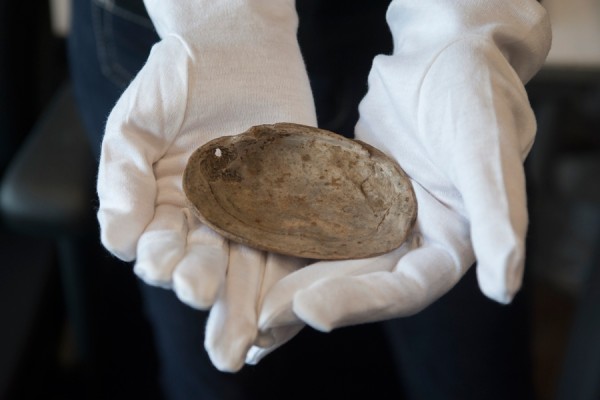
The earliest known example of geometric art was thought to have been made by Homo sapiens about 100,000 years ago. The discovery that Homo erectus engraved this shell half a million years ago has transformed our understanding of what has long been considered one of the defining traits of modern humans: artistic creativity.
The engraved shell sat in a museum in the Netherlands for over a century and remained unrecogonised until archaeologist Josephine Joordens noticed it while studying the collection when researching how Homo erectus used marine resources. Read more.
2. The 4,000 Year Old Meeting Hall that Could Be Europe’s Oldest Known Purpose-Built Political Precinct
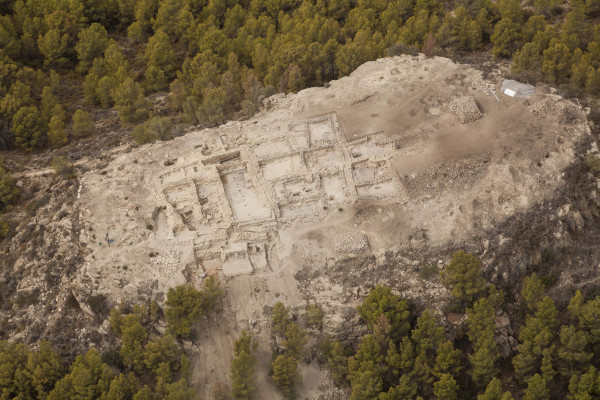
Archaeologists in Spain uncovered a densely populated urban settlement centred around a meeting hall capable of seating up to 64 people and believe this 4,000 year old complex could be one of Europe’s first purpose-built political precincts.
High up on a steep plateau, the site of La Almolaya is set within the Argaric territory – a civilisation that flourished in south-eastern Spain during the Bronze Age. The excavations also uncovered tombs containing a wealth of grave goods, including a silver diadem and four gold and silver ear dilators. Read more.
3. The Vast Array of Previously Unknown Archaeological Monuments Surrounding Stonehenge
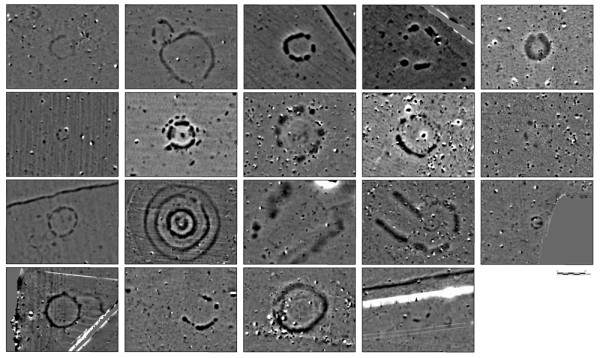
An unprecedented digital mapping project transformed our knowledge of the iconic Stonehnge landscape when it revealed a vast array of previously unknown archaeological monuments, including remarkable new discoveries at the world’s largest ‘super henge’, Durrington Walls.
The Stonehenge Hidden Landscapes Project, led by the University of Birmingham in conjunction with the Ludwig Boltzmann Institute for Archaeological Prospection and Virtual Archaeology, is the largest project its kind. Read more.
4. The Incredible Iron Age Site Uncovered By Finland’s First Crowdfunded Dig

Cold, remote and relatively unknown to archaeologists, few have excavated in Northern Finland. In fact, many believed it remained poor and unsettled until the Middle Ages.
During a three week excavation in Pirttitörmä, Northern Finland, a small team of archaeologists from the University of Oulu unearthed evidence of a rare Late Iron Age site, including jewellery, coins and a walled settlement, with a burial site just 1km away. Read more.
5. The Engimatic Viking Fortress of King Harald Bluetooth that Was Burnt to the Ground

South of Copenhagen, on the island of Zealand, archaeologists did something they hadn’t done for over 60 years: discover a new Viking fortress, and a massive one at that.
Measuring 145m from side to side, this is not just any Viking fortress, but one of the perfectly circular Trelleborg fortresses built during the reign of King Harald Bluetooth. And it seems to have been burnt to the ground. The discovery of this new Viking fortress is a unique opportunity to gain new knowledge about Viking war and conflicts. Read more.
Archaeology in your inbox?!
Want to join a dig? Learn more about archaeology? Join our email list for a monthly digest of our most popular stories, plus alerts for any digs, events, or courses you can join.
Join the list
Written by DigVentures
Fascinated by archaeology? DigVentures runs excavations that anyone can be part of. From Roman ruins and medieval castles, to Bronze Age monuments and industrial heritage, you can choose to dig alongside our team, help out in the Finds Room, take an online course, or become a Subscriber for even more ways to enjoy archaeology with our team.




Comments (2)
Some new facts about Harald Blootooth emerged recently as a small golden plate belonging to a Swedish
family turned out to be an archaeological sensation. The plate is probably a souvenir from the
funeral of the Danish King and it is dated to c. 986 AD. This story is really amazing as it was an
11y.o. girl who re-discovered the plate among the stuff left by her recently departed great-
grandmother.
http://www.naukawpolsce.pap.pl/en/news/news,402921,polish-family-treasure-an-archaeological-
sensation-in-sweden.html
https://www.academia.edu/9647410/A_unique_object_from_Harald_Bluetooth_s_time
http://www.naukawpolsce.pap.pl/en/news/news,402921,polish-family-treasure-an-archaeological-sensation-in-sweden.html