
Stonehenge is certainly one of the most famous sites built to mark the solstice, but it’s not the only one vying for the title of most ancient.
So as revellers gather to observe the solstice, we bring you five more of the world’s lesser known, but equally dazzling, solar sites from around the ancient world:
1. Chankillo, Peru (2,300 years ago)
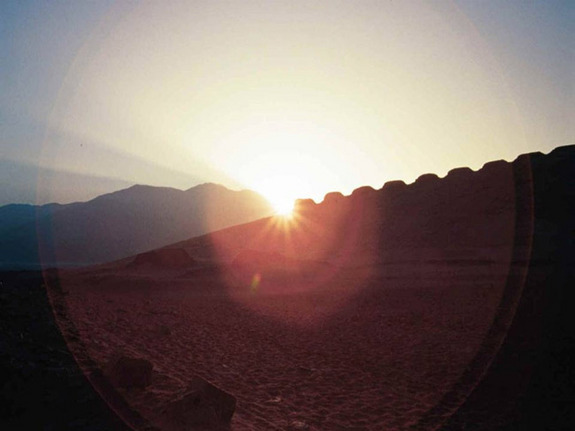
Possibly the oldest solar observatory in the Americas, this complex contains 13 towers running along a 300m ridge. Each day, the sun rises and sets in one of the gaps, taking about 10 days to move from one to the next.
2. Big Horn Medicine Wheel, Wyoming (2,000 years ago)
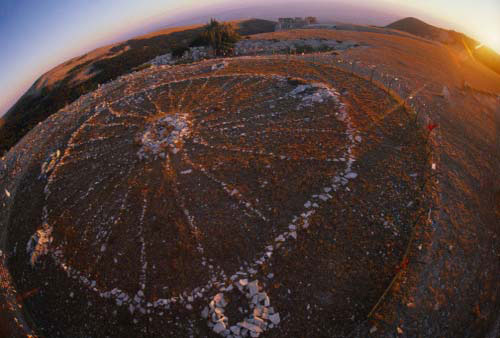
Thought to have been built by the Cheyenne people, this is one of the most striking and best-preserved examples of around 70 similar monuments known in North America. Measuring 80 feet (23 metres) across and made of 28 rock ‘spokes’, the line between the central stone and one peripheral cairn points to sunrise on the summer solstice, as does the axis of symmetry of the overall design.
3. Taosi, China (4,100 years ago)

The Taosi site is believed to be the capital of King Yao. According to Yao Dian [Canon of Yao], a classical Chinese text, he commanded astronomical officials to “make a calendar to delineate the regularities of the sun, moon, stars, and constellations, and to bestow respectfully to the people the seasons for observance”.
4. Mnajdra, Malta (6,000 years ago)
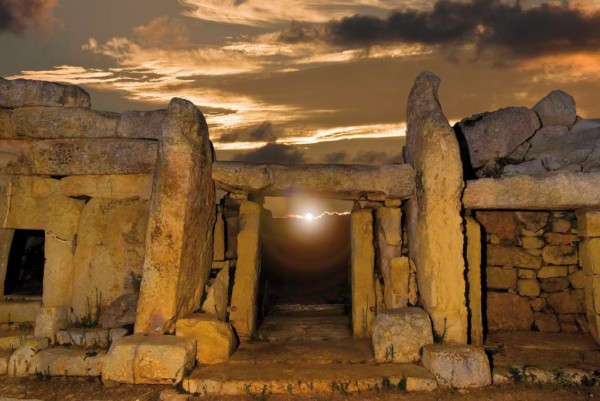
The ruins at Mnajdra are grouped into three sanctuaries, each composed of several conjoined buildings arranged in the shape of a figure of eight. One of the three temple complexes faces east and functions as a solar observatory – the sun shines through on the spring and autumnal equinoxes through the nested chambers to illuminate the altar.
5. Zorats Karer, Armenia (4,500 – 7,600 years ago)
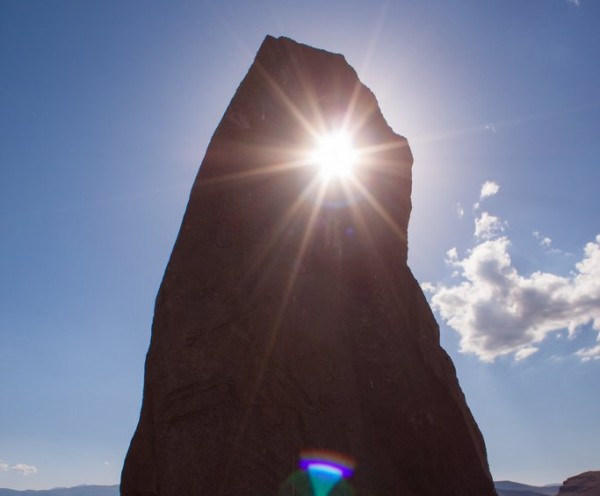
Like Stonehenge, this site seems to have started as a burial site or necropolis – a place acting as a bridge between earth and sky in the cyclical journey of life, death and rebirth. The site is also clearly aligned with the sun and – owing to the placement of small holes drilled through the monoliths and aimed to the horizon – possibly to other stars or planets.
Archaeology in your inbox?!
Want to join a dig? Learn more about archaeology? Join our email list for a monthly digest of our most popular stories, plus alerts for any digs, events, or courses you can join.
Join the list
Written by Maiya Pina-Dacier
Director of Engagement at DigVentures, Maiya digs with a trowel in one hand, and a Twitter feed in the other. She loves finding new ways to get people involved in archaeology - online and in the field.




There are no comments on this post yet. Be the first!