The connections forged by two early medieval saints link our present day communities. Rediscovering this shared history can benefit the people who live here today.
St David, patron saint of Wales, was lived during the 6th century. Although the details of his life have become shrouded in myth and legend, one thing we do know is that the bond between him and his protege St Aidan has influenced the development and identity of Wexford and Pembrokeshire for generations.
St Aidan is said to have sailed from Wexford to Pembrokeshire to become his pupil. When Aidan finally returned home to Ireland after years of study, he brought back with him more than just a Christian education: he also established his own monastery at Ferns, as well as a wider network of religious infrastructure modelled on what he had seen during his time in Wales.
Over the centuries, both Wexford and Pembrokshire developed distinct landscapes of pilgrimage, filled with churches, chapels, cathedrals, cemeteries, monasteries, holy wells, and other sites of pilgrimage.
These sites are a reminder that ideas, beliefs, and knowledge flowed between the churches of Ireland and Wales, across their shared Atlantic sea lanes. They are the physical remains of the ancient connections forged by Saint David and Aidan, and they capture the stories that link them.
Although many of the upstanding ruins date to later centuries, many appear to originate in the early medieval period. To date, they these landscapes of pilgrimage remain understudied, yet the sites within them have the potential to yield exciting new evidence of the cultural, historical, and religious links forged between the two regions over the course of millennia.
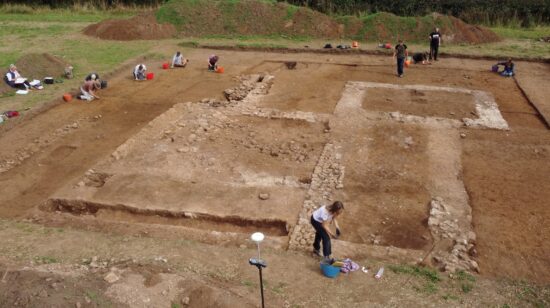
Geophysical survey and archaeological excavation can reveal the layouts and chronologies of these early medieval sites, in order to draw comparisons between Wexford and Pembrokeshire, and provide new information about these ‘ancient connections’.