We’re pleased to announce that Deep Time has been awarded an Honorary Mention from the prestigious European Union Prize for Citizen Science 2025 for our work with Natural England on the Citizen Science Local Pilots project. This award celebrates projects that demonstrate excellence in involving citizens in scientific research while delivering meaningful results.
This project was jointly funded through the Defra-managed NCEA programme, the NLHF Heritage Innovation Fund, Impetus, and supported by Natural England.
The prize is awarded to Citizen Science Initiatives (CSIs) supported by IMPETUS (Innovative Methods for Providing European citizens with Trusted and Useful Science). Deep Time was selected by IMPETUS in 2024 to be a part of their Accelerator Programme, which includes training activities, mentoring and financial support for CSIs. You can read more about
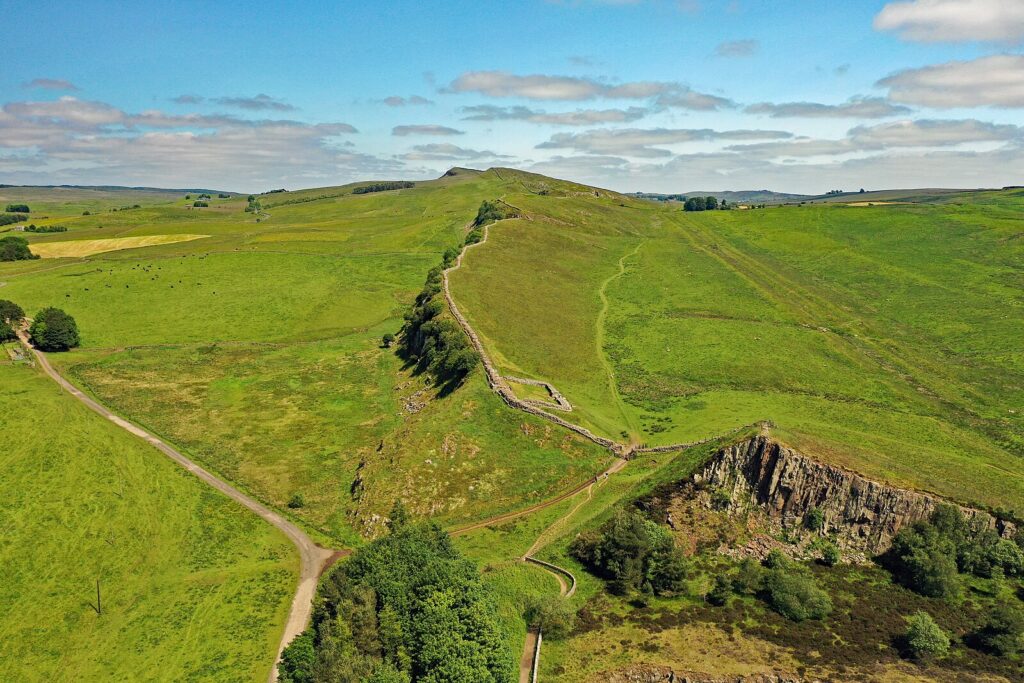
Hadrian’s Wall Corridor, where Futurenauts identified multiple habitat types in our mission with Northumberland Wildlife Trust.
AI That Works for Everyone
At the core of Deep Time, we believe that enhancing the world through artificial intelligence (AI) should work for the many, not the few. We believe that using participatory methods to bring public voices into the design and development of AI models is one way to create fairer, more accurate and trustworthy AI systems.
Instead of the future of our environment being decided by AI alone, Deep Time combines the power of collective and artificial intelligence to change how we understand and protect our landscapes.
Meet the Futurenauts
In 2024, as part of our work with Natural England, we teamed up with Living England to validate AI predictions based on Earth Observation data about where different habitats are likely to be found.
To test the accuracy of Living England’s AI-generated maps, we asked our citizen scientists, the Futurenauts, to create habitat maps using the Deep Time platform for comparison.
Our participants used three key technologies to do this:
- The AI-generated mapping provided by Living England
- The Deep Time Citizen Mapping Platform (a participatory Geographic Information System which allows participants to map and integrate various data sources)
- The Deep Time Online Training course (a learning management system empowering non-specialists to make scientifically valid contributions)
In just a few short weeks, this new approach produced remarkable results.
Over a thousand citizen scientists helped monitor more than 4,500 km² of land.
Working alongside major conservation organisations, including Wildlife Trusts, National Landscapes, and a National Park, they mapped over 58,000 polygons of varied habitat types.
The results were very exciting. Quality assessment of the data revealed the Futurenauts matched or outperformed the AI datasets in accuracy 88% of the time.

Meaningful impact and deeper connections
But Deep Time goes far beyond creating actionable data. By engaging directly with those most impacted by climate change – local communities – our work with the Citizen Science Local Pilots project filled critical data gaps and provided pathways to positive behavioural change.
Amongst our citizen scientists, 27% reported increased interest in local climate impacts and 22% felt motivated to join other climate initiatives. Nearly 25% expressed greater optimism about the future, and 24% noted reduced climate anxiety. Perhaps most significantly, 91% of participants stated they had been inspired to make further daily changes to have a positive effect on the environment, demonstrating a beneficial ripple effect resulting from participation.
By combining the collective intelligence of people and the power of digital technologies, our proven model has generated data for nature recovery and provided a tangible pathway for communities to engage in landscape transformation.

Thanks to Nesta, NLHF’s Heritage Innovation Fund, Impetus, Natural England, DEFRA and NCEA, particularly, Ellen Creighton, Andy Jefferies, Tabitha Roache Osborne and Oliver Grafton. Huge thanks to our tech partners, Martin Chapman Fromm and Andy Wilkinson at Humap, and Nick and Chris Barron at The Pixel Parlour.
Thanks also to Miranda Bane, Michael Pocock, Hugh Smith, Amy Stocking, Gavin Haughton, Living England, Becky Trippier, Amy Woodget, Rebecca Mein, Durham Wildlife Trust, North Pennines National Landscape, National Trust, Northumberland Coast National Landscape, Northumberland Wildlife Trust, Northumberland National Park Authority, NE Satellite Applications Centre of Excellence, ERIC NE, NICRE, and finally, to our amazing participants, without whom this work would not exist.
More about the European Union Prize for Citizen Science and IMPETUS
The full list of European Union Prize for Citizen Science 2025 winners
Ars Electronica organizes the European Union Prize for Citizen Science as part of the IMPETUS project. IMPETUS stands for ‘Innovative Methods for Providing European citizens with Trusted and Useful Science.’ The initiative honours, presents and supports outstanding projects whose social and political impact advances the further development of a pluralistic, inclusive and sustainable society in Europe.





There are no comments on this post yet. Be the first!