Natural England Citizen Science Local Pilots
Northumbria Region
DigVentures is taking everything we’ve learned about citizen science for the historic environment, and using it to help Natural England shape a national approach to citizen science for nature recovery.
Our team has created Deep Time: a crowdscience platform that enables citizens to rapidly and accurately search Earth Observation data for historic environments. From ancient monuments to long-lost watercourses, the sites they identify together support acts of land stewardship and nature recovery by organisations such as National Trust, turning public curiosity into environmental action.
Now, we’re working with Natural England to test a very simple idea: can citizens across the country also use Earth Observation data to identify and monitor different habitats and ecosystems? Can it make citizen science a more respected and practical option for use in regional and national decision-making? And can integrating the collection of natural and historic environment data lead to better outcomes for people and landscapes?
Our Northumberland-based pilot project will run in 2024 and 2025. We’re open to anyone who wants to receive updates, or is interested in taking part – no previous experience required!

Why does nature recovery need (more) Citizen Science?
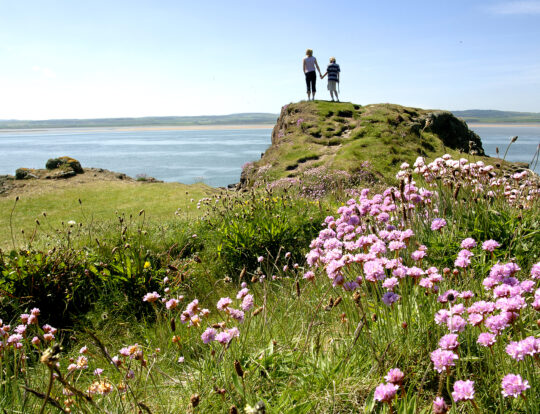
Citizen scientists have long been collecting valuable conservation and biodiversity data, from counting butterflies and recording sightings of endangered species, through to identifying important habitats and testing water pollution levels.
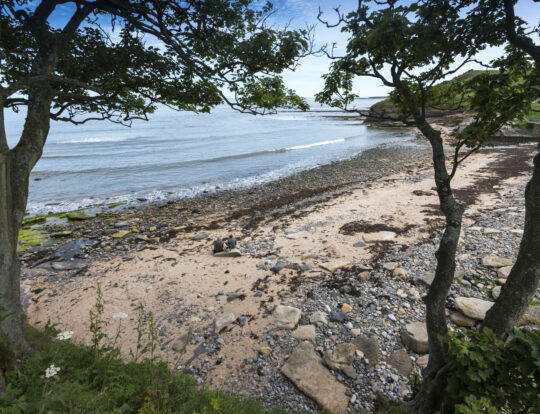
Credit: Gavin Duthie
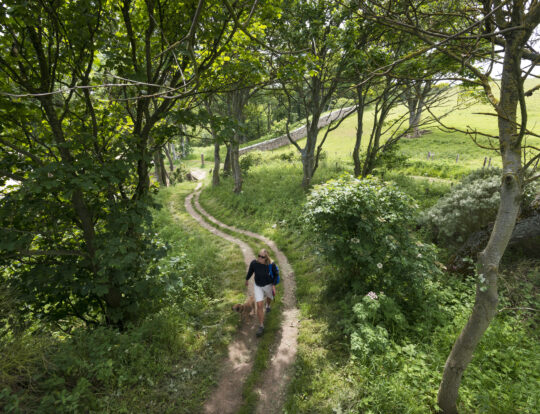
Credit: Gavin Duthie
Credit: Gavin Duthie
These projects regularly collect a vast amount of high-quality, highly specialised, and highly localised data. In fact, citizen science is already one of the main sources of environmental data in England.
And yet most of this data fall at the same hurdle: making the results nationally available and interoperable so that they can be used alongside other valuable information, leaving it under-utilised and under-valued.
The scale and speed of data collection required for monitoring ecosystems change at regional and national levels on an ongoing basis makes it clear: we need citizen science support. Even better, a growing body of research helps us to understand the very positive benefits citizens experience in return for their contribution.
And with Nature-based Solutions and Biodiversity Net Gain set to transform ecosystems monitoring even further, the need for up-to-date data to be systematically available is even greater, alongside the development of a regenerative model that ensures equity, democracy, trust and inclusion in the creation of these data.
The Department for Environment, Food & Rural Affairs (Defra) would like public study and the value of citizen science data to become a much more widely recognised, respected, and practical option for accessing data and evidence when working on nature recovery programmes.
The Citizen Science Local Pilots are testing models to help make this happen.
How does citizen science benefit people and society?
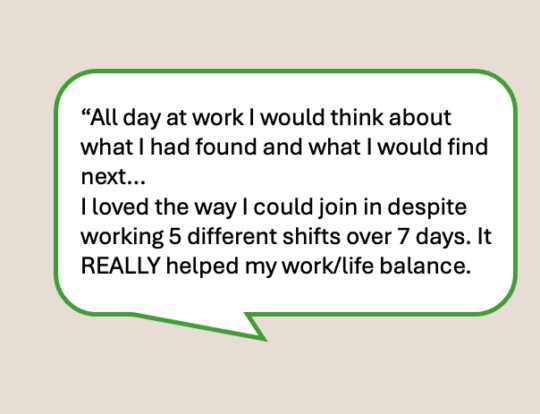
Quote from a Pastronaut (Deep Time participant)
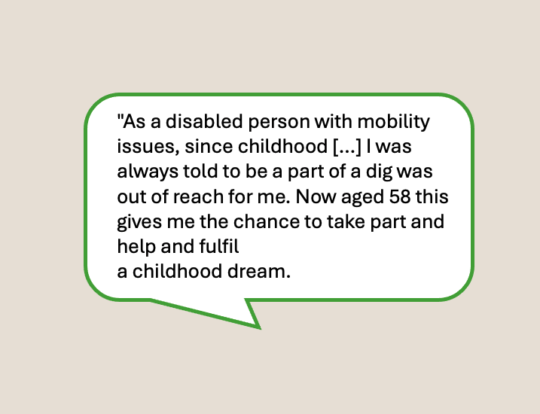
Quote from a Pastronaut (Deep Time participant)
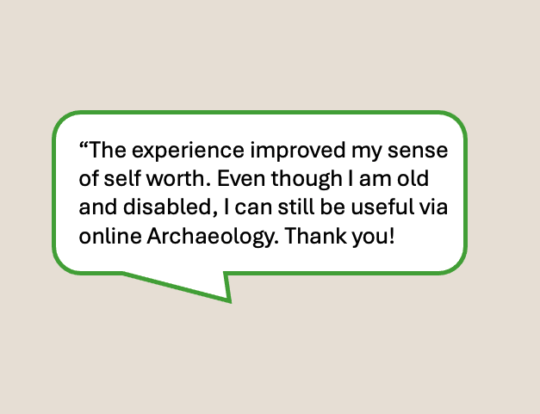
Quote from a Pastronaut (Deep Time participant)
One of the NCEA programme’s goals is to identify innovative and transformative ways of collecting, analysing and distributing data to ensure science meets the needs of policy and decision makers. Better data and evidence help government and society to:
- Understand our natural capital, how and why it is changing.
- Tackle pressures on the environment and the drivers of change.
- Take biodiversity and natural capital into account in decision making.
- Target action where it will be most effective.
- Evaluate policies and interventions to improve their effectiveness.
But citizen science isn’t just about the data: it can also be highly rewarding for those who contribute.
Learning, community, connection, sense of purpose and self-worth, enjoyment, and the ability to access and be part of something that makes a real difference to an issue you care about are all widely-cited by citizen scientists.
It also enables people who are affected by something to be part of the solution, and empowering people and ensuring inclusiveness is one of the UN’s Sustainable Development Goals.
What are the Citizen Science Local Pilots?
The Citizen Science Local Pilots project is funded by Defra’s Natural Capital and Ecosystem Assessment (NCEA) programme, and is delivered in partnership with Natural England. The NCEA was set up to collect data on the extent, condition and change over time of England’s ecosystems and natural capital, and their benefits to society.
In order to find the best ways of collecting and sharing Citizen Science data for national-level use, the programme is running a series of pilot projects in different regions.
Each pilot will collect real environmental data, with real environmental purpose. But at the same time, each pilot will also be evaluating different aspects and models of stakeholder partnerships and citizen science.
As well as questions around data quality, scalability, workflows and interoperability, this includes accessibility, inclusiveness, and the perceived benefits to people and wider society.
Anyone who participates in the pilots will be helping to create ecosystem baseline monitoring data, and will just as importantly be providing valuable learnings about how, when, and why citizen science can inform a national response to nature recovery. The project models also seek to understand the variety of stakeholders and relationships, as well as methods of communication and collaboration, that are needed to enable this work. These learnings can then be used to develop the programme further.
DigVentures is undertaking the Citizen Science Local Pilot project in the Northumbria region, alongside the Natural History Consortium who are leading the pilot in the Wessex region.
Our teams are each exploring different models of citizen science, as well as different models of co-design, built around Natural England’s themes:
- Convene
- Coordinate
- Engage
Combining our results and sharing our learnings will provide insights into how Natural England can further enhance the role and impact of environmental citizen science across England.
What will DigVentures’ Northumbria pilot involve?
The Northumbria consortium is led by DigVentures, alongside six regional partners: Durham Wildlife Trust, National Trust (Wallington), North Pennines National Landscape, Northumberland National Landscape, Northumberland National Park and Northumberland Wildlife Trust, plus our tech partners Humap.
Conceived as an experiment in understanding the potential of Earth Observation Data to be used for identifying habitats and monitoring ecosystems change, the main activity will be five citizen science ‘missions’ delivered via our Deep Time platform.

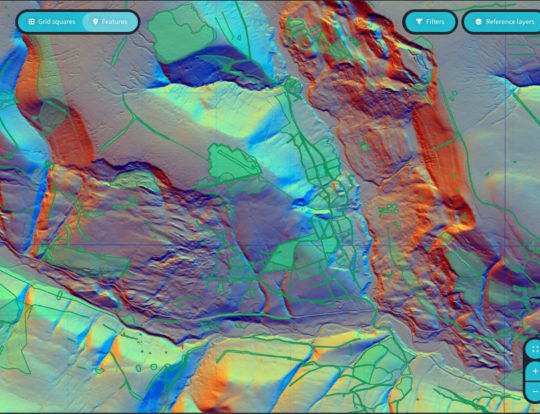
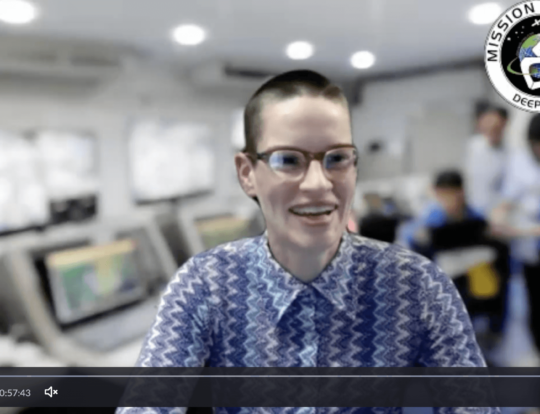
The nature of these missions has been collectively designed in consultation with our six partners, with each mission running consecutively for one month each, one per partner study area.
Participants (‘Futurenauts’) will be recruited via national, regional, local and partner channels and will need no prior experience: everyone will learn together, guided by an online course with live support, in how to identify habitats and environmental features from Earth Observation data.
Our Futurenauts will then be able to select and search a grid square, with results single-track validated within the peer group, before being given a final check by the project team ensuring that the results are pre-validated and suitable for immediate use.
How to get involved
Curious about searching for different ecological habitats? Want to do something to help nature recovery? Start your Deep Time training to become a Futurenaut and join one of our Citizen Science Local Pilots Missions
Registration is currently closed, but check back for more training opportunities in 2025.