BBC’s Digging for Britain has returned with a brand new series following archaeological digs across the UK – and this year, you might spot some familiar faces on your screen…
Our 2025 Earth Trust dig features in the episode ‘Medieval Murder and Roman Pets’, where we explore how animal remains, artefacts and traces of daily life reveal the stories of the Roman and Iron Age families, farmers and four-legged companions who once lived at the foot of Wittenham Clumps, an iconic hillfort and Scheduled Ancient Monument in Oxfordshire.
Since 2018, our team at Earth Trust has been digging, recording and piecing together clues that help us understand life in ancient Oxfordshire – particularly the influence of Roman occupation on this rural landscape. But what have we found that takes us even further back in time?
Keep reading to find out what this site has to say about life in prehistoric Oxfordshire, and how you can join the team in 2026.
A (small) step back in time
Iron Age life at Wittenham Clumps first came into focus in 2004, when Time Team’s excavations revealed a series of archaeological features spanning multiple eras, from the Bronze Age through to the Roman occupation. Among them, several Iron Age storage pits hinted at a larger prehistoric presence that later excavations would soon reveal…

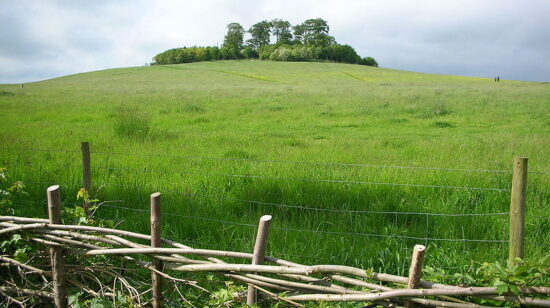
Wittenham Clumps. Credit: Burst Design
It turns out the storage pits were just the beginning. Subsequent excavations also uncovered evidence of an extensive Iron Age settlement nearby, hidden in the shadow of the iconic monument.
Knowing this community lived so close to the prominent Wittenham Clumps really sparks our imagination – did the natural landmark shape their sense of territory, their belonging, or even hold symbolic meaning for them?
Enter DigVentures
Fast forward to 2018, when DigVentures was invited by Earth Trust, an Environmental Learning Charity and proud guardian of the much loved Wittenham Clumps, to carry out excavations as part of planned improvements and tree-planting on their land.
This work revealed that the proposed site of a new building would sit directly on top of a previously unknown Iron Age settlement, and return exploration over the years has uncovered a host of fascinating finds that add depth to what we know about daily domestic life, community layout, routine and skill in Iron Age Oxfordshire.
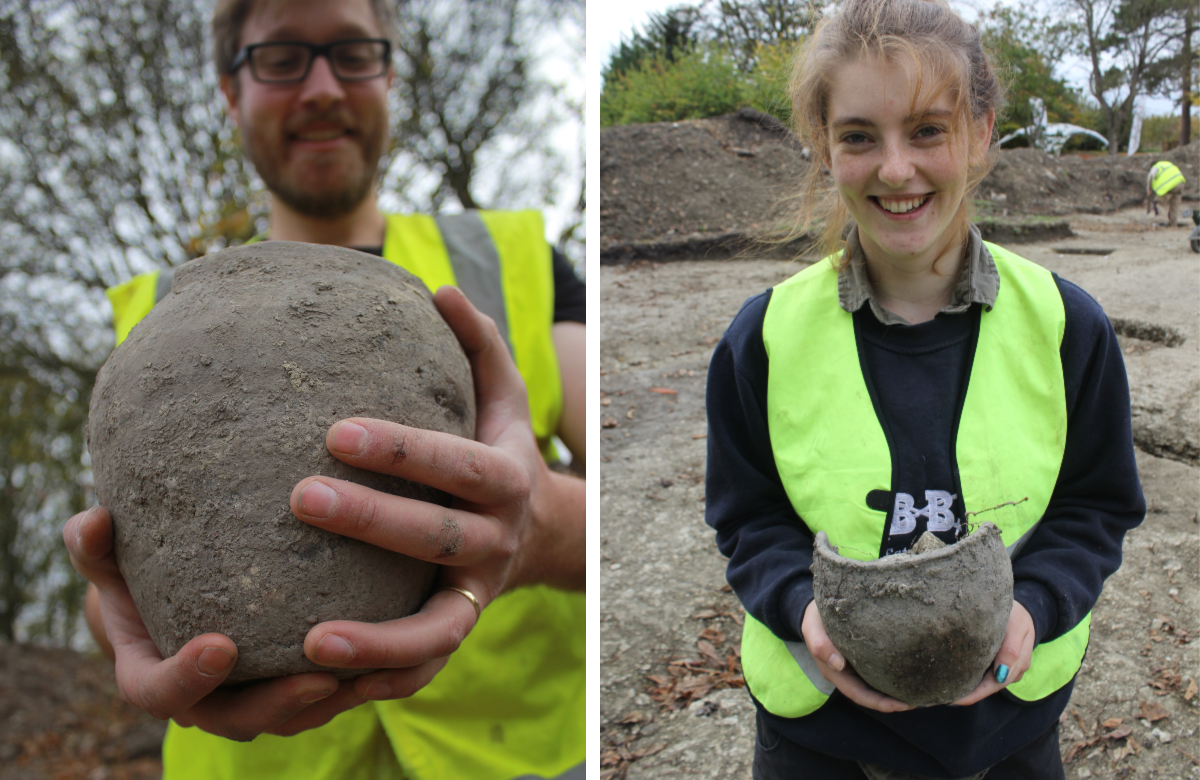
Josh and Indie with two pots recovered from a storage pit full of them. Finds like these hint at a communal rhythm to daily life here, with routine cooking and shared meals. Credit: DigVentures
Storage pits are among the most frequent and intriguing of our Iron Age discoveries. These pits were often used to store food and household goods underground, keeping precious supplies safe from weather and curious animals, cool and close at hand in a world without fridges or freezers. When no longer needed for storage, some pits appear to have been repurposed practically for rubbish, while the artefacts found in others suggest they may have been used for symbolic or ritual offerings.
The variation in finds from these storage pits makes us wonder what determined how a pit was reused – was it convenience, changing needs within the village, or something else entirely?
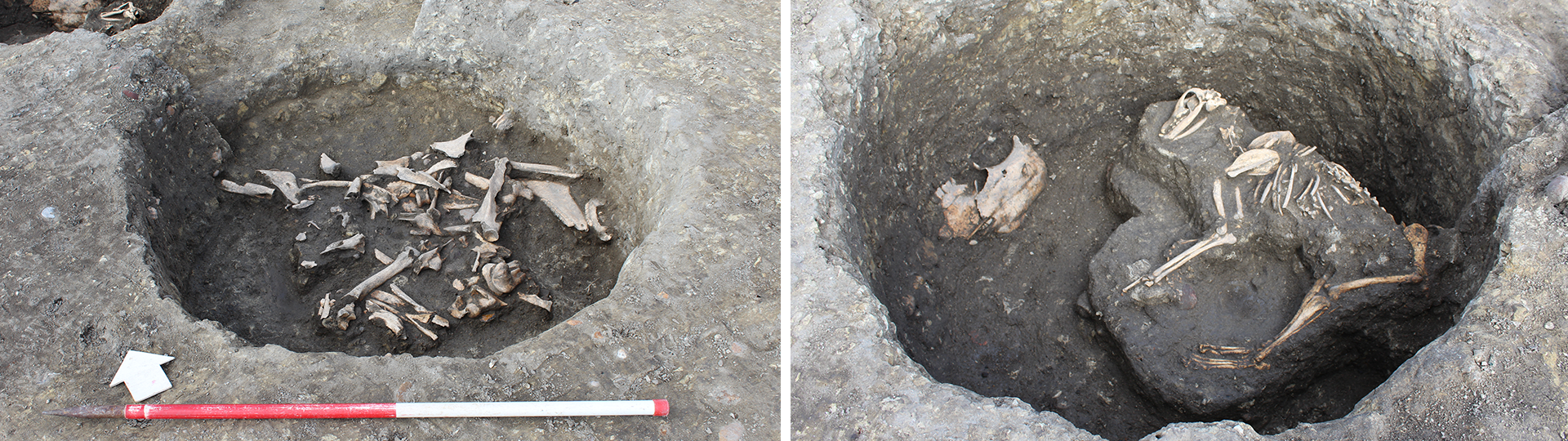
Left: A range of disarticulated animal bones from pigs, cattle, sheep and goats have been recovered from storage pits, indicating that this community valued self-sufficiency and low waste. They likely reared pigs for meat, cattle for ploughing and transport, and sheep and goats for wool and milk.
Right: This elderly dog was found carefully buried in a pit alongside other deposits, raising interesting ideas about Iron Age ritual or remembrance practices in this community. Credit: DigVentures
The storage pits tell us what people kept, ate and possibly valued, but other discoveries reveal what they made – and our excavations unearthed evidence of a skilled Iron Age blacksmith.
The remains of a workshop, smithy and tools suggest both everyday items and sophisticated, high-status pieces were being made here, such as swords and parts for carts or chariots. The discovery of a rare intact tuyere (a pipe used to direct air through the hearth) points to specialised metalworking, leaving us wondering whether this level of skill was unusual for a settlement of this size.

A series of circular and semi-circular gullies form the footprint of the blacksmith’s workshop with an entrance on the southeast side, additional structures to limit the light, and a smaller ring of postholes marking out an internal feature. Credit: DigVentures
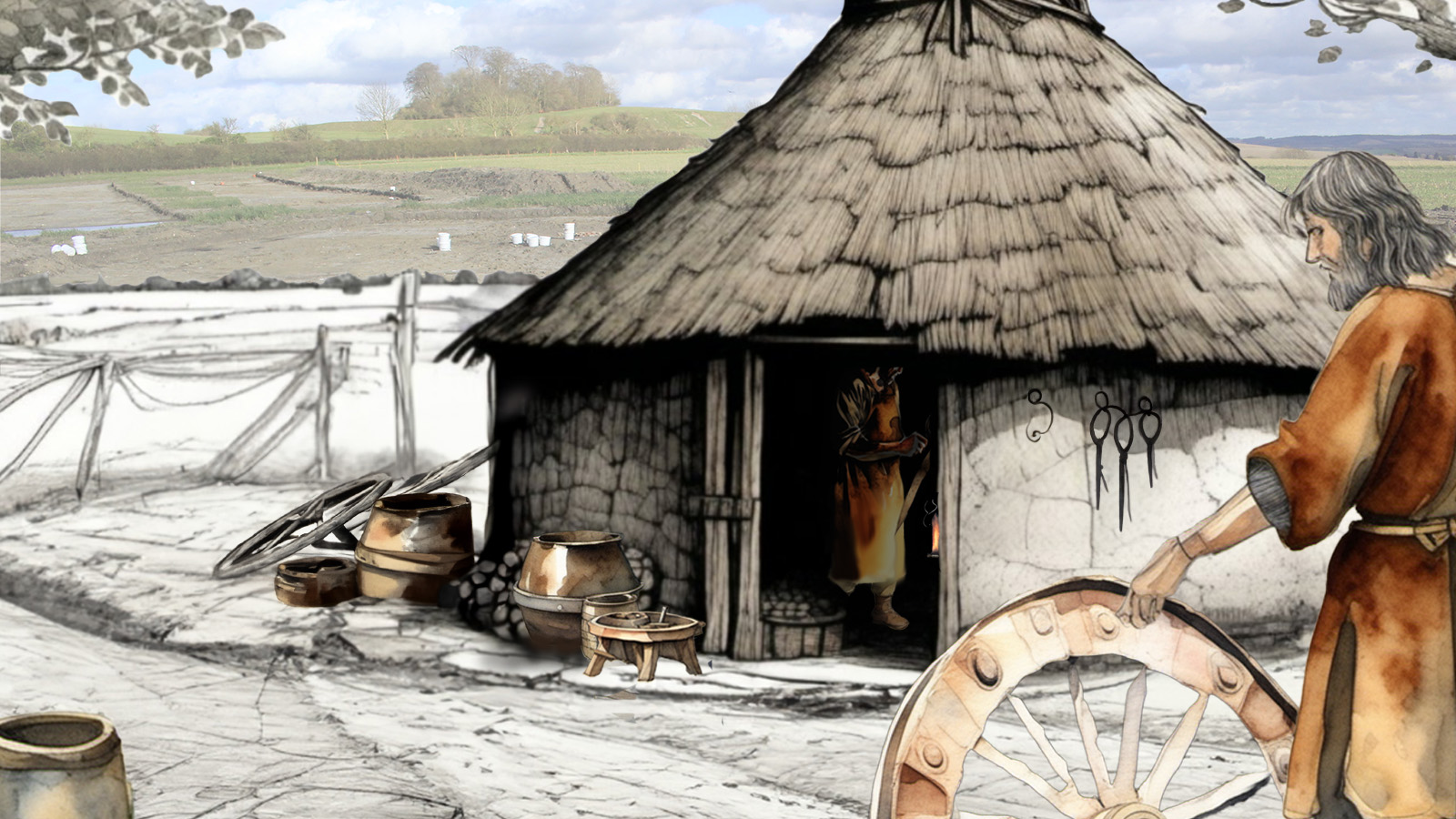
AI impression of a roundhouse like the one that would’ve housed the blacksmith’s workshop, with Wittenham Clumps visible in the background. Image made using Adobe Firefly. Credit: DigVentures
But the blacksmith’s workshop is only part of the story. No settlement would be complete without knowing where the community lived, ate, gathered and slept.
Our team also found the remains of several roundhouses, which were common, practical homes for Bronze Age and Iron Age families. Roundhouses were typically circular with timber posts, wattle-and-daub walls, pointy thatched roofs and one open space inside. These single space structures served all domestic needs, acting as the kitchen, bedroom and common room, with a central fire that provided warmth and light.
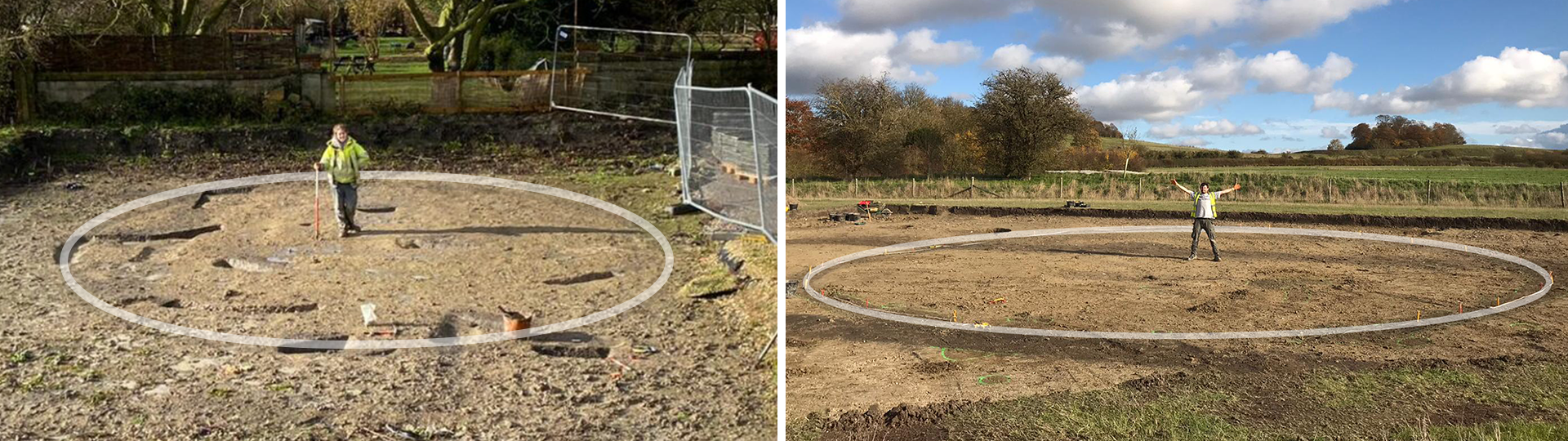
Left: Indie standing in one of the smaller Iron Age roundhouses, measuring around 9m in diameter. The white outline highlights the perimeter of the roundhouse.
Right: Ben standing in the centre of a large Iron Age roundhouse. At 14m in diameter, it’s at least twice the width of the average three-bedroom house, giving a real sense of the space these families lived in.
Credit: DigVentures
Beyond the remains of daily life, we’ve also found evidence of how this community honoured their dead. A small number of Iron Age burials have been discovered at this site to date, including two neonatal infants carefully placed in pits, showing that even the youngest were treated with care and intention.
Together, these discoveries paint a vivid picture of Iron Age life at Earth Trust. This was a settled, resilient community of farmers, craftspeople and families who lived deeply rooted, self-sufficient lives. From the blacksmith’s workshop to the practical roundhouses and carefully interred burials, every discovery adds to this wider story of community, continuity and everyday resilience.
But our work is far from over, and every season brings new questions. How large was this settlement? What was life like between the transition from the Iron Age to the Roman period? Every pot, pit and posthole provides more clues to this expanding puzzle, and we’re excited to uncover what else this remarkable site has to share.
Watch
Interested in how the four-legged finds from our Earth Trust dig add depth to our understanding of ancient Oxfordshire?
Catch us in ‘Medieval Murder and Roman Pets’ on BBC Two, 4 February (or stream it now on BBC iPlayer) here.
Join In
If you’ve ever wanted to be part of a team making real, ground-breaking discoveries about the past, this is your chance. Support this year’s dig online, or join us in person, and help make nationally important archaeology possible.
Find out more about our dig at Earth Trust later this year, and how you can get involved.



There are no comments on this post yet. Be the first!