As the United Nations pushes forward with its ambitious Sustainable Development Goals (SDGs), there’s a growing recognition that citizen science – where members of the public participate in scientific research – is so much more than simple data collection.
Citizen science can be a vital bridge between local action and sustainability goals, with enormous potential to contribute to global targets. But how should we build meaningful, measurable and repeatable pathways for citizens to contribute to SDGs, and how will we know when we are succeeding or failing?
Proving a causal link between citizen participation and sustainable action requires more than just anecdotal evidence; it needs concrete data and measurable outcomes that show real impact against measurable targets. Only then will policymakers and funders be convinced, above and beyond fuzzy notions of outreach and education, of the vital role citizen science can serve in supporting sustainable development.
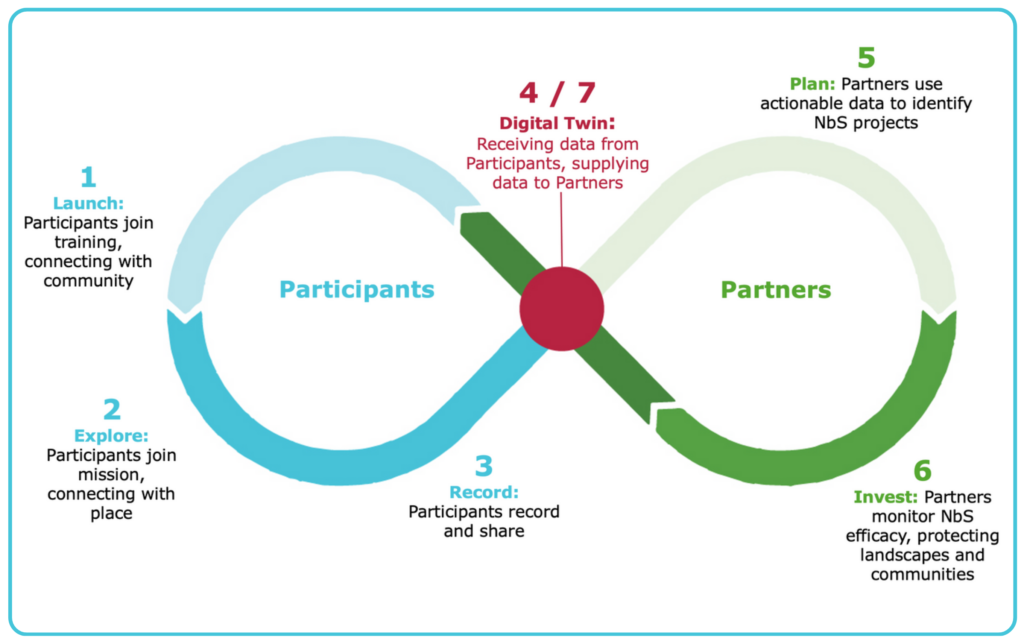
Deep Time’s High Level Workflow, showing the relationship between participant-generated data and our partners.
In our own field of archaeology, or more broadly defined, cultural heritage, this alignment with SDGs presents an additional problem. Despite the vital role cultural heritage could play in sustainable development, it is not mentioned in any of the UN’s 17 SDGs and barely registers in its 169 targets –appearing just once in a goal about resilient cities.
Heritage (both natural and cultural) is far more than just historic buildings, monuments and landscapes – it’s a living force that can help solve global challenges. Yet, these broader values often go uncounted in decision-making processes. We need new ways to capture and demonstrate these crucial but often invisible contributions to sustainable development.

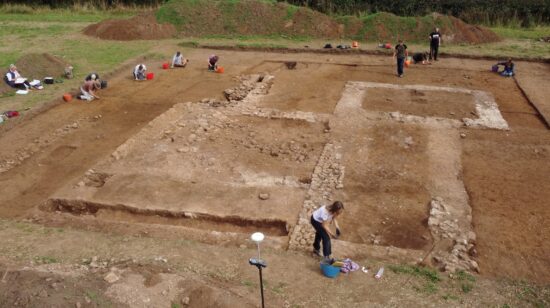
Archaeology as citizen science, connecting people with their landscapes, cultural knowledge, and shared practices. Credit: DigVentures
This is why we have built impact evaluation into the heart of our Deep Time collaborative mapping platform, generating a robust evidence-base to prove that citizen participation can create high quality, actionable landscape data while also tackling sustainable goals. By connecting people with their landscapes, cultural knowledge, and shared practices, this model provides the policy evidence needed to firmly centre heritage as a catalyst for sustainable development.
Our approach is based on a Theory of Change with three interconnected pillars – people, place, and planet – each contributing to specific UN Sustainable Development Goals. Through quality education initiatives (SDG4), we empower people with lifelong learning opportunities and digital skills, ensuring equal access across communities through targets 4.3, 4.4, and 4.5. Our focus on place aligns with Climate Action (SDG13) and Life on Land (SDG15), building environmental awareness and supporting ecosystem preservation through targets that protect biodiversity, forests, and mountain habitats (13.3, 15.1, 15.2, 15.4, 15.5), while attracting vital conservation funding (15.a/15.b). For the planet, we contribute to Sustainable Cities and Communities (SDG11), particularly target 11.4’s emphasis on safeguarding world heritage. Together, these pillars create a framework that turns citizen participation into measurable progress toward global sustainability goals.
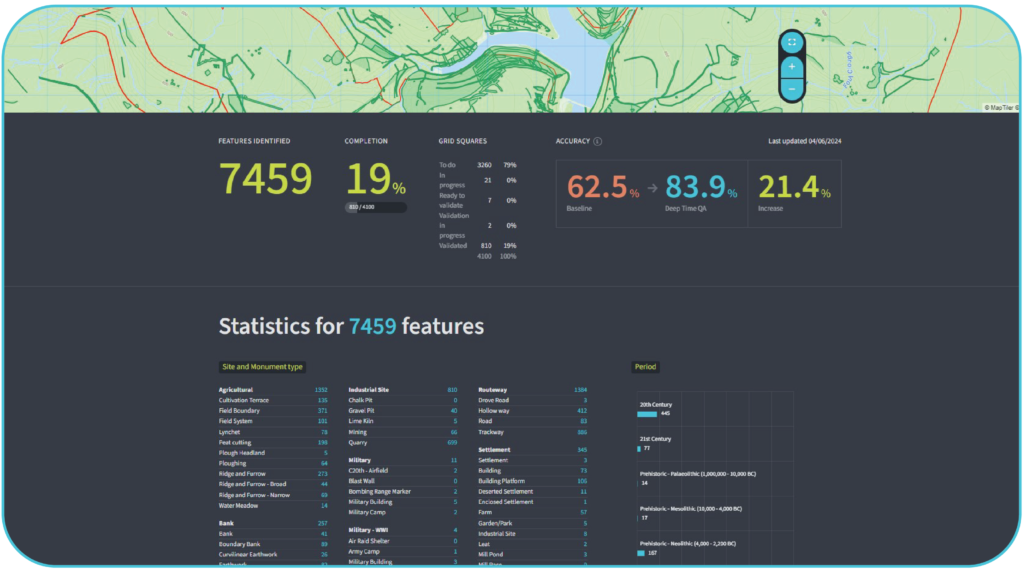
The Deep Time dashboard shows real-time results and progress on our citizen science missions.
If our Theory of Change as a set of hypotheses, predicting how heritage could drive progress toward global sustainability goals, then capturing the data that proves we are reaching those targets is the job of our evaluation framework. Real-time dashboards track impact as it happens, linking activities to meaningful outcomes, with rich quantitative and qualitative data collection at numerous touchpoints in the citizen science journey. This dynamic approach means we can quickly adapt our strategies to better serve different communities and scale up what works best. Most importantly, we share these insights with our partners, creating a continuous cycle of learning and improvement that strengthens each Deep Time mission and its outcomes.
When citizens map and monitor their local environments, they’re not just preserving the past – they’re actively shaping a more sustainable future. Citizen science represents a powerful bridge between local action and global change, but for this to be scalable and successful, we need to collect data both through citizen science and about citizen science.
As we face growing environmental challenges, this dual approach to data collection can provide the evidence needed to shape policies and practices, proving beyond doubt citizen science offers a practical path forward: one that combines scientific rigor with the power of community action to create lasting positive change.




There are no comments on this post yet. Be the first!