The First Stone Tools Weren’t Made By Humans

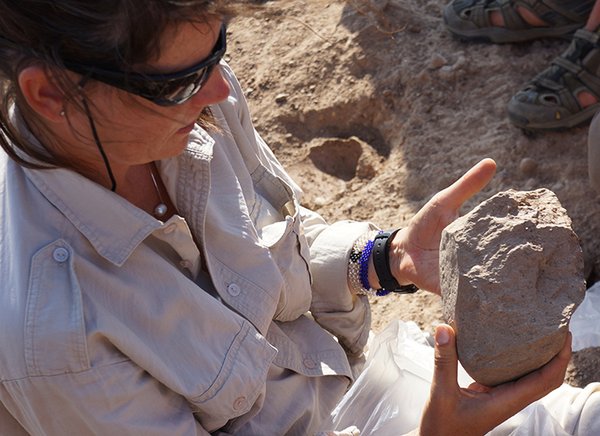
oldest stone tool harman holding lomekwi

The world’s newest oldest stone tool was made 700,000 years before the Homo genus emerged

Much as we love field archaeology, trowels and brushes are no longer the only essential pieces in the modern archaeologist’s toolkit. Look at this 3D model being used to forensically investigate a 430,000 year old murder, or this new device that will give archaeologists something even better than x-ray vision.

All this technology is dead exciting. It’s helping to extract new information, restore lost artworks, and even prevent damage to existing ones. But still, sometimes all it takes is a keen eye and a bit of luck to make a discovery that’s so important it shifts our perspective on who we are and how we got here… and that’s exactly what’s just happened with a discovery that takes us right back to technology’s humble origins; the world’s newest oldest stone tools!

Until now, the earliest clear evidence of stone tools were Oldowan style choppers, which were found at a 2.6-million-year-old site in Ethiopia and are thought to have been made by an early human ancestor called Homo habilis.
But when archaeologists accidentally stumbled across a new site in northern Kenya, they found a site littered with rocks. To the untrained eye, they do just look like rocks, but to archaeologists and palaeoanthropoligsts, they had clearly been intentionally modified.
Altogether, they found 149 stone artefacts and, by analysing magnetic minerals and volcanic ash tufts, they put age of the site at 3.3 million years old. That’s 700,000 years before the Homo genus had even emerged 2.8 million years ago.
The tools seem to have been made with rudimentary techniques, as Sandra Harman who lead the team explains in the Smithsonian:

Further analysis of the markings on the tools and attempts to replicate their production suggests two possible ways: The toolmaker might have set the stone on a flat rock and chipped away at it with a hammer rock. Or, the toolmaker could have held the stone with two hands and hit it against the flat base rock.

That’s quite different to the Oldowan method, which requires the maker to be a bit more dextrous and hold a rock in one hand and strike it against a rock held in the other hand at just the right angle.
Of course, this wasn’t the first clue that someone was making tools before Homo appeared on the scene. In 2010, researchers found fossilised animal bones with cut marks in Kenya dating to 3.4 million years ago. Lucy’s species (Australopithecus afarensis) was the only human relative in the area at that time and, though still controversial, researchers say the cut marks may have been made with stone tools.

Which species made these tools is still up for debate, but it sure is a blow to the widespread assumption that the things we so often say are hallmarks of being human — making tools, creating art, using language — arose with the genus Homo. Time to rethink the story: when it comes to tools, clearly we were not the first.

Archaeology in your inbox?!

Want to join a dig? Learn more about archaeology? Join our email list for a monthly digest of our most popular stories, plus alerts for any digs, events, or courses you can join.

Join the list

Written by Maiya Pina-Dacier

Director of Engagement at DigVentures, Maiya digs with a trowel in one hand, and a Twitter feed in the other. She loves finding new ways to get people involved in archaeology - online and in the field.

Read more from Maiya Pina-Dacier +

There are no comments on this post yet. Be the first!

Leave a comment

Get the DigVentures Newsletter

Sign up to discover opportunities to get involved in archaeology - in your area, and beyond!

Easy opt-out at any time - Privacy Policy

Archaeology / In Your Hands
  • Heritage Lottery Fund
  • CIfA

See all the archaeology digs, talks, festivals and other events coming up at DigVentures

Learn more about digging up the past and have fun while you're doing it!

We're connecting people who love archaeology, with opportunities to do archaeology.

Archaeology experiences and other perfect presents for people who love the past.