
Are archaeologists a patient bunch? Lucy Shipley says no, contrary to popular perception, patience is not a virtue.
People quite often say to me, when I tell them I’m an archaeologist, that I must be “very patient.” Teachers told me I wouldn’t be a good archaeologist because I was “too excitable – you won’t enjoy all that brushing and waiting.” I wonder if other people are turned off archaeology because of this idea that you have to be entirely mellow to be any good on an excavation. I hope not, because I honestly think that this is a BIG FAT MISCONCEPTION.

An example of a rather fine post hole. Eat your heart out Howard Carter.
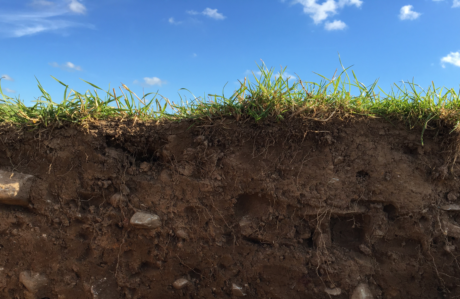
You don’t need patience when you recognise that every action you make in a trench could result in finding something amazing. It could be that change in soil colour or texture that tells you you’re in a new context, heading deeper into the past or on the verge of identifying a feature. It could be a grim looking, gnawed animal bone with the teeniest of cut marks. It could be a piece of pottery that allows you to roughly date the age of everything else you are finding. All these little triumphs are just as incredible as finding a great big show-off sword, or some super shiny gold. I think my best moment in archaeology came when I noticed a soft patch of soil in the middle of an otherwise very hard surface. It turned out to be a post hole, one of the first signs of a building that wasn’t meant to exist. It was just a squidgy, slightly darker roundish shape, but it made me feel like Howard Carter.
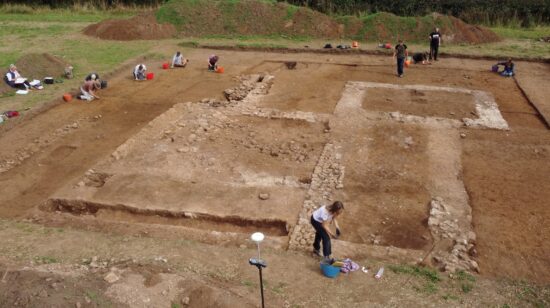
The emphasis on patience implies that when you’re digging, you’re just sitting in a hole waiting for something to happen. Not true. You are making things happen. You are revealing new information, getting excited about it, recording it, and then doing it all over again. Nobody else has seen the exact piece of soil you are seeing. Nobody else knows exactly how it related to the soil above it, and what was there. Excavation is not a repeatable science experiment, that you can do again and again and test the results. It’s fleeting, bittersweet, and if you don’t do it properly, don’t give it the passion and dedication it deserves, you’ll lose precious information about the past with no chance of getting it back.
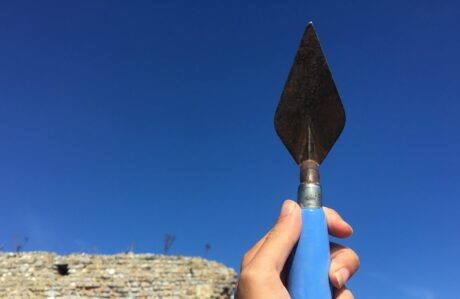
The intensity of excavation makes a mockery of the assertion that patience is the essential requirement for archaeologists. As soon as you get the trowel in your hands, break out the pickaxe or mattock or pick up a shovel, your passion starts to flow and all you feel is curiosity mingled with joy. Patience not required.
Archaeology in your inbox?!
Want to join a dig? Learn more about archaeology? Join our email list for a monthly digest of our most popular stories, plus alerts for any digs, events, or courses you can join.
Join the list
Written by Lucy Shipley
Lucy is an archaeologist, feminist, italofila and mum working on the archaeology of Etruscan Italy.


Comments (6)
You forget 90% of the job, start a PhD, write books, papers, grant applications, do lab work and then we’ll see if “patience is not required”…
That’s a fair(ish) point… although perhaps success in all those things has more to do with tenacity, focus, determination and a whole heap of get-up-and-go than with patience?
You might not need patience with a shovel in hand, but sitting behind a screen you sure better have some.
I think this idea focuses on only one kind of archaeology – academic excavation and lab analysis. Survey work, whether academic or CRM, takes a different skillset and mindset, and a different type of person thrives in it. Unfortunately, too many of the energetic, active people we need in the CRM industry are turned off by the slow pace and limited scope of academic field schools. Archaeology is a diverse profession and there are places for all types.
Love it, from the pyramids in Egypt and Peru, to the Chaco Canyon Complex in NMex and Colorado, to the mounds on the East Coast. So many lives tell so many stories.
Would not want her digging on my site.