Moorsholm
DigVentures investigates a recently-discovered prehistoric village on the North York Moors
The North York Moors is a very special place; today it might look wild and empty, but the quiet drama of this landscape has actually been forged by thousands of years of human activity.
From Neolithic and Bronze Age burial mounds, to huge Iron Age hillforts (Roulston Scar is one of the biggest in the country), it is filled with the monuments of ancient life. Who built them? And what were their day-to-day lives like?
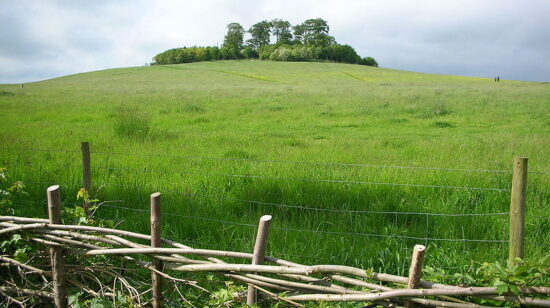
In 2022, DigVentures was called in to investigate the newly-discovered remains of a prehistoric settlement, where LiDAR and earthwork study revealed the layout of roundhouses, enclosures, boundary ditches, housing platforms, and nearby burial mounds. Would we be able to recover traces of its long-gone inhabitants, and find out what kind of settlement this might have been?
While many of the prehistoric sites that have been excavated in the region are monumental in nature, understanding the places where people lived – and their everyday, ordinary lives – is just as important. This new site presented a unique and rare opportunity to find out more about who was living on the North York Moors, and who was responsible for shaping this incredible landscape, thousands of years ago.

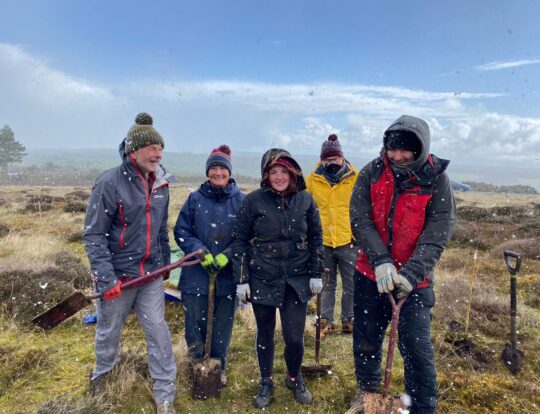

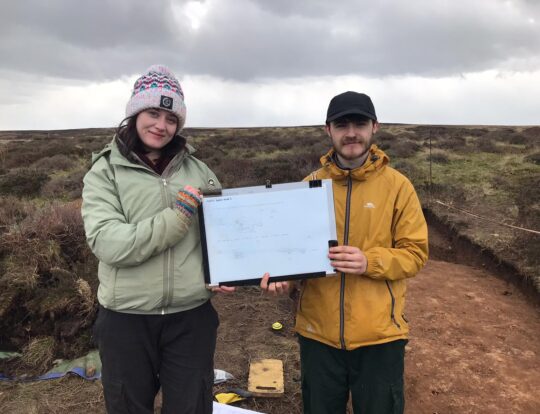
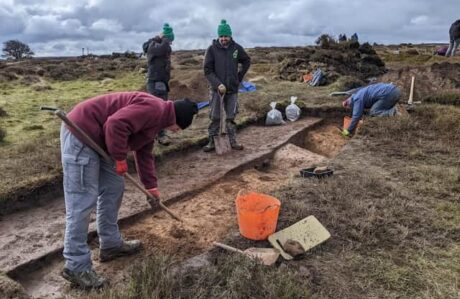
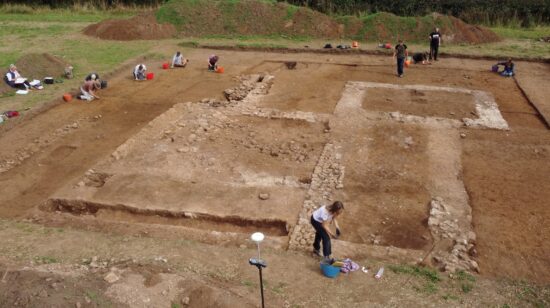
In March 2022, DigVentures set off on a 10-day excavation to investigate. Over 60 local residents joined the excavation, helping to recover evidence dating all the way back to the Bronze Age, and to answer questions like: When did people live here? How old was this settlement? Can we create a snapshot of the site through time? Or even recover traces of the tools, meals, and other items that residents used in daily life?
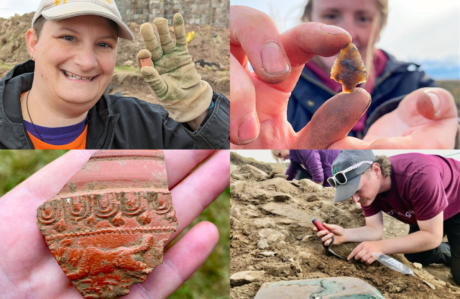
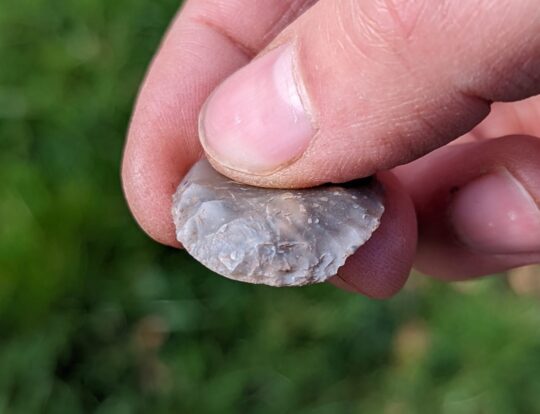
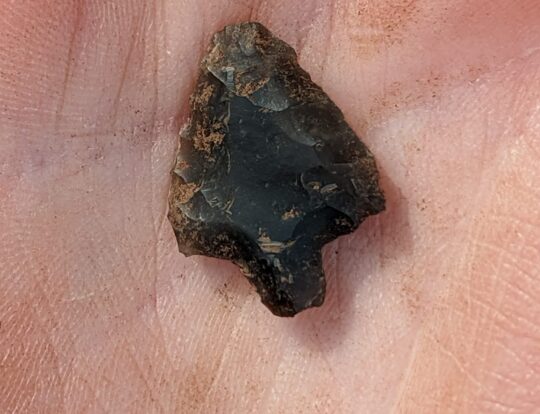
After ten days of fieldwork, the team returned with over 200 pieces of flint (including Neolithic scrapers and a late Neolithic or early Bronze Age arrowhead), traces of several of prehistoric buildings (including post-holes), and 32 pieces of Iron Age and Roman pottery (which appear to have washed in from surrounding sites).
Among many other discoveries, the finds included a range of stone tools like arrowheads, scrapers, and cores, tantalising evidence of long-lost wooden structures, pieces of pottery, a watering hole, and a series of earthen banks, ditches, and livestock enclosures.
Together, this provided the first solid evidence that the site is prehistoric in origin, and has potential to reveal more detail about day-to-day life on the North York Moors up to 4,000 years ago. The search for evidence continues…
Moorsholm
Approximate site location
In March 2023, the search for evidence continued in an attempt to establish whether this was a transient camp, or a more permanent home, and whather the potential round barrows (burial mounds) on the site are the same age as the settlement and its enclosures.
Can we create a snapshot of the site through time? Can we begin to understand the live of the people who shaped this landscape? Or even recover traces of the tools, meals, and other items that residents used in daily life?
All of this information is vital to understanding ancient life on the North York Moors, and to the future management and conservation of these very special remains.