
The ancient city of Tenea is believed to have been first settled around 1200-1300 BC, by survivors of the Trojan war.
Archaeologists say they have found the lost city of Tenea, which the ancient Greeks believed was founded by survivors of the Trojan War.
Until now, the city’s location has only been known from ancient texts. Although archaeologists had a rough idea of where it was, they had no tangible proof.
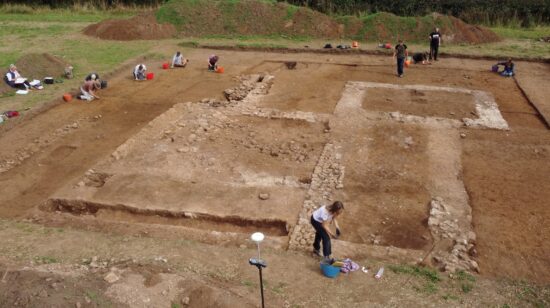
According to the Greek Culture Ministry, an excavation which began in 2013 near the modern-day village of Hiliomodi 60km southwest of Athens has finally produced hard evidence of the city’s existence.
Lead archaeologist Elena Korka told the Associated Press that her team had only been digging the cemeteries around Tenea until now, but this year began work on the city itself.
So far, her team has uncovered the remains of a housing settlement, jewellery, household pottery, several burials, and coins dating from 400 BC to late Roman times.
Carefully-constructed walls as well as clay, stone and marble floors were uncovered, and around 200 rare coins, including one designed to pay for the journey to an afterlife, were also found.
Seven graves – including one containing the remains of a woman and child – were unearthed, adorned with vases and jewellery.

Artefacts from the excavations include pottery, jewellery and coins. Image via Greek Reporter.
Lead archaeologist Elena Korka said that the discoveries suggest that the citizens of Tenea had been “remarkably affluent”.
She said the city would have been located on a key trade route between the main cities of Corinth and Argos in the northern Peloponnese, and that the city “had distinctive pottery shapes with eastern influences, maintained contacts with both east and west… and had its own thinking, which, to the extent that it could, shaped its own policies”.
Little is known about Tenea, but legend has it that it was founded by Trojans who had been captured by King Agamemnon of Mycenae during his war with Troy in the 1200-1300 BC.
The city is thought to have flourished during the Roman era but may have been abandoned by 400 AD.
Korka said more details about the city will emerge as excavations continue over the coming years.
Archaeology in your inbox?!
Want to join a dig? Learn more about archaeology? Join our email list for a monthly digest of our most popular stories, plus alerts for any digs, events, or courses you can join.
Join the list
Written by Maiya Pina-Dacier
Director of Engagement at DigVentures, Maiya digs with a trowel in one hand, and a Twitter feed in the other. She loves finding new ways to get people involved in archaeology - online and in the field.




There are no comments on this post yet. Be the first!