
Archaeologists from the University of Sheffield have uncovered a previously unknown Anglo-Saxon cemetery in the Lincolnshire Wolds, including more than 20 burials dating back to the late 5th – mid 6th centuries AD
Many of the lavish burial items belonged to women including amber necklaces, glass and rock crystal beads and personal items such as tweezers.
The cemetery was first brought to light when a local metal dectorist began to discover a number of Anglo-Saxon artefacts, including copper gilded brooches, iron shield bosses and spear heads.
 |
 |
 |
 |
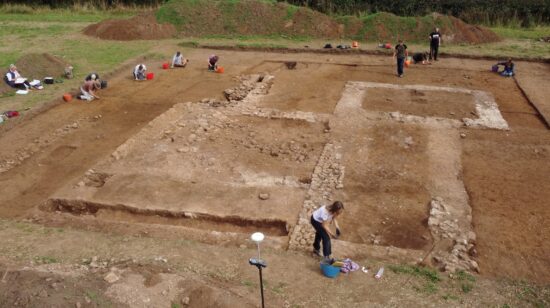
The site in Scremby was excavated by a team from University of Sheffield, in collaboration with the Portable Antiquities Scheme to ensure any further artefacts were retrieved, recorded and preserved before they could be destroyed by agricultural activity.
“Almost without exception, the burials were accompanied by a rich array of objects, in keeping with the funerary rites adopted during the early centuries of the Germanic migrations to eastern England” said Dr Hugh Willmott, who led the excavation with colleague Dr Katie Hemer from the university’s Department of Archaeology
“What is particularly interesting is the significant proportion of very lavish burials which belonged to women. These women wore necklaces made from sometimes hundreds of amber, glass and rock crystal beads, used personal items such as tweezers, carried fabric bags held open by elephant ivory rings, and wore exquisitely decorated brooches to fasten their clothing” he added.
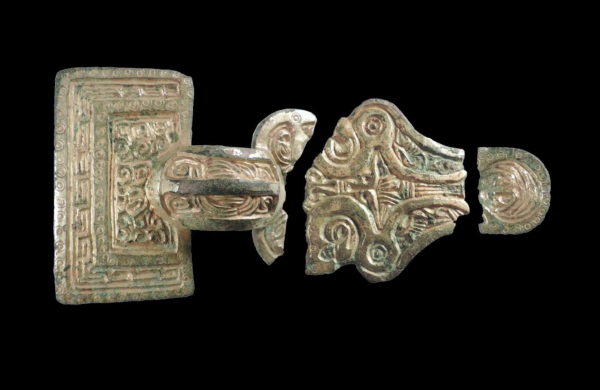
Two women even received silver finger rings and a style of silver buckle commonly associated with Jutish communities in Kent. Furnished burials belonging to males were also identified, including a number buried with weaponry such as spears and shields.
Dr Willmott added: “Children were notably absent in the parts of the cemetery excavated this year, however, one of the most striking burials was that of a richly-dressed woman who was buried with a baby cradled in her left arm.
The human remains are undergoing a complete osteological assessment, whilst stable isotope analysis of teeth and bone will identify where the individuals grew up as children and what food resources they ate.
“Analysis also extends to a number of the finds, including the amber beads, which are being provenanced in collaboration with colleagues from Sheffield’s Department of Physics; we will analyse the elemental composition of the metalwork and identify the elephant species which produced the ivory rings” said Dr Katie Hemer.
International volunteers, students from the University of Sheffield, and members of the RAF from nearby stations took part in the excavation which is the first to have been extensively investigated since the 19th century.
The excavation will feature on Digging for Britain on BBC4 at 9pm on 28 November 2018
Archaeology in your inbox?!
Want to join a dig? Learn more about archaeology? Join our email list for a monthly digest of our most popular stories, plus alerts for any digs, events, or courses you can join.
Join the list
Written by Maiya Pina-Dacier
Director of Engagement at DigVentures, Maiya digs with a trowel in one hand, and a Twitter feed in the other. She loves finding new ways to get people involved in archaeology - online and in the field.




Comments (1)
Hi I am new to this very interesting site. My Question is about the ivory. What species did they find it came from. thanks.