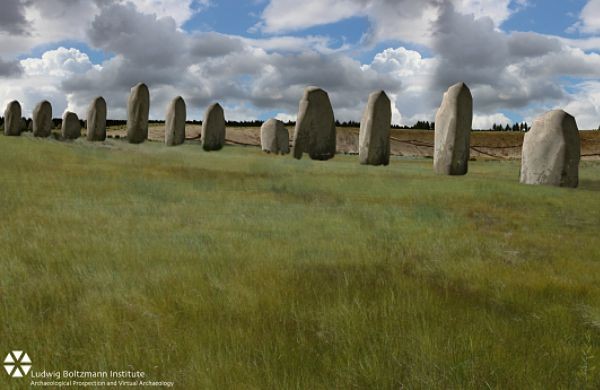
Archaeologists at Durrington Walls say that pots found in residential areas were used for cooking meat, while pottery in ceremonial areas were used for cheese and dairy.
Cheese. We all love cheese and many of us would probably even say that it tastes divine. But it turns out that among the people of Neolithic Britain, it really was food for the gods.
Durrington Walls (aka ‘Superhenge’) is one of the largest henges in the world. It is contemporaneous with Stonehenge and encircles a number of wooden dwellings. The people who lived here, say many archaeologists, would have not only witnessed the building of Stonehenge, but were probably part of the construction team.
As part of the Feeding Stonehenge project, archaeologists including Professor Mike Parker Pearson, analysed the residues left inside pots from different areas of the site and they’ve found a surprising pattern. Pottery recovered from residential areas had been used for boiling pork and beef, whereas pottery recovered from ceremonial areas had more frequently been used for dairy.

Cheesehenge? Pots from ceremonial areas contained dairy lipids. Image by Sirona via Pinterest.
The social organisation underlying these huge construction projects has been a matter of debate for decades, but seemed to peter out for a while as many resigned themselves to saying it was driven by elites. But the theory that more co-operative and egalitarian processes were at work continues to gain ground.
Studies of food and food consumption at Durrington Walls are adding to that theory. Publishing in the journal Antiquity, the study’s authors say that even though cheese and dairy products were reserved for certain areas, the people of Durrington otherwise took part in barbecue-style feasts, cooking pork and beef on a grand scale.
Meat was cooked in large, open-air mass gatherings, and also shared out to be cooked (usually boiled) within individual households. What’s more, analysis of the bones showed that cattle had been brought in not just from one locale, but from all over Britain, suggesting that contributions were made by a widespread network of willing volunteers.
According to Mike Parker Pearson, Professor at University College London and Director of the Feeding Stonehenge project, “the special placing of milk pots at the larger ceremonial buildings reveals that certain products had a ritual significance beyond that of nutrition alone.”
But, he added, “the sharing of food had religious as well as social connotations for promoting unity among Britain’s scattered farming communities in prehistory.”
The team of archaeologists on the project believe the pattern of large-scale feasting reflects an underlying social organisation that was largely egalitarian, and that these huge construction projects were built through the cooperation of willing participants, rather than slavery.
Read more:
Archaeology in your inbox?!
Want to join a dig? Learn more about archaeology? Join our email list for a monthly digest of our most popular stories, plus alerts for any digs, events, or courses you can join.
Join the list
Written by Maiya Pina-Dacier
Director of Engagement at DigVentures, Maiya digs with a trowel in one hand, and a Twitter feed in the other. She loves finding new ways to get people involved in archaeology - online and in the field.




There are no comments on this post yet. Be the first!