The Discoveries
The remains of at least five Ice Age mammoths, including two adults, two juveniles, and one infant, have been discovered, with stone tools made by Neanderthals found close by.
Other Ice Age megafauna, such as Steppe bison and cave bears, have also been discovered, along with such delicate remains as the freshwater snail shells, and beetle elytra (wing casings).
Mammoth bones
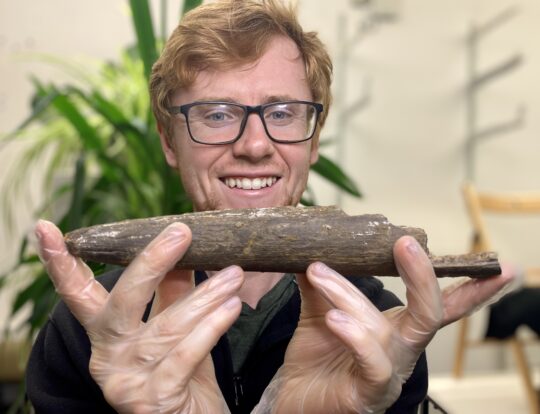
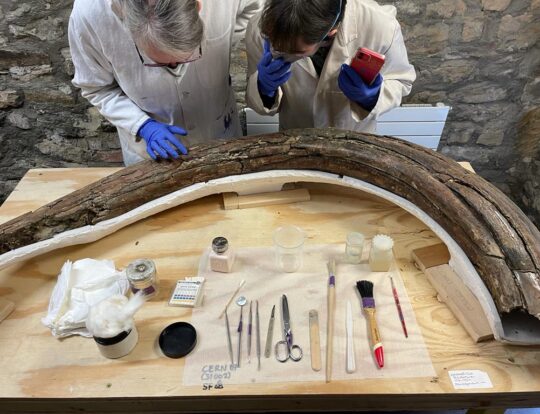
Hundreds of mammoth bones, including skull fragments, leg bones, ribs, teeth, vertebrae and tusks have been found, representing at least five individuals. All of them belong to a species of Steppe mammoth, ancestor of the Woolly mammoth. Many of the bones have been examined by experts at the Natural History Museum, and some are under further analysis for evidence of butchery.

Neanderthal stone tools
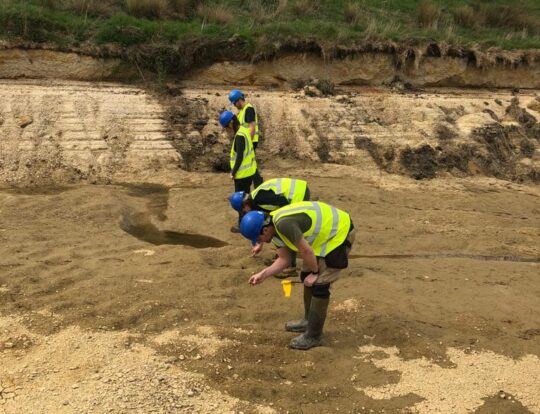
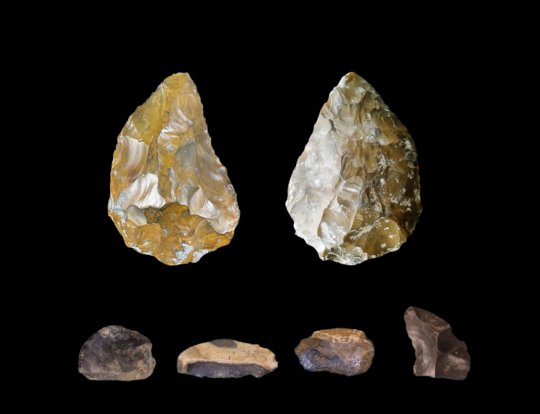
Several stone tools have been found at the site, including the hand axe spotted by Sally and Neville. Our digs revealed further evidence of Neanderthal activity, including ‘scrapers’ – small, expertly crafted flint tools that would have been used for cleaning fresh hides, as well as debris from making other tools.


Environmental and dating evidence
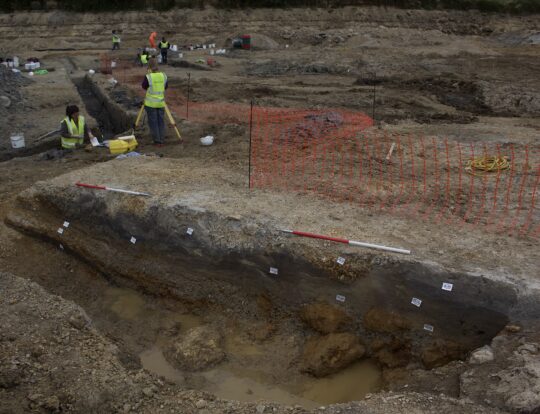
The astounding preservation of the site means that we were able to recover crucial environmental and dating evidence, including fragile freshwater snail shells and delicate beetle elytra (protective wing cases), along with the more robust remains of other Ice Age megafauna, such as Steppe bison. Professional excavation, alongside the use of direct scientific dating techniques such as OSL dating, as well as indirect dating methods, means we have been able to date the bones, as well as the layers of sediment that they were found in, to between 210,00-200,000 years old during the MIS7 interglacial.