Project Background
Lindisfarne is no ordinary archaeological site; raided by Vikings in AD 793, it is one of the most iconic in Britain.
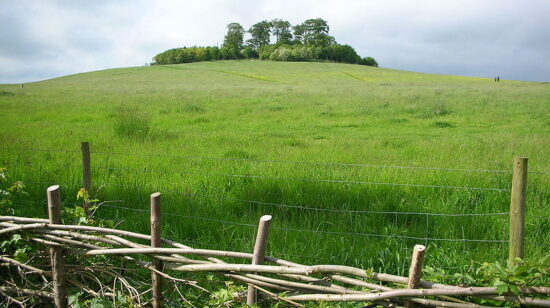
Lindisfarne is a small tidal island in full view of Bamburgh Castle, just off the coast of Northumberland. Today, it seems peaceful, remote, and quiet – a place that you can only reach at low tide, where people come to enjoy long walks along desolate white sand beaches. But it was once the bustling heart of the early Medieval Kingdom of Northumbria, with a famous monastery that sat right in the centre of an extensive network of sea routes that traversed the North Sea and extended down into the heart of Europe.
Lindisfarne
Holy Island, Northumberland
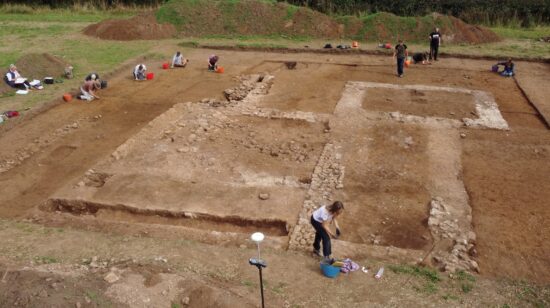
Our excavation area includes the remains of early medieval structures, and part of a cemetery. So far, the evidence we’ve recovered all dates to the 8th, 9th, and 10th centuries, when Lindisfarne was at the peak of its fame. It’s in the perfect location to recover the stories of people who lived here before, during, and after the Viking raids.

Despite its fame, historical documents written by chroniclers like Bede and Alcuin only record a fragment of the island’s story, but together, our community has unearthed fascinating new details about the men, women, and children who lived here, where they came from, the food they ate, what they did for fun, how they buried their dead, and the impact of the Viking raids on their community.
This will be our 10th and final year of excavation on Lindisfarne. Some of the discoveries our crowdfunders have made so far have been so significant that they’ve made international headlines in the Guardian, BBC and Smithsonian.
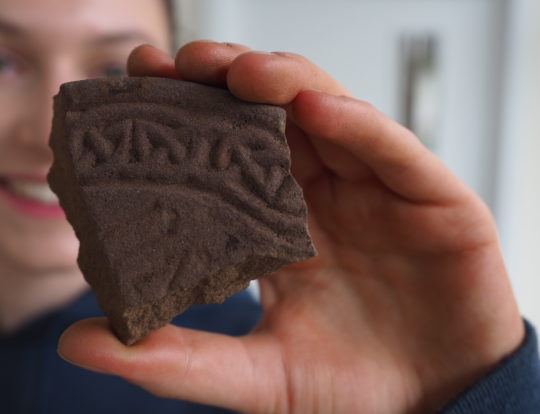
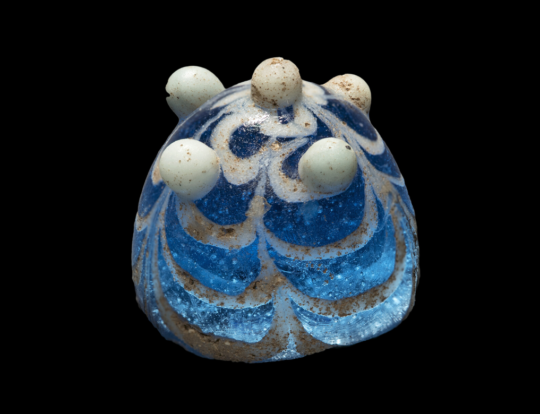
As well as buildings, workshops and part of a burial ground, our discoveries include early medieval carvings, runic namestones, coins, hairpins, combs, copper rings, a unique glass gaming piece, and burials which all date back to the time of the Viking raids.
This year, our archaeological goals are more important than ever; we’ve started to uncover the remains of an early medieval smithy, with evidence of the workshop, the furnaces, and the metal itself all still in the ground.
Dig Updates
Follow the latest archaeology action from Holy Island as it happens.