Archaeology Dig at Rosina Vallis (St Davids), with Ancient Connections

Free
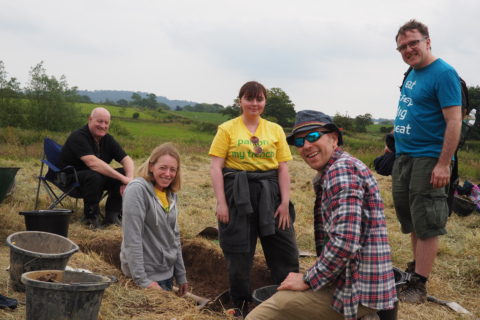
Join the dig
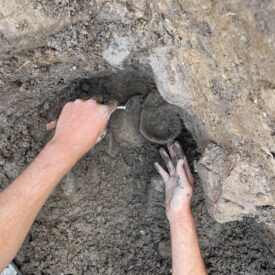
Lifting delicate remains
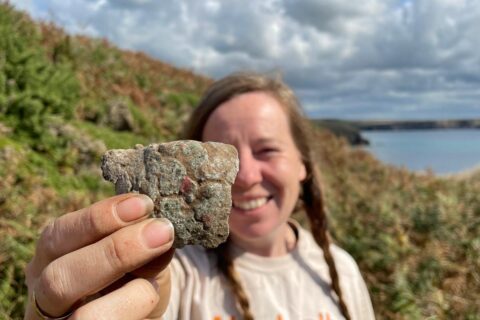
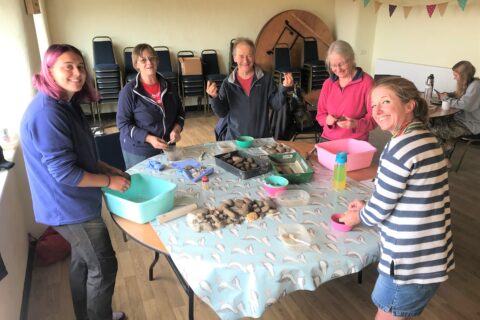
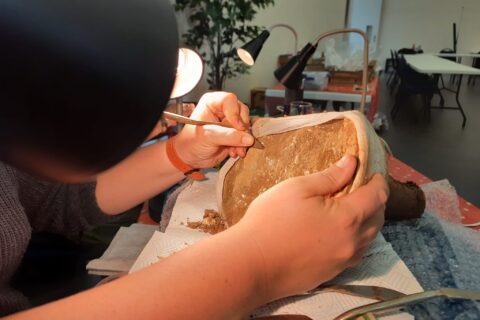
Handling artefacts in the Finds Room

Unearth the story of St David, the patron saint of Wales, and join a unique archaeological dig searching for traces of the early medieval monastery he established in the 6th century AD, in a location known as ‘Rosina Vallis’.

This Autumn, you can dig into Pembrokeshire’s past with Ancient Connections and DigVentures. Join our archaeological team as we explore a very special site where the footprints of early medieval buildings may have been found. Are they the remains of St David’s early monastery? With your help, we can find out. Depending on the weather, you’ll get to handle artefacts in the Finds Room, or unearth buried clues and archaeological remains out on our Dig Site. No previous experience required!

When: 10am – 3pm, Monday 07 – Tuesday 29 November 2022 (excluding 11, 17, 18, 19 and 24th November 2022)
Where: Rosina Vallis, Fford Porth Clais (near St Davids), Haverfordwest, Pembrokeshire
Who: Anyone aged 17+
Group size: 10
Lead by: DigVentures, on behalf of Ancient Connections
Cost: Free
Safe Dig policies: We’re taking precautions and encourage you to do the same (see additional info)

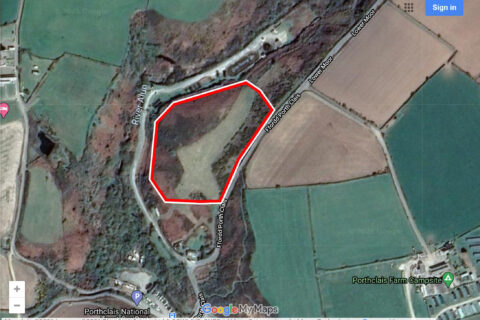
Our dig site

St David has been the patron saint of Wales since the 12th century. Born in the 6th century, his reputed birthplace is close to what is now the city of St Davids. When the city’s famous cathedral was built nearly 600 years later, it is said to have been placed on the site of a much older monastery established by St David himself.

Can the remains of the wood or stone buildings established by St David be found? It’s easy to assume that by the time the cathedral was built, they would be long-gone. But recent discoveries in a nearby pasture field indicate that traces of this early monastery – or related medieval structures – may yet survive.

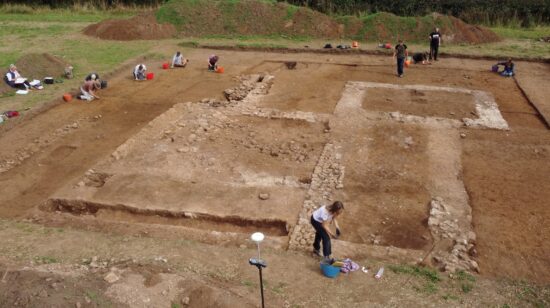
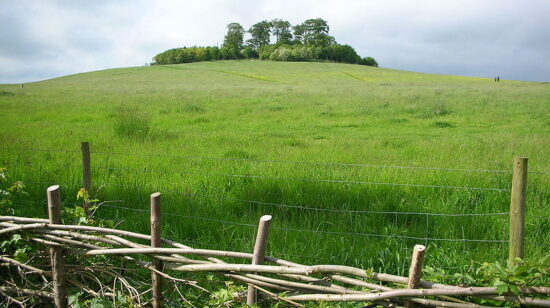
Today, this pasture field still bears the name Rosina Vallis (in Welsh Glyn Rhosyn, meaning ‘valley of the swamp’) – the same name often used to refer to the site of his early monastery. In 2021, a geophysical survey revealed a series of rectilinear and sub-circular shapes, which could be the remains of medieval and early medieval buildings. Evidence of an ancient enclosure, and medieval floor tiles, has also emerged from the site. Could they provide new clues to the fate of St Davids early monastery?

Our dig site is perfectly located to find out whether ancient buildings really do lie just below the surface. Excavation has the potential to reveal whether they are old enough to be part of the early monastery, or related medieval structures that may help us learn about the communities living in its wake.

If you’re curious about medieval history, the story of St Davids, and connections between the early religious communities living on either side of the Irish Sea, we’d love you to join our archaeological dig to uncover the past and help us find out.

What we'll do

Weather in November can be highly variable, so what we do each day will depend on the conditions:

  • When it’s dry enough, we’ll work outside, using the fair weather to unearth new clues on our Dig Site
  • When it’s too cold or wet, we’ll head indoors, using the rainy days to examine and process our discoveries in our Finds Room

So, whatever happens this November, you’ll get to do archaeology and help us investigate Rosina Vallis!

On ‘fair weather’ days: We’ll meet at our Meeting Point, and then head out to our Dig Site where we’ll teach you all the skills and techniques you’ll need in order to search for new archaeological clues with our Dig Team. Together, we’ll investigate four different areas of the site – each one over a different part of the possible buildings identified by the geophysical survey. You’ll learn how to dig, recognise new archaeological layers, identify archaeological features, and record your discoveries. Plus, you’ll be helping to retrieve evidence that has lain buried for millennia – all while having some good old-fashioned outdoor fun.

On rainy days: We’ll meet at our Meeting Point, and then head into the Finds Room where you’ll get to help us examine and process our archaeological discoveries indoors. You’ll learn how to clean, handle, examine, and identify artefacts, and find out what archaeologists do with them next. Plus, you’ll be handling objects that no-one has seen for centuries and helping to process them – all while enjoying plenty of tea and biscuits.

Uncovering the Past, with Ancient Connections

This dig at Rosina Vallis is part of Uncovering the Past – an archaeological project led by Ancient Connections exploring the linkages between Pembrokeshire and Wexford during the Early Medieval period.

The churches, chapels, and cemeteries of these two regions – along with the stories about Saints David and Aidan and their close friendship – are a vivid reminder of the importance of the shared Atlantic sea-lanes that linked the early medieval communities of Ireland and Wales.

So far, Uncovering the Past has been using a combination of geophysical survey (to locate sites of interest) and archaeological excavation (to investigate them further), to reveal new information about the early Celtic Church, Celtic Saints, their followers, pilgrimages, and deep historical links found between many different sites across the two regions.

It is a collaborative investigation of our shared past, and anyone can get involved – whether you live here, or want to visit and learn more about the area – thereby contributing to the cross-border story.

Location


Our meeting point will be along Fford Porth Clais, between St Davids and Porthclais. You’ll receive the exact location of our Meeting Point once you are registered for the dig.
Additional information

Who can join this dig?

At least half the places on this dig are reserved for people who live, work, volunteer, or study in Pembrokeshire.

Anyone aged 17+ can join – you don’t need any previous archaeological experience!

Please note: if you are aged 17 and have not turned 18 by the time of the dig, you will need to bring an adult who is either registered to take part with you, or who can accompany you during the morning orientation to sign a waiver of liability on your behalf.


Which days can I join the dig?

The dig runs from Monday 07 November to Tuesday 29 November 2022, with days off on Friday 11, Thursday 17 – Saturday 19, and Thursday 24 November 2022.

Our intake days are highlighted in green, which means you can only start your experience with us on these dates.

You can book in any combination of 2, 3, 4, or 5 day blocks, and you are welcome to book more than one block if you’d like to join us for longer.

One day bookings are available on Wednesday 16 and Friday 25 November only.

Mon 07 Nov – Dig or Finds

Tue 08 Nov – Dig or Finds

Wed 09 Nov – Dig or Finds

Thu 10 Nov – Dig or Finds

Fri 11 Nov – Day off (no activity)

Sat 12 Nov – Dig or Finds

Sun 13 Nov – Dig or Finds

Mon 14 Nov – Dig or Finds

Tue 15 Nov – Dig or Finds

Wed 16 Nov – Dig or Finds

Thu 17 Nov – Day off (no activity)

Fri 18 Nov – Day off (no activity)

Sat 19 Nov – Day off (no activity)

Sun 20 Nov – Dig or Finds

Mon 21 Nov – Dig or Finds

Tue 22 Nov – Dig or Finds

Wed 23 Nov – Dig or Finds

Thu 24 Nov – Day off (no activity)

Fri 25 Nov – Dig or Finds

Sat 26 Nov – Dig or Finds

Sun 27 Nov – Dig or Finds

Mon 28 Nov – Dig or Finds

Tue 29 Nov – Dig or Finds

What happens on rainy days?

Weather in November can be highly variable, so what we do each day will depend on the conditions.

We’ll work outside on our dig site when it’s dry enough, using the good weather to dig and unearth new clues.

If it gets too cold or wet, we’ll head indoors to our Finds Room, using the rainy days to examine and process our discoveries.

Can children and families join the dig?

The general dig is not suitable for children aged 16 or under. Instead, we will be running dedicated sessions for familes on specific days so that children and young people can still take part in a dedicated ‘DigCamp’ session on Sunday 13 or Sunday 20 November 2022.

These sessions are suitable for families with children aged 6-12, and families with teenagers aged 12-16.


Can I join a waiting list if the dig is full?

Yes! We recommend joining our email list to get alerts when places become free, or when we announce new digs for you to join. You can do that here: https://digventures.com/get-involved

📍 Meeting point

Our meeting point is along Fford Porth Clais, between St Davids and Porthclais. We will send you precise directions by email once you are registered for the dig.

⏰ Start and finish times

Each day begins at 10:00 and finishes at 15:00.

It’s really important that you plan your journey to arrive at our Meeting Point in good time, especially on your first day. We begin each day with an Archaeological Briefing, and you can only enter the Dig Site or Finds Room once you have completed it.

👣 On site access and facilities

Archaeology is fun, but it’s outdoors fun, and this site is particularly ‘rustic’.

From our meeting point, access to the excavation site is a short walk down the road, and across an open field.

We will have toilets (portaloos), shelter (our famous Dig Tent), and a welfare unit, but little else – you will need to be prepared for an all-day outdoor adventure.

You are welcome to reach out to us at bookings@digventures.com before booking if you have any specific access concerns or requirements – we will always do our best to get you onto site.

What are your COVID-19 'Safe Dig' policies?

In relation to COVID-19 (as well as seasonal flu), we believe it’s important to do everything we can to keep our staff, our Venturers, and the communities we work in, safe and healthy. We are a small team, and we will be occasionally working indoors in a closed room.

We are therefore continuing to take precautions, and encourage you to do the same by:
– Taking a test the morning or evening before your arrival
– Tell us if you have symptoms or develop them while you’re with us
– Stay home if you feel unwell

Please note we may ask you to take a test or return home if you display symptoms such as a cough, cold, or fever.

You can read more about our Safe Dig policies here during a regional or national lockdown. In short, we will follow sector-specific best practice and government guidelines that are in place at the time of the dig.

What to bring

We’ll provide all of the archaeological tools and training that you’ll need. All you need to bring is a pinch of curiosity and:

  • Packed lunch and snacks
  • Plenty of water or juice
  • Flask of hot drink to warm you up at break time
  • Sturdy, waterpoof boots, such as hiking boots, wellies, construction boots, or Timberland/Dr Marten’s-style boots (trainers and sandals will not be allowed)
  • A pair of light builders or gardening gloves (preferably seamless)
  • Weather-appropriate clothing:
    • If it’s wet, cold, or windy, this includes: waterproofs, jumpers/fleeces, warm hat, warm gloves
    • If it’s hot or sunny this includes: suncream, sunhat
  • Bug spray/midge repellent
  • Camping chair or picnic blanket for a bit of extra comfort at break times

Remember, archaeology is fun, but it is outdoor fun, so be prepared for the weather!

You can view our full kit list and latest COVID-19 requirements on our Safe Dig page.

Food, travel and accommodation

Food, travel, and accommodation are not included. You will need to:

  • Bring your own packed lunch, snacks, and drinks each day
  • Arrange your own travel to our meeting point
  • Book your own accommodation if you are a student or Subscriber who doesn’t live locally

There are enough AirBnBs, B&Bs, campsites, hotels and hostels in the area for you to find an option that suits your budget.