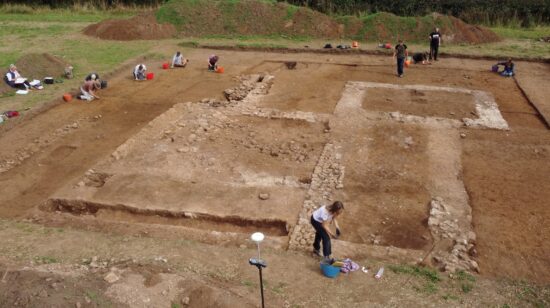
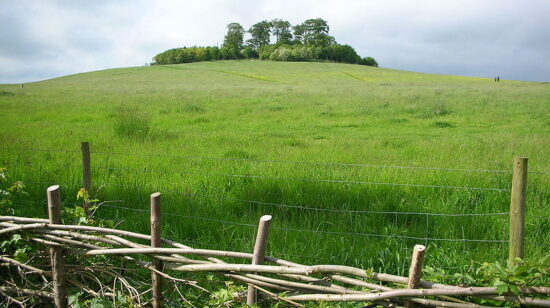
Archaeology Dig at Long Meg and Her Daughters
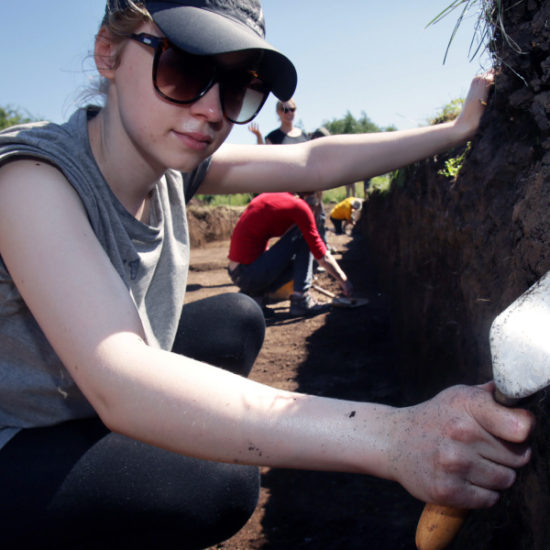

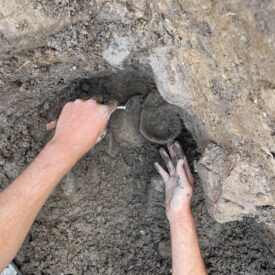

Try archaeology and learn to dig while unearthing the ancient story of Long Meg and Her Daughters – an incredible Neolithic stone cirlce within the Eden Valley and Fellfoot Forward Landscape Partnership Scheme area of the North Pennines AONB.
When: Sat 22 October – Sun 30 October 2022 (excluding Wed 26 October) 9am-4pm daily
Where: Long Meg and Her Daughters stone circle, near Hunsonby
Group size: 10
Experience level: No previous experience necessary!
Who join the dig: Anyone can join, but some places are reserved for people who live, work, study, or volunteer within 30 miles of the North Pennines AONB
Lead by: North Pennines AONB Partnership and DigVentures, as part of the Fellfoot Forward Landscape Partnership Scheme’s Uncovering the Past project
Cost: Free (this dig is being funded by North Pennines AONB Partnership’s Fellfoot Forward landscape partnership scheme, funded through Cumbria County Council and National Lottery Heritage Fund)
Food, travel and accommodation: Accommodation and food not included but we may be able to support travel costs through our Community Travel Grant scheme
Please note: We may ask for proof that you live within the stated area before the dig begins. If in doubt about whether you can join the dig, please email us before booking.
If you are under 18:
Teen ‘DigClub’ sessions are available for young people aged 12-17 who live or study within the Carlisle or Eden Districts. Please book your spot here.
Our dig site
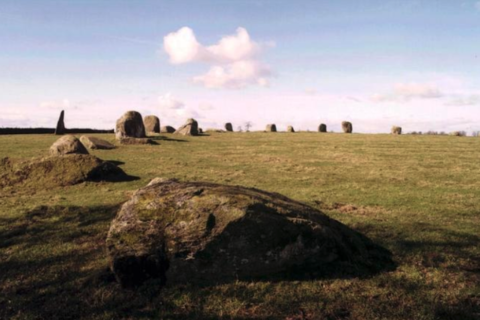
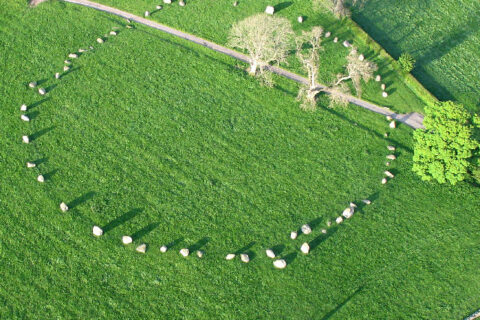
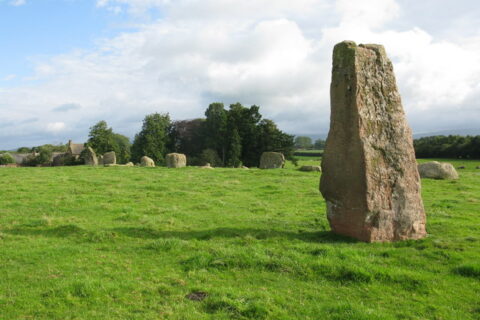
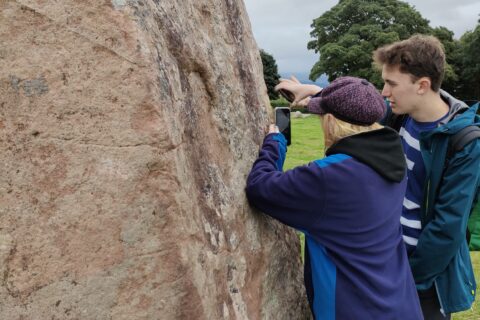
Bordered on the east by the high shelf of the North Pennines and on the west by the mountainous Lake District, this part of Cumbria is not only beautiful, but absolutely full of fascinating prehistoric archaeological sites.
Since the last glaciers retreated, the Eden Valley has been an important routeway for people moving through the landscape as they followed the path of the river, tracked animals, and eventually, settled and planted crops. The amazing stone circle at Long Meg likely starting being constructed around 5000 years ago in the Neolithic period, and has stood proud in the landscape ever since. It is one of around 1300 stone circles across Britain and Ireland and research is increasingly showing that the Neolithic was a vibrant period of time where people and their technologies for building these huge monuments travelled across the country and beyond.
Why did huge numbers of people come together to build this monument and how did they use it? Long Meg is a fascinating puzzle and archaeology can help answer some of these questions. As part of the Fellfoot Forward Landscape Partnership Scheme’s Uncovering the Past project, DigVentures is helping local communities grapple with these questions and explore the archaeology on their doorsteps. In this community excavation we’re incredibly fortunate to have this rare opportunity to investigate a site of such significance and importance.
What we'll do


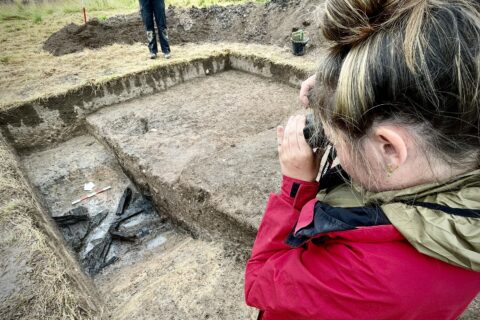
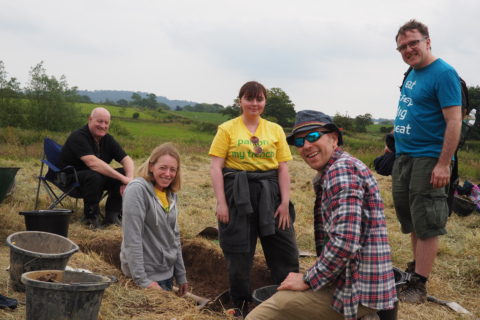
DigVentures has been called in to help answer some very important questions about this nationally important prehistoric monument. If you want to try archaeology, and experience what it’s like to unearth the past first-hand, this is your chance.
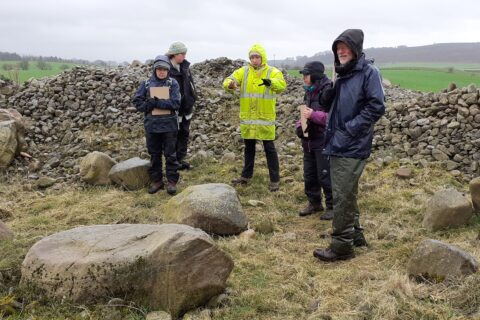
During this dig, you’ll help us unearth new clues about prehistoric life in the Eden Valley. To do it, we’ll teach you all the basic skills that a field archaeologist uses on a dig, including how to excavate, recognise new archaeological layers, identify finds, and record your discoveries like a pro.
If you join us for longer, you’ll have opportunities to accrue other archaeological skills too, like more advanced excavation techniques, archaeological photography, and more.
You’ll help us to recover evidence that can help us build up a chronology of the site, including the identification of different stratigraphic layers, dateable artefacts or other dateable material, and figuring out how different parts of the site fit together chronologically.
We’ll work together to unearth our site, and our friendly team of professional archaeologists will be there to guide your search for evidence every step of the way.
By the end, you’ll be heading home with a whole new range of archaeological skills and experiences. And undoubtedly you’ll have contributed to our knowledge of this fascinating and nationally-important heritage site.
Location
Our meeting point is the new car park adjacent to the Long Meg site. From there, access to the site is a short walk down the road.