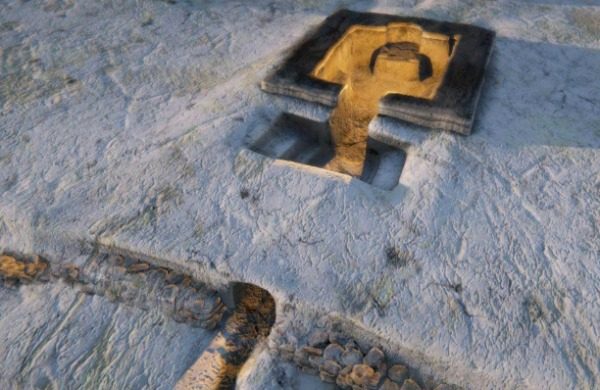
Digital reconstruction of what the steam room would have looked like. 📷 Piotr Kolodziejczyk
Archaeologists excavating the ancient city of Nakum in Guatemala have discovered a 2,500 year old steam bath carved into bedrock.
When archaeologists discovered a sloping tunnel leading into a rock-cut chamber they initially thought it was the entrance to a tomb. But as they worked their way inside, they realised that it was something quite different: an ancient steam bath that the Maya may have used for purification, relaxation, and religious practices.
“We initially thought that we were dealing with a tomb. But while gradually uncovering subsequent parts of the structure, we came to the conclusion that it was a steam bath” said Wiesław Koszkul from Jagiellonian University, who supervised the excavations.
As the archaeologists progressed with the investigation, they realised that the sloping tunnel wasn’t an entrance, but an exit where excess water would once have flowed out. And, a few meters further along, the team found a handy set of stairs leading to a rectangular room flanked with rock cut benches and an oval hearth.
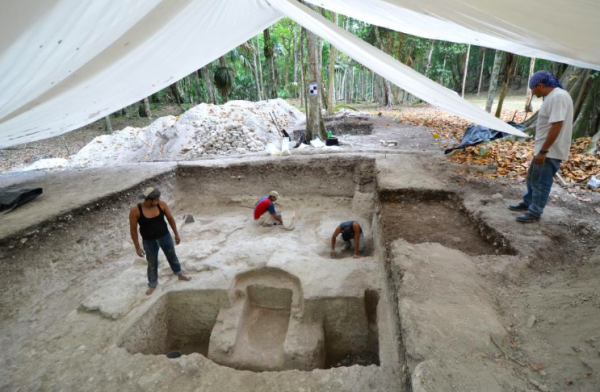
📷 W Koszkul
Evidence showed that the hearth had reached very high temperatures, and is likely where large stones were likely heated, and then splashed with water to produce steam. The resulting steam would have spread throughout the room, with excess water flowing down into a special hollow in the middle part of the steam room, before reaching a channel that would take it to the exit slope.
In the drainage channel, the archaeologists found a dark layer of ash, as well as fragments of ceramic vessels and obsidian tools.
While the lower part of the bath was carved into rock, the team believes it would also have had a superstructure made of wood, stones and mortar to prevent steam from escaping the room.
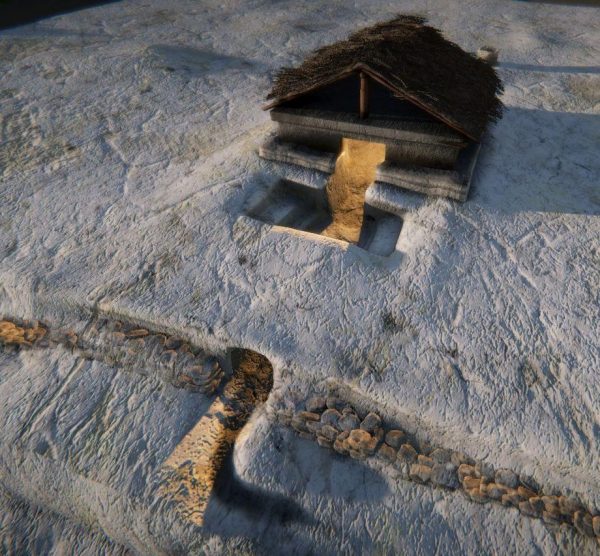
Digital reconstruction of how archaeologists think the steam bath would have looked with its wooden superstructure 📷 Piotr Kolodziejczyk
Dating evidence indicates that the bath was in use from approximately 700 BC to 300 BC, when it was eventually covered up with mortar and rubble. Quite why this happened is unclear.
“Perhaps it was related to the change of dynasty, which ruled in Nakum, or other important changes in the Mayan social and religious life” says Koszkul.
Over the years, archaeologists have found partial baths, but this is the discovery of this almost completely preserved complex is an archaeological first.
According to Koszkul, steam baths have a practical and religious function in the beliefs of the ancient Maya and, even today, pregnant women use them, believing that it will contribute to an easier delivery.
“In the Maya beliefs, caves and baths are treated almost the same way: the places where not only the gods, but also the first people were born and emerged from. They are also considered to be entries to the underworld, the world inhabited by gods and ancestors. Caves and steam baths were also associated with the harvest and the place of origin of life-giving water” added Dr. Jarosław Źrałka, who co-lead the excavation.

📷 J Zralka
Archaeologists from Jagiellonian University have been studying the city of Nakum’s ruins for over 12 years, including tombs, temples, palaces and residential buildings. Now, they can add baths to the list of structures that have been examined.
The bath was discovered during excavations at the northern part of the city, along its north-south axis, and is surrounded by ruins of temples, pyramids and buildings (including palaces) spanning nearly a thousand years from the Protoclassic phase (ca. 100 BC – AD 300) to the Terminal Classic phase (AD 800 – 950)
Other discoveries include sacrificial deposits containing, among other things, nine clay heads depicting Mayan deities, ceramic discs, human bone pendants. Underneath one of the buildings they also discovered a polychrome frieze depicting a mythical scene. One of the most spectacular structures is a 1,300 year old royal tomb from inside Pyramid No. 15, where archaeologists found burial gifts including a jade pectoral with hieroglyphic inscription.
Fancy a visit? Parts of the city have been restored and it’s possible to take a tour.
Archaeology in your inbox?!
Want to join a dig? Learn more about archaeology? Join our email list for a monthly digest of our most popular stories, plus alerts for any digs, events, or courses you can join.
Join the list
Written by Maiya Pina-Dacier
Director of Engagement at DigVentures, Maiya digs with a trowel in one hand, and a Twitter feed in the other. She loves finding new ways to get people involved in archaeology - online and in the field.




Comments (1)
Thank you for such amazing article and the discovery of ancient baths. It is so exciting to read and to be informed about so many new ancient finds. Also to realise that many hundred of years ago, people were enjoying steam baths.
Carry on with the much appreciated news, one learns so much from the digventures posts.