Unearth a Roman villa and Iron Age village at Earth Trust
13 October - 01 November 2026
DigVentures is unearthing the story of an Iron Age community and Roman villa at the foot of Wittenham Clumps. Crowdfund the dig to help make it happen - alongside our archaeologists!
We’re crowdfunding a dig to unearth the story of the Iron Age community and Roman villa at the foot of Wittenham Clumps. Help us reach our goal and you’ll have the amazing opportunity to take part in the dig itself – online, or in the field!
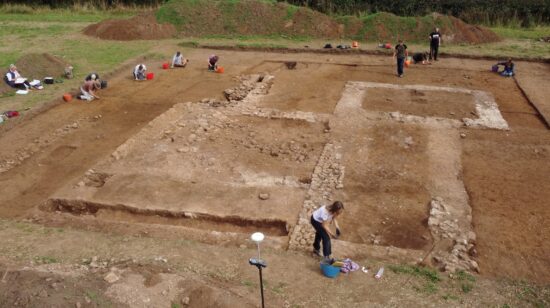
When the remains of a Roman villa were discovered during excavations next to the Earth Trust visitor centre, at the foot of Wittenham Clumps in Oxfordshire, it began to reveal the story of a Romano-British family who lived and worked the land in the 3rd-4th centuries AD.
From Roman kitchen utensils to the arrival of the first pet dogs in Roman Britain, these discoveries have given us a glimpse into an everyday family home. But they’re just the tip of the archaeological iceberg.
Beneath the Roman villa, lie the remains of the Iron Age community who lived here before them – including roundhouses, underground storage pits, Iron Age animals, and dozens of fascinating artefacts.
What else can we learn about these communities? How was the world changing around them? And can we help Earth Trust tell the stories that span the last 2,500 years?
Featured on Digging for Britain, The Guardian, The Smithsonian, and more, it’s a site that has captured the imaginations of people across the country – and the rest of the world.
This year, our goal is to unearth the rest of the Roman villa and map the Iron Age village that preceded it. Help us reach our goal to make the dig happen and you can be part of the archaeological team unearthing ancient Oxfordshire’s stories
Our dig site
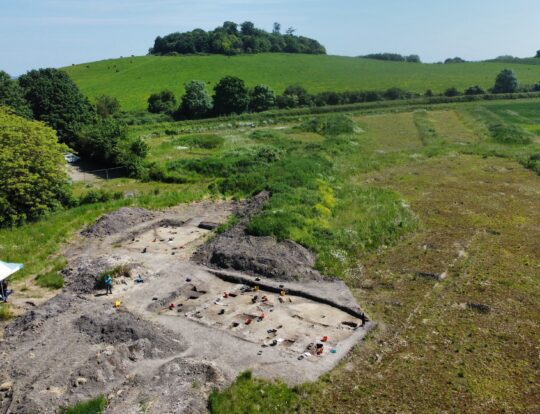
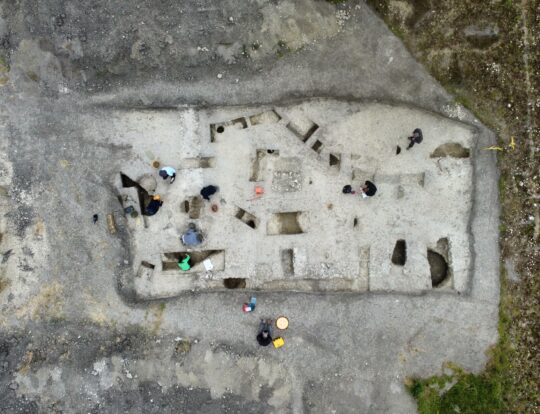
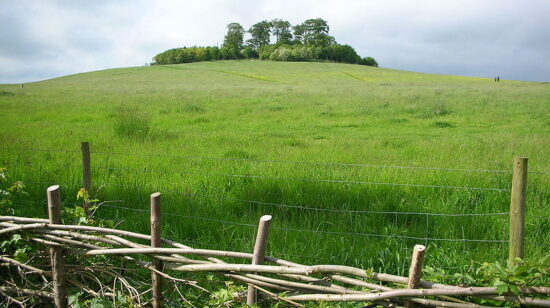
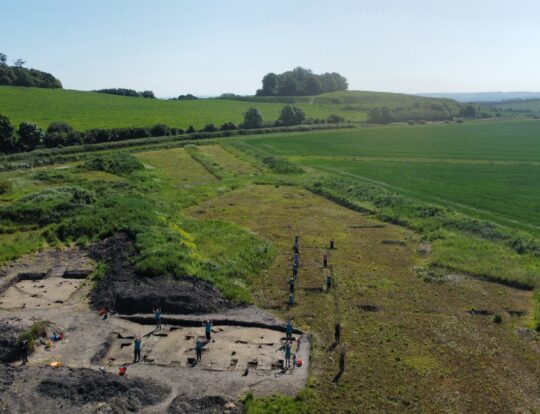
Our dig site sits at the base of Wittenham Clumps, a famous ancient hillfort near the River Thames. Set in the same landscape as the Uffington White Horse, and bustling with all the trade and traffic passing en route to towns like Dorchester, it must have been an extraordinary place to live.
Today, much of this landscape is under the guardianship of Earth Trust, the much-loved environmental charity that cares for, improves, and provides access to green spaces in Oxfordshire, including the hillfort.
Our archaeological investigations first began here ahead of planned improvements and tree-planting around the Earth Trust visitor centre. These excavations resulted in a groundswell of public interest following the discovery of a previously unknown Roman villa, and traces of an Iron Age settlement before it.
Many of these discoveries made national news headlines, including a tiny Roman pet dog, a set of Roman kitchen utensils, a pair of hobnail boots, brooches, hair combs, a Roman pen, and medical tools – all sitting on top of a vast Iron Age village, complete with roundhouses, and the workshop of an Iron Age ‘master’ blacksmith.
But these discoveries were just the tip of an archaeological iceberg.
The discoveries so far
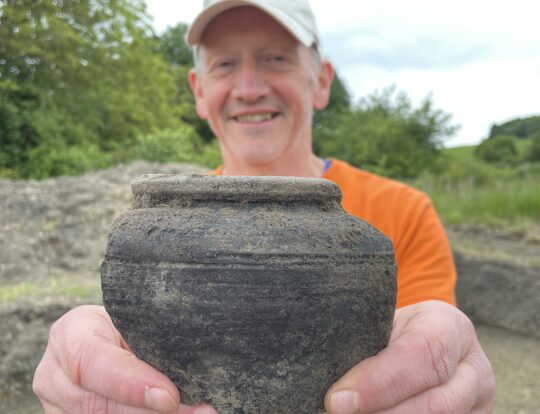
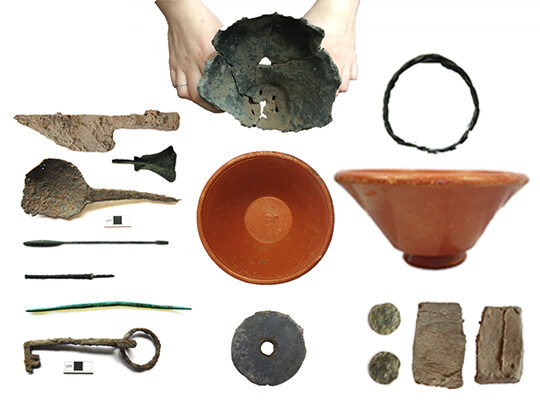
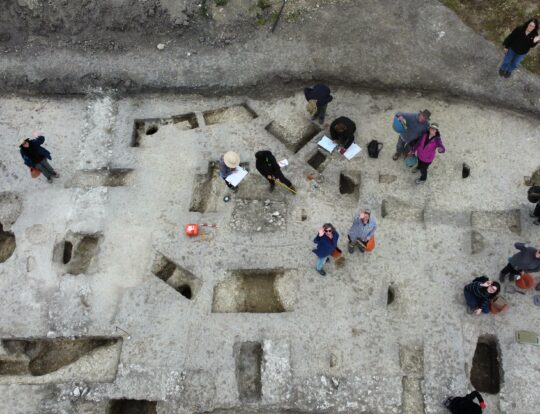
In partnership with Earth Trust, we launched our first crowdfunded dig here in 2024. Our goal was to expand outside the original excavation area and explore new and untouched parts of this previously unknown villa in more detail.
Typical Romano-British villas were a large, rural complex of buildings that served as home, farm, and sometimes industry for a family and its workers. In previous years, the dig had revealed some of the villa’s outer buildings, such as kilns and corn driers, as well as a long row of columns – the edge of the main villa building itself.
How big was this building? What was its layout? How fancy was it? And what could it tell us about the people that lived here?
In 2024, our crowdfunded dig revealed that this villa building was at least 30m long and 15 m wide. Most importantly, it revealed that there was more than one row of columns – and they were inside the building instead of outside!
This discovery completely changed our understanding of the villa; instead of a typical corridor villa, it now seems that the main villa building was an aisled farmhouse, a type that is unique to Roman Britain.
Within the ruins, we’ve recovered further evidence of family life, including Roman cooking pots, fancy ceramics, a double-pointed bone needle, a stone pestle, and evidence that, as well as growing crops and making beer, the villa may have been producing metal.
In the surrounding areas, we found evidence of the Iron Age people who lived here before the Romans. Roundhouses, underground storage pits, and domestic artefacts tell their story, along with remains of the animals who lived and worked alongside them – including a dog with Iron Age dog treats still in its belly.
Our goal now is to unearth the rest of the Roman building, and see what else we can reveal about the Iron Age village underneath it…
What we're looking for
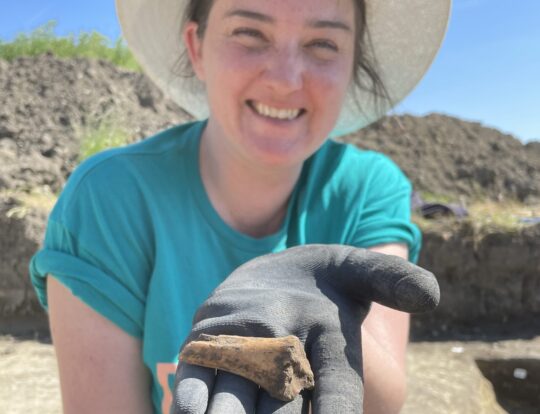
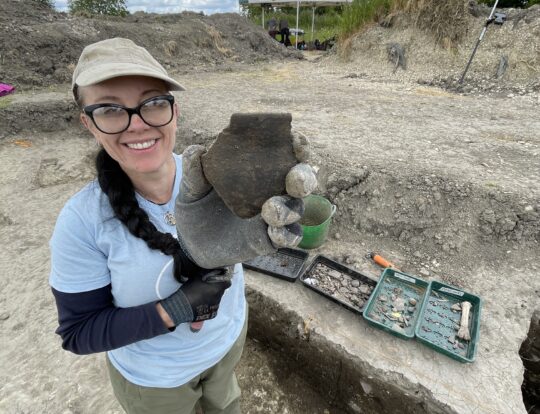
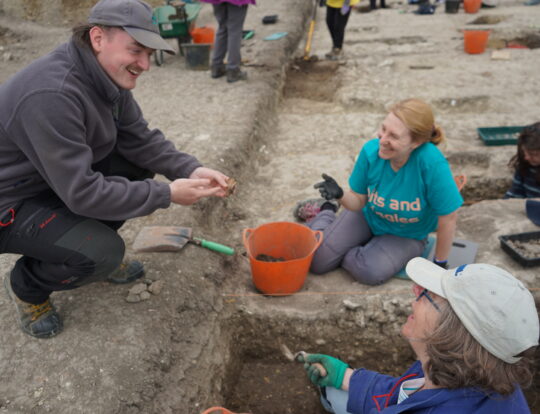
In partnership with Earth Trust, our goal is to uncover the rest of this unique Roman villa building and explore more of the Iron Age village underneath it.
With your help, we hope to unearth the full footprint of the villa and fully establish its size, layout, number of rooms, and what each one was used for – after all, this villa appears to have been uniquely adapted to Romano-British life.
Plus, we’ll be looking for evidence that can give us a more detailed snapshot of the Iron Age families who lived here before them, and their relationships with the people, animals, and natural features of the surrounding landscape.
Whether it’s personal artefacts, footprints of buildings, charred seeds or plant remains, animal bones, or the stratigraphic layers that can unlock the sequence and chronology of events, we’ll look for archaeological evidence that can add to the story.
Can we go on to build a more complete picture of all the different people, traditions, cultures, and ways of interacting with the landscape that have come and gone over millennia here at Earth Trust?
With your help, we can find out.
Why we want you to get involved
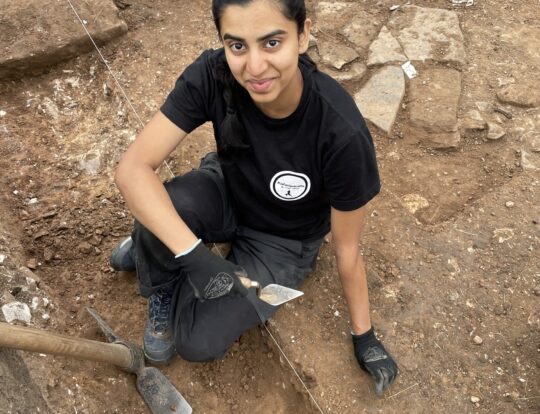
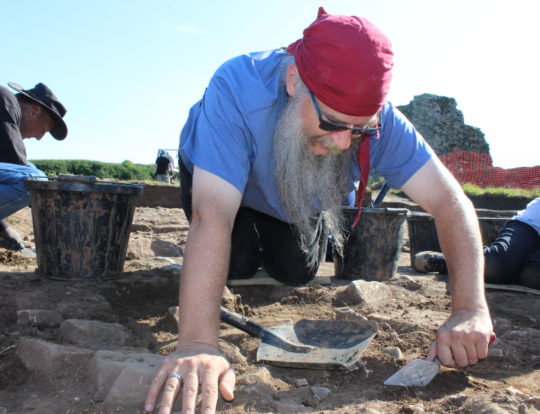
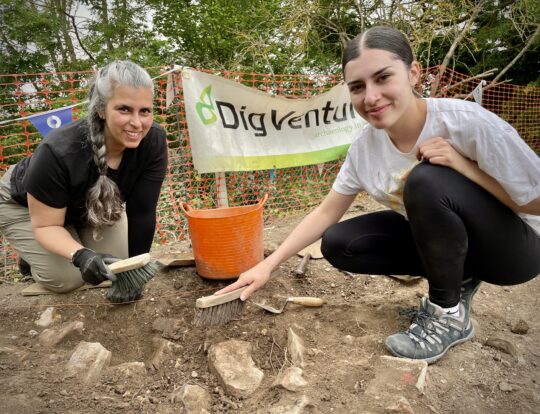
Archaeology doesn’t just have to be about watching documentaries on TV, visiting museums, or reading things in the news. It can also be about getting involved and helping to unearth the stories that matter to you.
Across the UK, there are hundreds of archaeological sites with incredible stories to tell but just haven’t got the attention they deserve.
At the same time, there are thousands of people like you who love history and archaeology, and know that their stories are just too important to ignore.
With guidance from our top team of archaeologists, and with your interest and involvement, we know that together we can uncover stories that really matter – to local communities, and to people like you across the country and the rest of the world.
We believe that this site at Earth Trust is one of those places: a site whose story deserves to be shared with all the visitors, school children, and local residents who come to see the site every year, as well as Iron Age and Roman history fans across the country.
But that can only happen if you get involved. It’s archaeology in your hands!
Archaeology for Oxfordshire
The stories unearthed by archaeology has the power to bring people together, igniting curiosity and a sense of joint discovery about the past. Over the last few years:
- Open days have drawn over 3,000 people, with displays, hands-on activities, and re-enactments
- Local school and SEND groups have joined tours and hands-on dig sessions
- Documentaries, press coverage, and exhibitions at the Abingdon County Hall Museum have spread the reach of the discoveries to millions of people across the country
The next phase will continue to work with Earth Trust to build on this success, enabling local residents and school groups to explore and connect with the incredible history across this landscape.
Crowdfund the dig to help make it happen!

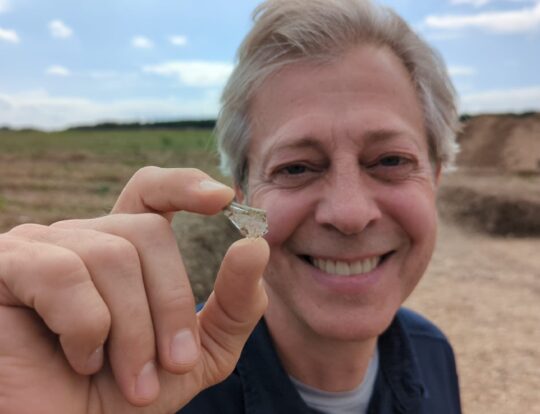
Whether you love history, this landscape, or just want to help unearth the past, you can:
- Join the Dig Team
- Join the Finds Team
- Bring the kids to DigCamp or DigClub
- Join a VIP Tour to meet the archaeologists on site, or
- Support the dig from a distance!
However you choose to get involved, you’re contributing to nationally significant research.
As well as excavation and fieldwork, your support covers planning and research design, conservation, expert analysis and reporting, archiving, outreach and publication.
We make sure that all of the results and discoveries from the dig are freely available to examine online and are published in our official Dig Report – with your name in the credits.
Through our work and collaboration with other experts in the field, we can make a real contribution to our knowledge of Roman Oxfordshire.
And by taking part, you can too.
Join the Dig Team!
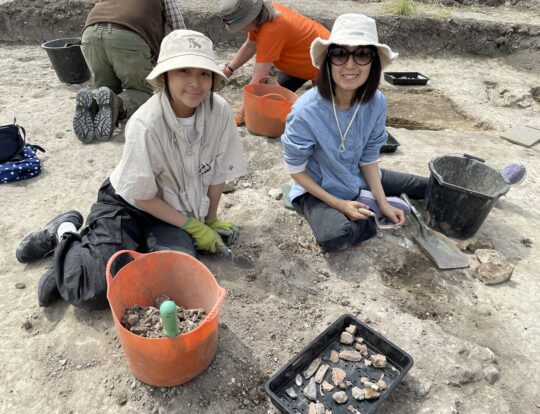
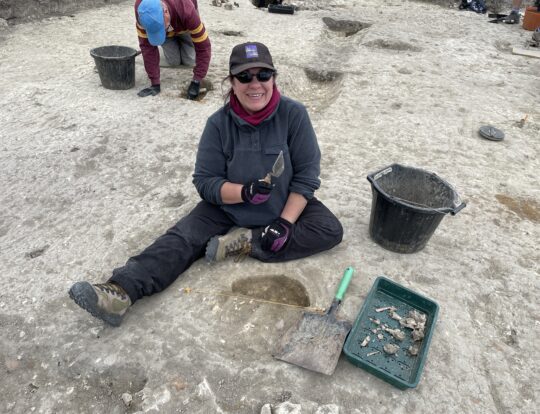
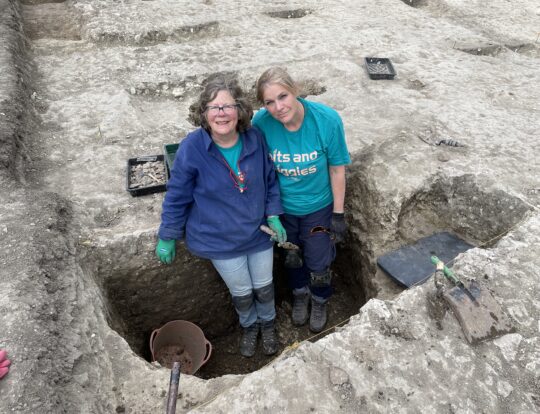
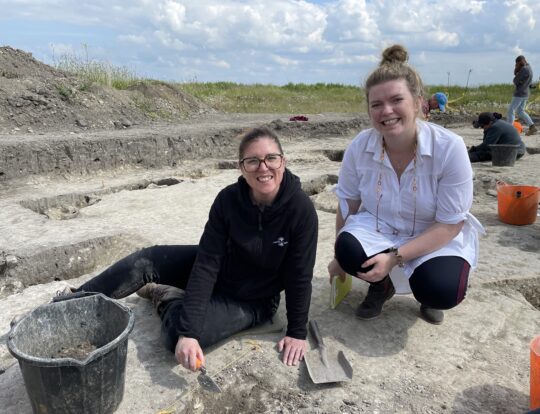
Join us on the dig and we’ll teach you all the essential skills that field archaeologists use: how to spot new archaeological features, how to excavate them, how to identify artefacts, and how to record what you find.
The archaeology you do will be real, hands-on, and just a little bit dirty. And your search for evidence will be guided by our friendly team of archaeologists every step of the way!
You’ll be part of our team from the moment you arrive, and the longer you stay, the more you’ll learn. Starting with the basics of how archaeologists locate which areas to dig through a process known as ‘cleaning’, you’ll soon progress through a range of different skills and more complex excavation challenges – from investigating features and lifting artefacts, to recording and interpreting your discoveries like a pro.
Most importantly, you’ll walk away having gained real archaeological experience – and having had fun while you’re at it!
Join the Finds Team!
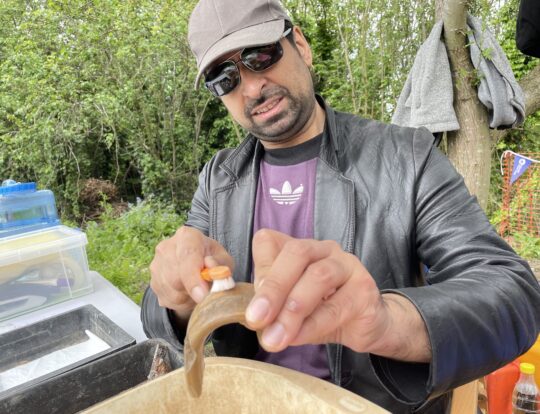
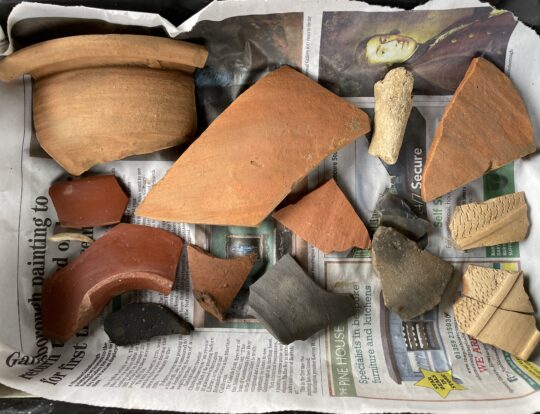
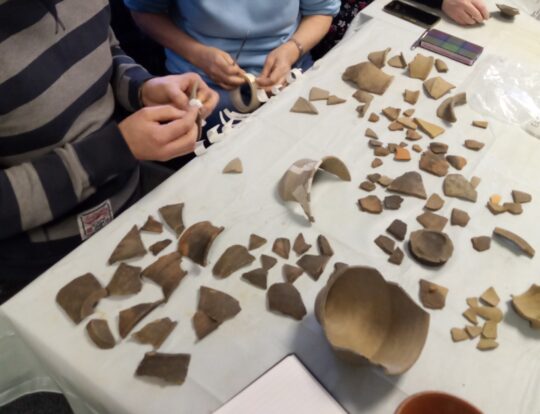
Archaeology isn’t just about digging! Join us on the Finds Team, and you’ll be part of the team that handles and cares for everything we find on the dig.
You’ll learn how to clean and prepare artefacts ahead of conservation; how to handle different materials, including bone, metal, and pottery; how to sort, identify, and analyse collections; and even how to draw, photograph, and record them.
The artefacts you handle will be fresh from the ground, straight from the trenches. Join us on the finds team to help conserve these incredible discoveries and unlock the stories and secrets they hold.
Support the dig from a distance
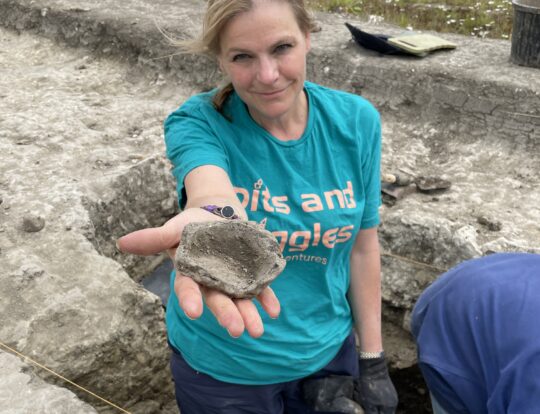
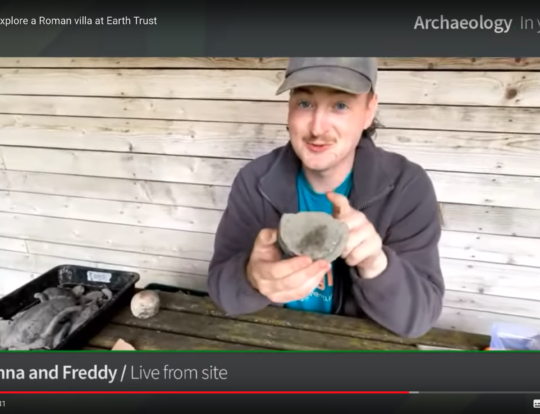

Can’t join the dig, but still want to be part of making it happen? Your support is just as important; it helps us do more to:
- Get new communities involved in archaeology
- Carry out more in-depth analysis of our discoveries
- Share the discoveries with you in new and exciting ways
From radiocarbon dates and conservation by specialists to community outreach, this is where your contribution really counts.
To show our appreciation, we’ll send you live updates whenever we make an exciting discovery or get interesting results back from the lab. Plus, we’ll acknowledge you as an official contributor in our Dig Report and send you a digital copy – with your name in the credits.
You can even choose extra perks like:
- A guided tour (online or in person)
- One of DigVentures’ famous archaeology t-shirts as an extra gift
If you’ve ever wanted to be part of a team who are making real, ground-breaking discoveries about the past, this is your chance to make that happen.
Choose a crowdfunding level
Follow our progress
Follow the latest archaeology action from our Oxfordshire site as it happens.