
Believe it or not, increased biodiversity could be a sign that an early urban settlement was forming.
We often think of sprawling urbanism as bringing death to the countryside. All that concrete and industry rides roughshod over the landscape. But many modern studies show that with gardens, parks and all sorts of microenvironments, cities can actually bring about increased biodiversity.
And it seems the same was true in some of the very earliest proto-urban settlements; while early farming societies deforested their surroundings, a study published in PLOS One suggests that early urbanites made them greener.
Neolithic destruction
From the Neolithic onwards, there is plenty of archaeological evidence for the disruptive effects of agriculture on the environment. Forest clearance, agriculture and livestock all show up in palaeoecological record around 6,000 years ago.
But, the researchers argue, while archaeologists have looked at landscape-scale disturbance of early farming activities in central Europe in detail, they haven’t yet really explored how a few thousand years later, early urbanism started to impact the local landscape.
Urban blossoms
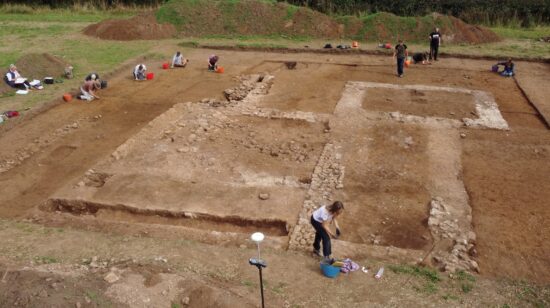
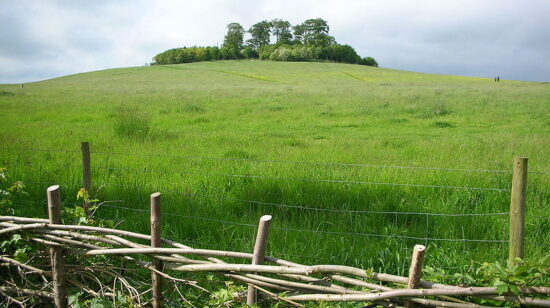
To find out, the researchers took a series of sediment cores from inside an archaeological settlement at Puy de Corent in Auvergne, France and examined the different pollens within.
Starting out as a fortified camp, Puy de Corent was first occupied in the Middle Neolithic (c. 4000–3400 BC). From the Bronze Age onwards, it underwent waves of increasingly dense settlement, culminating with an Iron Age Oppidum – densely populated proto-urban settlements with administrative, commercial and religious buildings, some of which housed up to 10,000 people.
What they found was pretty surprising. For the first 2,000 years or so, there was the expected evidence of opening up of the landscape, the appearance of cereals and the intensification of agriculture and deforestation over time.
But just as the settlement shows the first signs of urbanism around 950 BC, instead of further intensification and declining biodiversity, they found the opposite – evidence for agriculture drops off and floral diversity spikes.
In classical palaeoenvironmental studies of Bronze Age human impact, this kind of pattern has been interpreted as reflecting periods of abandonment or decline, but here, this is clearly not the case. So what’s going on?
Less farming, more flowers
This phenomenon is actually one that’s also observed in more recent urban environments, including medieval and even industrial era ones. Evidence of agriculture declines and as the city expands, intense disturbance to the ground generates a diverse array of habitats for species to invade. Later on, planting of fruit trees and gardens can also increase biodiversity within the city.
So, while early activity at the site was characterized by deforestation and farming, like many later cities, this early urban site bloomed.
Archaeology in your inbox?!
Want to join a dig? Learn more about archaeology? Join our email list for a monthly digest of our most popular stories, plus alerts for any digs, events, or courses you can join.
Join the list
Written by Maiya Pina-Dacier
Director of Engagement at DigVentures, Maiya digs with a trowel in one hand, and a Twitter feed in the other. She loves finding new ways to get people involved in archaeology - online and in the field.




There are no comments on this post yet. Be the first!