Windmill Mound
A windmill mound is an artificial earthen mound that is the former site of a windmill.
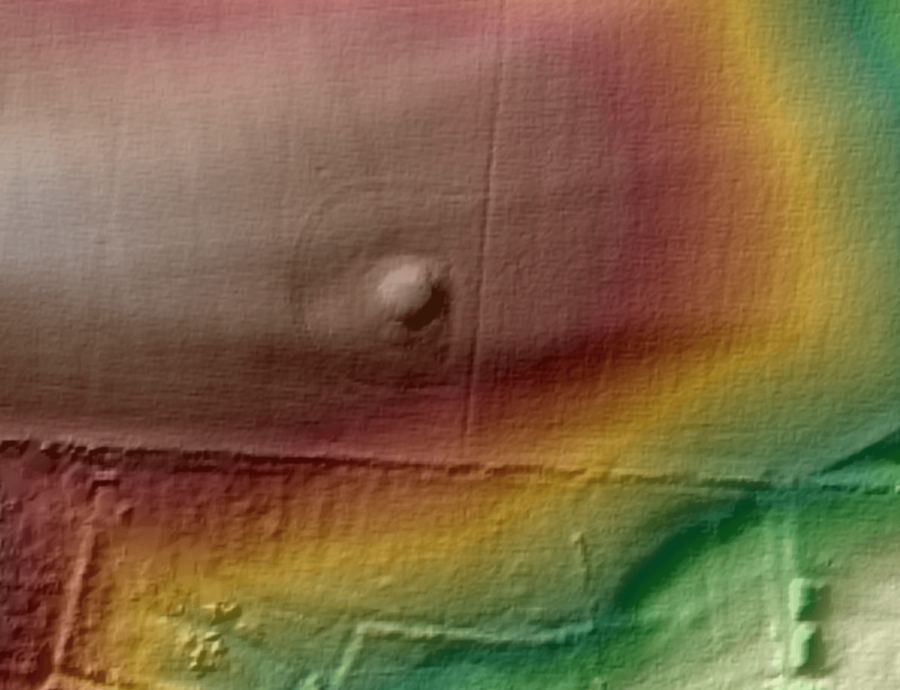

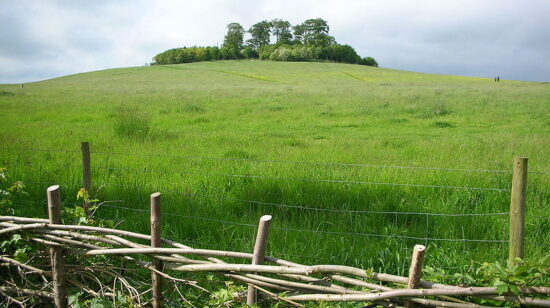
These mounds may be medieval (from c. AD 1100) in origin, though they continued to be built through the post-medieval period and into the 19th century. Windmill mounds (or ‘mill mounds’) may be easily confused with mottes or barrows, especially since some of these are actually re-used for windmills. Mounds made specifically for windmills are usually smaller – c. 10m in diameter (though they can be as large as 30m).
Early post-mill towers were constructed in wood with a central post that let the tower be turned depending on wind direction. Foundations had to be as substantial as possible since the structures were tall and narrow and placed in windy locations. Often the central post was set in two large cross beams that were embedded in the ground. The trenches for the beams were sometimes stone lined. This can leave a characteristic cross shape at the top of mounds helping to identify them.
What to look for:
- A (usually) flat-top to the mound itself
- A possible cross shaped depression on the top of the mound
- A surrounding ditch which may be associated
- Association with a farm or settlement