Soon, archaeologists will be able to see through layers of paint and dirt to explore artworks in more detail than ever before, without even touching them. But that’s not the only reason that this super device is so exciting…
Researchers working on INSIDDE, a pioneering EU Funded Project, have developed a prototype device that can explore under the surface of paintings, or through dirt encrusted archaeological objects. We just can’t wait to get our hands on one and here’s why…
It’s a new technology!
Archaeologists are always excited by the prospect of any new tool or device that can help us learn more about the objects that we work with, and allow us to interact with them in ways we’ve never been able to before!
It’s non-intrusive
One of the main challenges archaeologists face is finding ways to extract vital information from objects without losing or destroying any evidence in the process. Removing dirt or residue from objects may be aesthetically pleasing, but could actually result in the loss of important data.
[Read more: Why cleanliness is sometimes bad for archaeologists]
It’s less damaging than X-ray or infrared
If you thought X-ray and infrared were harmless to artefacts, think again. Both methods end up heating the object up, but this new graphene scanner generates high frequency terahertz waves, which can penetrate an object to reveal previously hidden features without damaging it.
It reveals more detail than either of them
X-ray and infrared reflectography can both be used to carry out a similar kind of study, but they are unable to distinguish the finer layers in some ceramic objects and paintings. But the graphene scanner? Well THAT can expose super-fine details, right down to individual brush-strokes and tool marks, which may provide valuable new information on the manufacture or creative process. Pretty neat!
It’s got the magic 3D element
3D imaging is hot stuff right now. Pairing the graphene scanner up with a commercial scanner, archaeologists will be able to generate 3D models of an object that is so detailed it will accentuate features that are invisible to the naked eye.
 It aims to become open access
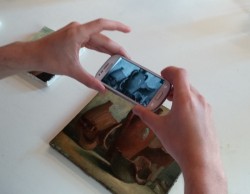
The 2D and 3D images generated will ultimately be uploaded and made available through museum apps on smartphones and tables. Just think, you’d be able to walk up to something on display and digitally explore the layers of detail hidden beneath.
It’s great for small museums
The project researchers are currently assessing how the scanner could become a cost-effective solution for smaller local museums, which don’t have access to conservation departments, to discover more about their own collections without the huge costs associated with restoration.
The funding is out there
In what can only be described as a difficult time for archaeology and heritage, it is encouraging to read that organisations are investing in technology that will produce new information and make heritage more accessible to everyone, all while saving money in the long run. Take for example, our own Digital Dig Team which helps archaeologists publish every find in a simple, searchable online museum, and the EU-funded Project Mosul, which is using photogrammetry and 3D imaging to reconstruct lost artefacts destroyed by IS.
[Learn how to create 3D models using your own camera]
Ready in time for Christmas?
The scanner is still in its trial phase, but the initial results are encouraging. The Asturias Fine Art Museum in Spain has been trialling both the scanner and the app. So far, they used the scanner to distinguish between different pigments in paintings, and then use the app to share these new findings with visitors.
The project is due to end in December 2015, so we’re hoping it might just be available in time to make it onto our Christmas lists…
Archaeology in your inbox?!
Want to join a dig? Learn more about archaeology? Join our email list for a monthly digest of our most popular stories, plus alerts for any digs, events, or courses you can join.
Join the list
Written by Rosanna Ring
Rosanna is one of DigVentures' intrepid Community Archaeologists. She's busy turning Barrowed Time (our dig at Morecambe's Bronze Age burial mound) into a real seaside adventure, and getting the Pop-Up Museum on the Prom ready for you to visit!