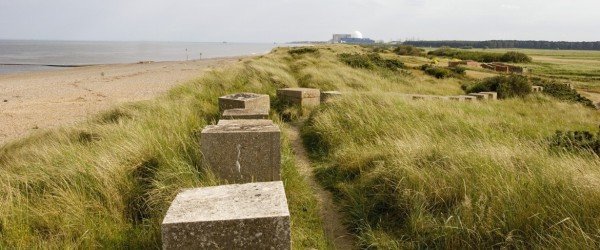
Pillbox may conceal medieval archaeology. Can you help uncover it?
No, this story isn’t about Tom Clancy’s epic computer game. Instead, it’s about the real archaeological evidence for a medieval splinter group concealed in a WW2 pillbox and the special team we need to put together to retrieve it…
The story starts in 1182, when Suffolk’s one and only group of Premonstratensian priests settled on the coast near Minsmere. They were an unusual group of priests, not least because the land they chose to set up home was swampy, wet and full of mosquitoes. And it flooded regularly. Very regularly.
Whether they picked this inhospitable site deliberately, or whether it was simply the best land available to them at the time is uncertain. Either way, it was clear that nearly 200 years later, they’d had enough.
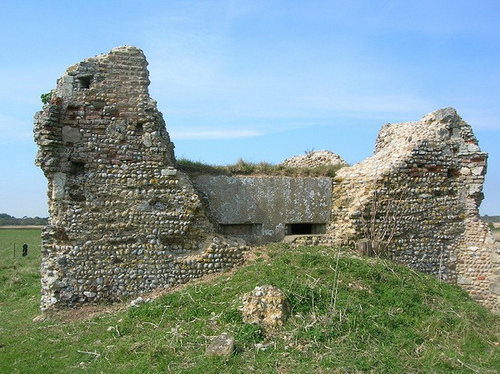
Soldiers concealed their WW2 pillbox in the ruins if a medieval chapel. Photo via Think Defence
In 1367, the site had flooded catastrophically. With the promise of religious favours for all benefactors, the group, who had so far been living out in the sticks, launched a relocation campaign among the local community. Eventually, one of their parishioners donated a new patch of land.
Of course, being priests, their home was no humble abode – it was a full-blown abbey and relocation was no easy task. Nevertheless, they dismantled the flooded abbey and moved it stone by stone to its new site two miles inland, right into the heart of a thriving community at Leiston. What they took with them is interesting, but what they left behind is just as fascinating…
Archaeological remains show that not every stone was moved. Not only was some of it left behind, those leftovers were remodeled into a small chapel. Clearly, some of the group could not bring themselves to abandon the site completely. The question is, did they form a breakaway group? How long did they stay? And why?
Hundreds of years later, those ruins became the refuge for another group. In 1940, soldiers turned the old outpost into a pillbox – a clever camouflage for their defences. They left behind a mound of rubble, which is still there to this day.
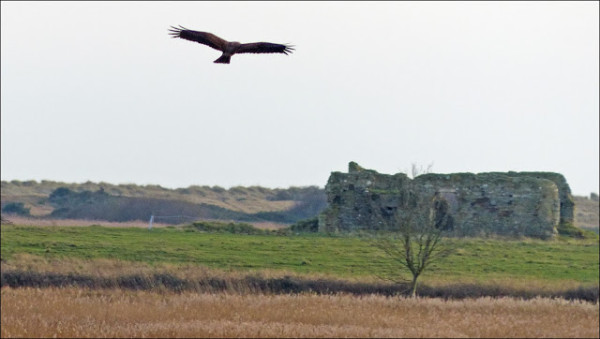
A harrier fliers over the remains of Minsmere Chapel. Photo: Caroline Gill
Today, Minsmere is a wonderful place for wildlife and the ruins are right in the middle of an RSPB reserve. But there’s also a fascinating story of a landscape that has changed and people who have changed with it. The clues to that story start with the ruins of the once flooded abbey and the evidence of those who chose to stay which is now hidden under the rubble.
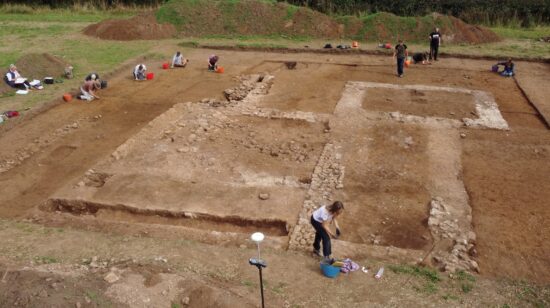
This summer, DigVentures plans to send out a special team, a splinter group from the main excavation at Leiston Abbey, to assess the remains and retrieve as much evidence from the ruins as possible.
This is the first time an archaeology project has attempted to unite the abbey and its original site, to understand how the life of a medieval community was split in two and forced to change by the landscape they inhabited, and how they chose to respond.
Archaeology in your inbox?!
Want to join a dig? Learn more about archaeology? Join our email list for a monthly digest of our most popular stories, plus alerts for any digs, events, or courses you can join.
Join the list
Written by Maiya Pina-Dacier
Director of Engagement at DigVentures, Maiya digs with a trowel in one hand, and a Twitter feed in the other. She loves finding new ways to get people involved in archaeology - online and in the field.




There are no comments on this post yet. Be the first!