Lindisfarne Sculpture

At its peak, Lindisfarne was a monastic powerhouse at the heart of the Kingdom of Northumbria. It produced some of the finest artworks of the early medieval world, with creative influences flowing in from Ireland, Scotland and Scandinavia.

Medieval sculpture can give us insight into the political views, creative influences, and religious beliefs of the time. The sculpture from this period reflects an era when politics and religion were intrinsically linked, and Lindisfarne’s influence was far-reaching.

Browse the Lindisfarne Sculpture collection

Large standing crosses were some of the most remarkable pieces produced by Northumbrian stonemasons. Adorned with Christian symbolism, crosses were used as focal points for religious worship, public gatherings, boundary markers, or to delimit areas of special significance. They stood as a reminder to all who saw them that the Kingdom of Northumbria was resolutely Christian.


The cross was adopted as a symbol of Christ’s suffering by Christians from the 3rd century. King Oswald raised the first known freestanding cross, made of wood, in Northumbria, near Hexham. This cross acted as a thanksgiving for his victory in the Battle of Heavenfield in 633 or 634.


Fragments of cross heads, shafts and bases make up much of the collection below, but you’ll also find fragmentary remains of burial markers. Elements of these sculptures may have been highly decorated and painted in bright colours.


Many of these fragments were found in the late 19th and early 20th century in poorly documented excavations. Little is known about the contexts from which the sculpture was recovered and many of the associated dates are stylistically based.


Previously, highly ornamental and carefully carved pieces have been typically dated to the peak of Lindisfarne sculpture production in the 8th, 9th and 10th centuries. Plainer, less detailed sculpture is often grouped into the 11th century and beyond.


However, as the corpus of Lindisfarne sculpture grows and further study is done, the interpretation of previously associated dates continues to evolve.


The majority of these stones are held in the English Heritage Lindisfarne Priory Collection and are on display in the site museum.

Cross shaft

Lindisfarne, AD 775-850
Learn more +

Cross shaft

Lindisfarne, AD 800-900

Learn more +

Cross shaft

Lindisfarne, AD 875-1000

Learn more +

Cross shaft

Lindisfarne, AD 800-900

Learn more +

Cross shaft

Lindisfarne, AD 875-950

Learn more +

Cross shaft

Lindisfarne, AD 875-950

Learn more +

Cross shaft

Lindisfarne, AD 900-1000

Learn more +

Cross shaft

Lindisfarne, AD 950-1000

Learn more +

Cross shaft

Lindisfarne, AD 875-1000

Learn more +

Cross shaft

Lindisfarne, possibly AD 800
Learn more +

Cross arm

Lindisfarne, AD 900

Learn more +

Cross

Lindisfarne, Early Medieval

Learn more +

Cross arm

Lindisfarne, AD 900

Learn more +

Cross

Lindisfarne, AD 900

Learn more +

Cross head

Lindisfarne, AD 775-850

Learn more +

Cross base

Lindisfarne, AD 775-850

Learn more +

Burial marker

Lindisfarne, AD 800

Learn more +

Cross

Lindisfarne, Early Medieval

Learn more +

Cross

Lindisfarne, AD 700-800

Learn more +

Burial marker

Lindisfarne, AD 900

Learn more +

Cross shaft

Lindisfarne, AD 875-900

Learn more +

Cross shaft or impost

Lindisfarne, AD 1000
Learn more +

Cross shaft

Lindisfarne, AD 1050-1100

Learn more +

Cross head

Lindisfarne, AD 1000

Learn more +

Burial marker

Lindisfarne, AD 1075 - 1125

Learn more +

Cross arm

Lindisfarne, Early Medieval

Learn more +

Cross boss

Lindisfarne, AD 800-900

Learn more +

Cross shaft

Lindisfarne, AD 800-900

Learn more +
Close

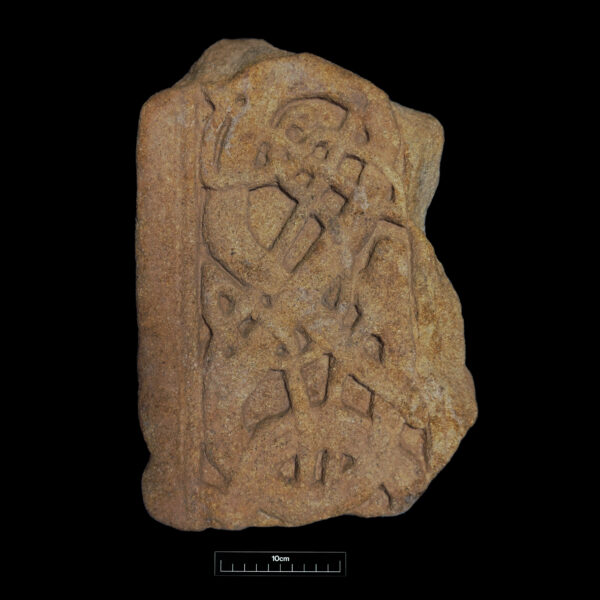
Cross shaft Lindisfarne, AD 775-850

Manuscript inspired motifs


This is a fragment of decorated cross shaft. Crosses were used as focal points for outdoor worship, often adorned with carved scenes used for teaching and preaching to gathering crowds.

The broadest, most complete face of this stone is decorated with a ribbon animal. The animal’s head is seen in profile with a lentoid eye, squared–off muzzle and a single ear extending into the interlace. Its double-outlined body ends in a single leg and three-toed foot.

The narrow face shows a crouching animal in profile, enmeshed in its tail with possible ears. The head appears to be rounded and the front leg ends with a three-toed foot.

These carved decorations may have been based on manuscripts, taking inspiration from similar motifs appearing in the Lindisfarne Gospels.

English Heritage accession number: 81077047

Close

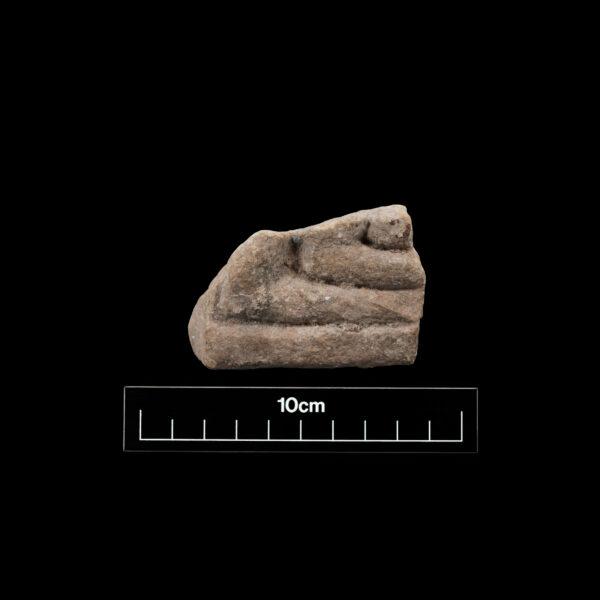
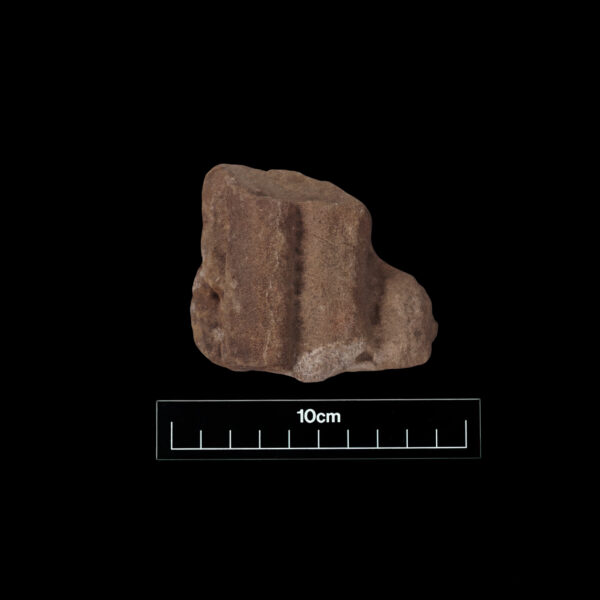
Cross shaft Lindisfarne, AD 800-900

Crouching animals


This cross shaft fragment is carved on all faces. A wide, flat band separates the remains of the damaged neck, where the cross head was formed, from the shaft

On the narrow side beneath the remnants of the curved neck are two interlaced ribbon animals. Both have straight front legs and bodies which end in curled tails. Their heads are rounded, with their jaws open and curled back. Their ears and tails are entwined, coming to an end with two frond-like terminations. The depiction of animals on this sculpture is unique in Northumbrian sculpture and is closely related to traditional Pictish animal ornament.

The broad, more deeply carved face of this stone appears to depict the lower limbs of two crouching animals, enmeshed in interlace and separated by what might be a tree trunk. The reverse face shows a plait, possibly made of twelve cords.

This sculpture was found sometime before 1862 in the nave of the later church of Lindisfarne priory.

English Heritage accession number: 81077053

Close

Cross shaft Lindisfarne, AD 875-1000

Christ in Judgement


This is part of a sandstone cross shaft. The upper panel is carved with a central seated figure, arms bent and hands on hips, topped with a halo. While this figure is similar to depictions of squatting individuals seen in Irish tradition metalwork, this particular figure may represent a seated Christ in a Judgement scene.

Above him are two figures each holding a book, or mallet, who appear to be blowing a trumpet. They are bearded, bare-legged and wearing short tunics.

Below the possible Christ figure are two seated figures each with a horn or scroll. The scrolls may have been painted with a name or biblical quote.

Intricate interlace patterns also adorn this cross shaft.

English Heritage accession number: 81077064

Close

Cross shaft Lindisfarne, AD 800-900

Reused as a column


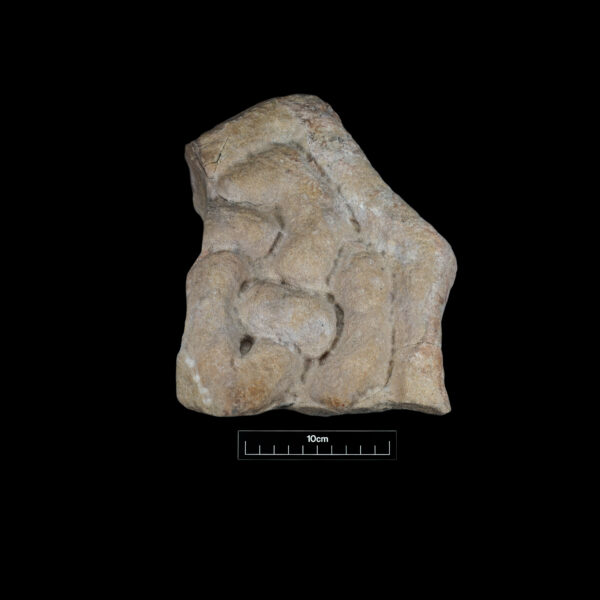
This incomplete cross shaft may have been reused as column in the 12th century priory church at Lindisfarne.

Found some time before 1924, only one worn face survives. The rest of the sculpture has been lost from reworking the stone into a column. The remaining decoration could be that of an animal or interlace design.

English Heritage accession number: 81077054

Close

Cross shaft Lindisfarne, AD 875-950

Fretwork and a four-legged beast


This cross shaft demonstrates many different designs. It is adorned with geometric decorations, the legs of a standing four-legged animal, fretwork, a botched ring-knot design, and finally a plain panel. Its worn and damaged appearance suggests it could have been repurposed later in its life.

English Heritage accession number: 81077063

Close

Cross shaft Lindisfarne, AD 875-950

Scottish parallels


Crosses such as these could have been used a boundary marker to delimit or indicate an area of particular importance such as a monastic precinct or vallum. On this fragment there are the legs of a ram above a carved geometric knot known as key or fret pattern. This pattern is identical to that on a cross found at St. Andrew’s in Scotland.

English Heritage accession number: 81077060

Close

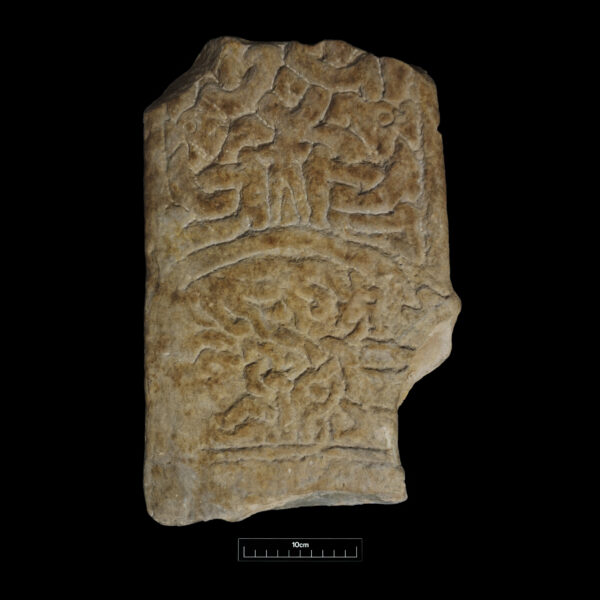
Cross shaft Lindisfarne, AD 900-1000

Less accomplished work


This fragment of sculpture was part of a cross-shaft which has been re-used and damaged over its lifetime.

The main face of this fragment is decorated with a flat, curved band and random lumpy interlace. Emerging from both sides of the interlace are two bird’s heads with round eyes and open beaks. The lower part of a human body appears in the centre, stood on the curved band.

At the base of this face is a four-legged animal which may be laying down. It has a lumpy forehead, pointed ear, a canine jaw and its tongue and two legs disappear into the jumble of interlace.

The opposite face is divided by a thick curved roll which may terminate in a bird’s head. An irregular interlace pattern sits below.

This fragment may have originally formed part of the same monument as this cross arm.

English Heritage accession number: 81077056

Close

Cross shaft Lindisfarne, AD 950-1000

Copycat designs


This fragment of cross shaft depicts two bearded figures facing each other separated by a column, suggesting they are stood in a building. Similar figures are evident on other earlier crosses, and this shaft may have taken inspiration from such crosses.

A similar example can be seen in the  Norham 04 sculpture.

English Heritage accession number: 81077062

Close

Cross shaft Lindisfarne, AD 875-1000

Sole surviving face


This is a broken, worn, and incomplete cross shaft with only a single narrow face surviving. This remaining face is edged by two flat bands and decorated with traces of interlace. This fragment may have been part of the shaft for this cross arm fragment.

English Heritage accession number: 81077058

Close

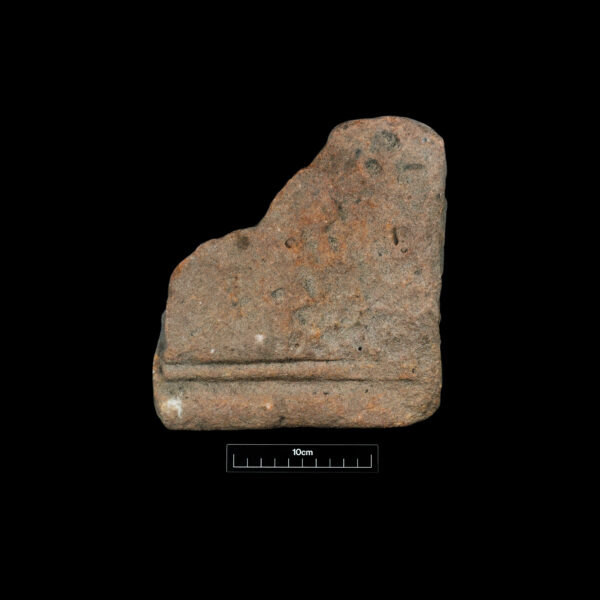
Cross shaft Lindisfarne, possibly AD 800

Finely dressed


A small fragment of cross shaft measuring 20cm by 21cm by 9.5cm. Its face is very finely dressed, with a delicately chiselled inner roll moulding.

English Heritage accession number: 81077049

Close

Cross arm Lindisfarne, AD 900

Fragmentary remains


This is an unworn fragment of a cross arm. This fragment may have been part of the head for this cross-shaft fragment. However, not enough of either the cross shaft or cross arm survives to make a definitive link between the two.

English Heritage accession number: 81077042

Close

Cross Lindisfarne, Early Medieval

Highly worn


A worn fragment of cross with only one decorated face of indecipherable interlace.

English Heritage accession number: 81077044

Close

Cross arm Lindisfarne, AD 900

Confused and clumsy


This fragment of sculpture is a broken and worn section of a cross arm. It is decorated with a confused and clumsy linked pattern, which does not appear to be based on any geometric principle.

English Heritage accession number: 81077051

Close

Cross Lindisfarne, AD 900

Interlaced arm


A fragmentary arm from a stone cross decorated with an incised interlace pattern.

English Heritage accession number: 81077048

Close

Cross head Lindisfarne, AD 775-850

Could be part of Lindisfarne 1?


This slightly weathered cross head fragment is decorated with a variety of interlace patterns. This head could belong to this cross shaft fragment.


English Heritage accession number: 81077045

Close

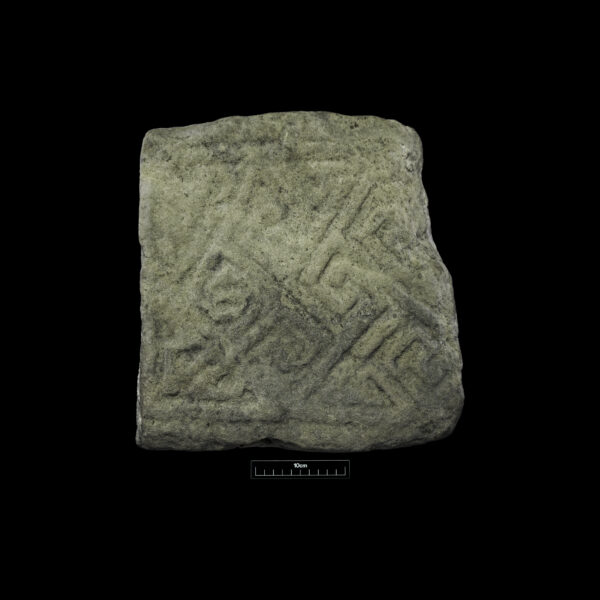
Cross base Lindisfarne, AD 775-850

Re-used as a foundation stone


This is a unique cross base unlike any other found on Lindisfarne to date. The front face is decorated with two cords running around the outer edge which interlock at the top and bottom.

The top cords twist together, hang vertically and end in cruciform. The lower cords lie intertwined at the bottom of the stone and finish a wedge or Tau cross shape.

The design is reminiscent of the entwined serpents on the late 7th century portal stones of the church at Monkwearmouth. It has also been suggested that the simple ornament gives the impression that the base is covered with a cloth with decorative bindings and ties.

It was broken in half and laid before the high altar as the foundation stone of the early 12th century church.

English Heritage accession number: 88404000

Close

Burial marker Lindisfarne, AD 800

Vertical or flat grave marker


This sandstone slab, originally much taller, would have marked a burial. Decorated with a raised cross in the centre, each arm of the cross is decorated with interlace. This type of burial cover has a long Anglo-Saxon history and can be compared with examples from Norham and Monkwearmouth, as well as wider afield in Scotland and Ireland.

This sculpture was found reused within the walling of the 13th century Chapter House of Lindisfarne Priory.

This stone may have been used as a vertical or flat grave marker.

English Heritage accession number: 81077052

Close

Cross Lindisfarne, Early Medieval

Very worn


This cross shaft fragment is very worn, with two faces broken away. There are indications of flat-band moulding, multiple panels and interlace, but too little of the decoration remains to be sure.

English Heritage accession number: 81077046

Close

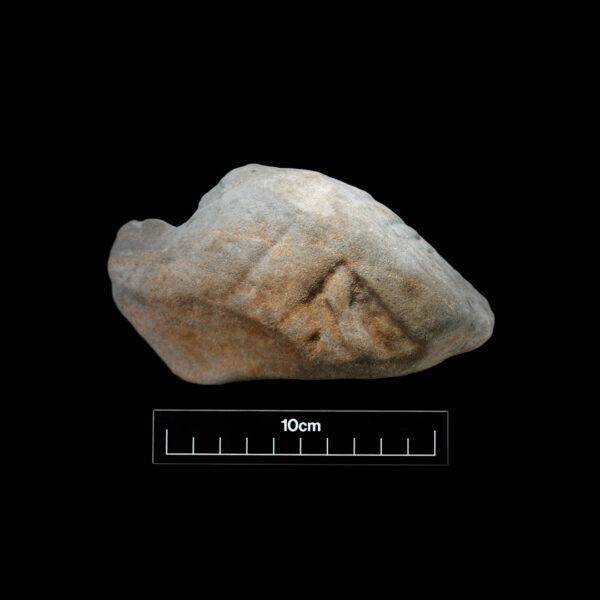
Cross Lindisfarne, AD 700-800

Small and smooth


This fragment of early medieval stone carving is relatively unworn. It is smoothly dressed with vertically incised panels on one face, and part of a deeply cut modelled interlace on another. While interesting, this fragment is too small to base any significant conclusions.

English Heritage accession number: 81077039

Close

Burial marker Lindisfarne, AD 900

Small rolls


This fragment of a burial marker measures only 9cm tall, by 10.5cm wide and is 5.5 cm thick. It is decorated with small rolls.

English Heritage accession number: 81077043

Close

Cross shaft Lindisfarne, AD 875-900

Subtle interlace decoration


A fragment of cross shaft incised with interlace decoration.

English Heritage accession number: 81077040

Close

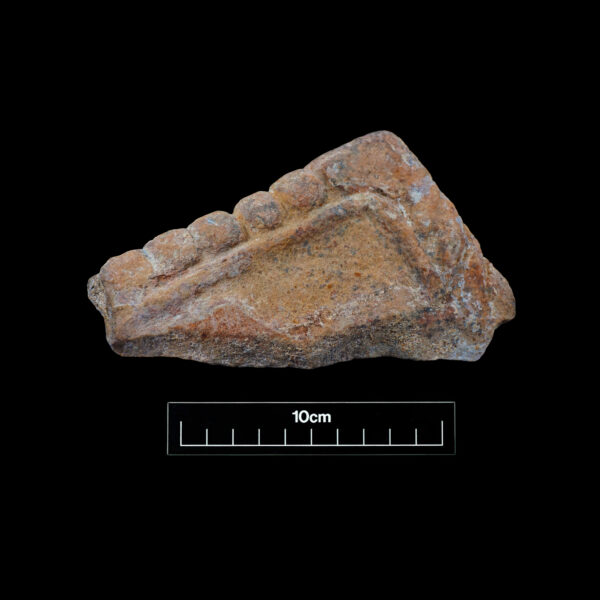
Cross shaft or impost Lindisfarne, AD 1000

One of a kind


This is a broken but unworn fragment of a cross shaft or impost. Imposts are blocks which rest on top of a column or are embedded in a wall as part of an arch. This fragment measures 21cm tall by 14.5cm wide and is 13cm thick.

It is difficult to determine its function because only a small piece of this sculpture remains.

It is decorated using heavy cables and thick pellets, which tend to be associated with later periods (Norman conquest and onwards). If it was used as an impost, the robust decoration may be linked to its use within an architectural feature.

This is an unusual piece of pre-Norman conquest sculpture found on Lindisfarne in terms of both form and decoration.

English Heritage accession number: 81077050

Close

Cross shaft Lindisfarne, AD 1050-1100

Originally had a painted design?


This fragment of a cross shaft is made from sandstone and plainly decorated with a double incised border and rolled edge. Plain shafts such as these may be associated with later period ring-headed crosses. Ring-heads can be dated to as late as c. 1100, however this plain shaft could be pre-Conquest.

It may have been more elaborately decorated with a painted design, but no trace of paint remains now.

English Heritage accession number: 81077066

Close

Cross head Lindisfarne, AD 1000

One of two


This large ring-headed cross made of yellow sandstone is one of two known from Lindisfarne. The other was reset on a 19th century cross shaft on the village green on Holy Island until it was blown down in high winds in 1993.

English Heritage accession number: 880636

Close

Burial marker Lindisfarne, AD 1075 - 1125

For a possible shrine burial


This end section of a burial marker may have served as a covering stone for a shrine burial. Shrine burials were typically made of stone and took prominence by sitting on the surface, rather than being buried below ground. They were usually reserved for important or significant members of the monastic community and may have also become a focal point around which other individuals were buried.

English Heritage accession number: 81077059

Close

Cross arm Lindisfarne, Early Medieval

Reused fragment


A small fragment of early medieval cross arm with mortar on all faces from later reuse as building stone. This piece is plainly decorated with chamfered roll moulding on its edges. A chamfer is a type of bevel which connects two adjoining right-angled faces at a 45-degree angle.

English Heritage accession number: 81077005

Close

Cross boss Lindisfarne, AD 800-900

A decorative centre


This is a finial or central boss of freestanding cross decorated with small rolls and pellet moulding. The fragment measures 11cm tall and 15cm in across, with each pellet approximately 1cm in diameter.

English Heritage accession number: 81077033

Close

Cross shaft Lindisfarne, AD 800-900

From the Heugh


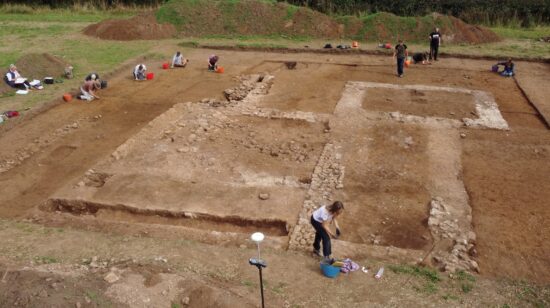
This fragment of a cross shaft was found on the Heugh, an elevated rocky ridge on Holy Island where foundations for a 7th century church have also been found. The fragment was reused to separate two skulls in an 11th century burial. The interlace pattern is very similar to Lindisfarne 02.

Owned by The Crossman Trust.