Ampthill Castle
06 - 18 June 2026
DigVentures is crowdfunding a dig to unearth the first home of Henry VIII and Catherine of Aragon. Help make the dig happen – alongside our archaeologists!
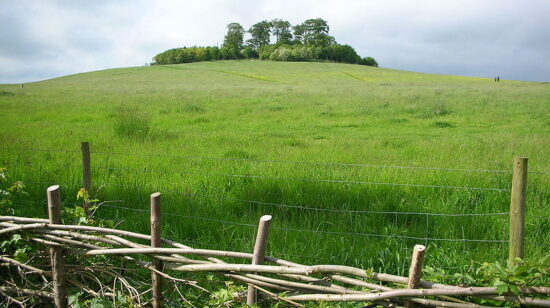
Buried somewhere in Ampthill Park lie the ruins of a royal castle. But it’s not just any castle; it was the first place that Henry VIII and Catherine of Aragon called home.
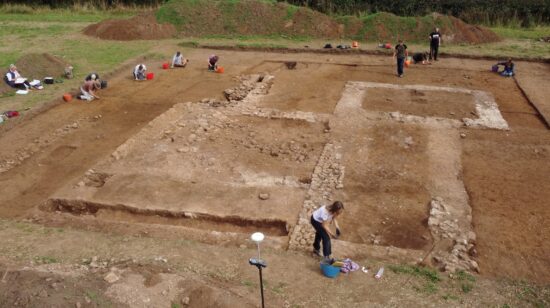
From the palace where they lived, to stables, and other forgotten structures, we’re on a mission to explore how far the castle ruins extend beneath the park – and prove that there’s far more to Ampthill than first meets the eye.
Join our crowdfunded dig and we’ll teach you everything you need to know to dig alongside our archaeologists, make real discoveries, and experience what it’s like to unearth the past. Together, we can reveal a clear picture of Henry and Catherine’s first home – for the first time in nearly 500 years…
Our dig site – and why Ampthill matters


Ampthill Palace (also known as Ampthill Castle) was a 15th-century royal residence. Henry VIII owned it from 1524, and Catherine of Aragon lived here during the early years of their marriage – and the divorce proceedings in 1533 that changed the course of English history.
But by 1567 the palace had fallen into disrepair, and by 1649 it was demolished. Today, the site is marked by Katherine’s Cross, erected in the 1770s. The surrounding deer park was later transformed by Lancelot ‘Capability’ Brown into the 18th-century landscaped Ampthill Park, which now spans over 150 acres of public land.
Even though the palace itself is a Scheduled Monument, many details remain a mystery, including the exact location of its buildings and outbuildings. That’s where our excavation comes in!
The discoveries so far

Google Earth map of Ampthill Park showing parch marks as visible in 2006

Headland Archaeology geophysical survey from 2024

Plan of Ampthill House from 1567 (Turner 2010) over geophysical survey and LiDAR survey
Previous surveys and excavations (2002–2018) have revealed:
- Remains of a Saxon settlement, including sunken buildings and post holes
- Late medieval stone wall foundations, floors and hearths
- Evidence suggesting the palace ruins may lie near Katherine’s Cross
- Medieval and post-medieval features, including ditches, enclosures, and the original deer park landscape
In 2024, geophysical surveys revealed strong anomalies that match earlier LiDAR and cropmark data. These could be substantial outbuildings, including a possible stable block connected to Henry VIII’s palace. Their location (out of sight and downhill) would have been perfect for horses and hunting, while keeping smells away from the royal quarters.
What we’re looking for


Starting with the outer buildings, our goal is to explore the daily workings of a Tudor royal household. Targeted test pitting and small trenches could confirm whether the geophysical anomalies are walls, foundations, or floors from Henry VIII’s palace complex.
This next phase of the project will also help us:
- Pinpoint the true location of Ampthill Palace
- Understand how the palace and its outbuildings fit into the wider landscape
- Explore the lives of the people who lived, worked and moved through Henry VIII’s first marital home
Why we want you to get involved


Want to help us write the next chapter of Ampthill’s story?
Archaeology doesn’t just have to be about watching documentaries on TV, visiting museums, or reading things in the news. It can also be about getting involved and helping to unearth the stories and experiences that matter to you.
Across the UK, there are thousands of people like you who love history and know that there is so much more to their local area than meets the eye – if only they knew how to prove it.
With guidance from our top team of archaeologists, and with your interest and involvement, you can help us piece together how Henry VIII and Catherine of Aragon may have lived, worked and moved through their first marital home.
Archaeology isn’t just for experts, it’s about curiosity, discovery, and sharing history that matters. Ampthill’s history has been waiting to be told – and with your support, we can bring it to life.
It’s archaeology in your hands!
Who else will be involved?
This project brings together:
- Ampthill and District Archaeological and Local History Society, providing invaluable local knowledge
- Ampthill Town Council and the Greensand Trust, managing the “Ampthill People’s Park” initiative
- And YOU!
We’ll also be working with Ampthill Town Council, to create opportunities for schools, community and youth groups to be part of the dig, too, including:
- Family activities
- Workshops and hands-on digging for school children
- Volunteering
- Tours
Whether you dig on site, join a finds team, or support the project from home, your involvement will help us piece together Ampthill’s story.
Crowdfund the dig to help make it happen!


Whether you love history, the Tudors, or just want to help unearth the past, you can:
- Join us on the dig
- Support the dig from a distance
However you choose to get involved, you’re contributing to nationally significant research.
We make sure that all results and discoveries from the dig are freely available to examine online and are published in our official Dig Report – with your name in the credits.
Through our work and collaboration with other experts in the field, they can make a real contribution to our knowledge of Tudor Bedfordshire.
And by taking part, you can too.
Join the dig team


Join us on the dig and we’ll teach you all the essential skills that field archaeologists use: how to spot new archaeological features, how to excavate them, how to identify artefacts, and how to record what you find.
The archaeology you do will be real, hands-on, and just a little bit dirty. And your search for evidence will be guided by our friendly team of archaeologists every step of the way!
You’ll be part of our team from the moment you arrive, and the longer you stay, the more you’ll learn. Starting with the basics of how archaeologists locate which areas to dig through a process known as ‘cleaning’, you’ll soon progress through a range of different skills and more complex excavation challenges – from investigating features and lifting artefacts, to recording and interpreting your discoveries like a pro.
Most importantly, you’ll walk away having gained real archaeological experience – and having had fun while you’re at it!
Support the dig from home!


Can’t join the dig, but still want to be part of making it happen? Your support is just as important; it helps us do more to:
- Get new communities involved in archaeology
- Carry out more in-depth analysis of our discoveries
- Share the discoveries with you in new and exciting ways
From radiocarbon dates and conservation by specialists to community outreach, this is where your contribution really counts.
To show our appreciation, we’ll send you live updates whenever we make an exciting discovery or get interesting results back from the lab.
Plus, we’ll acknowledge you as an official contributor in our Dig Report and send you a digital copy – with your name in the credits.
You can even choose extra perks like:
- Behind-the-scenes updates
- One of DigVentures’ famous archaeology t-shirts as an extra gift
Want to be part of the dig?


If you’ve ever wanted to be part of a team who are making real, ground-breaking new discoveries about the past, this is your chance to make it happen.
It’s archaeology in your hands!
Backer levels
Follow our progress
Follow the latest archaeology action from Ampthill as it happens.