Landscape-scale Habitat Intelligence: Hadrian’s Wall Corridor
Citizen scientists prove they can provide a fast and affordable alternative to traditional large-scale surveys.
- Area size: 1,631 km2
- Project partner: Northumberland Wildlife Trust, Northumberland National Park Authority, National Trust
- Launch date: October 2024
One of the questions running through the whole of Deep Time is whether citizen scientists can provide a fast, affordable alternative to traditional large-scale ecological surveys. The Hadrian’s Wall mission was designed specifically to test that, and to do it across one of England’s most iconic landscapes.
We trained 227 participants (known as Futurenauts) in Earth Observation data analysis and habitat identification, to spend four weeks mapping 16 habitat types across more than 1,600 km² of land, through over 32,400 polygons of habitat. When we compared their work against professional surveys and AI-generated datasets, the results made a strong case for what citizen science is capable of.
“I really enjoyed every aspect from learning about all the different habitats to studying the maps and plotting the polygons. I’m really interested in nature and history… and it felt really great to feel like I was contributing towards something important.” Linda, 25–34, Futurenaut
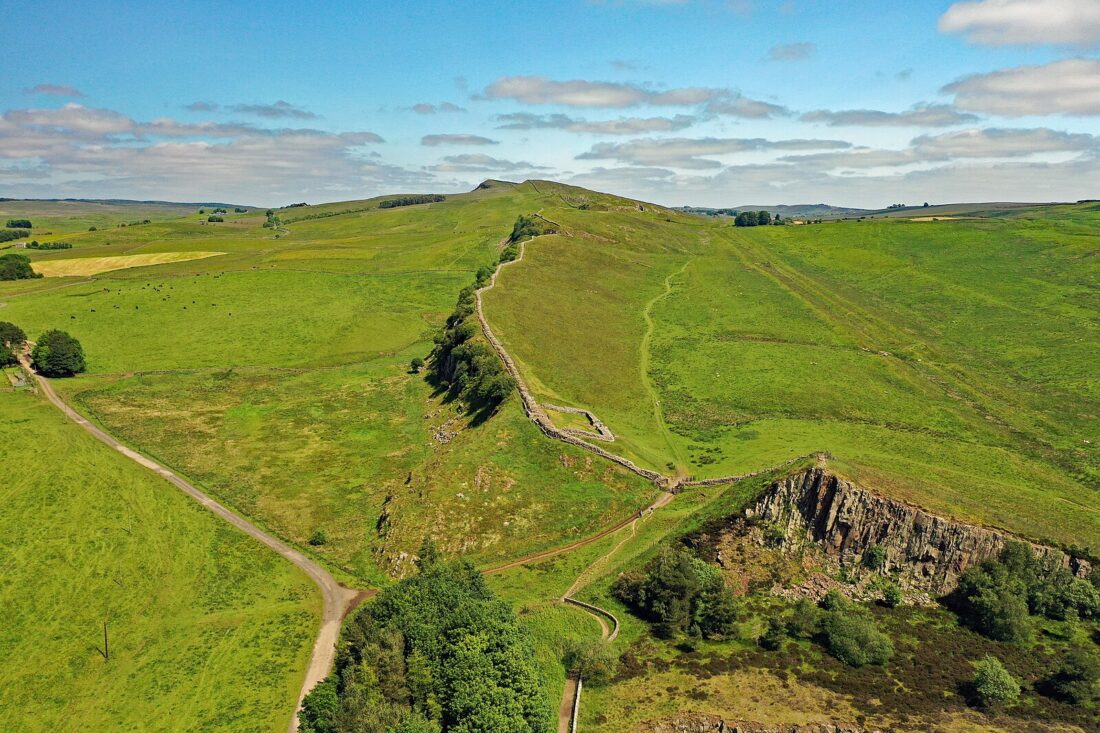
The Landscape
The Hadrian’s Wall corridor is a landscape where cultural and natural heritage visibly meet. The wall itself is a World Heritage Site, but the landscape it crosses is just as remarkable, with rolling grasslands, ancient woodlands, exposed peatlands and river corridors that support a wide range of ecological communities, many under pressure from climate change.
What makes this landscape particularly interesting for Deep Time is how inseparable its heritage and ecology are. Medieval land management shaped the habitats that exist today, and ancient field systems created the biodiversity patterns that conservation work now tries to protect.
Project Map
Explore a snapshot of the full 1,631 km² of mapped Hadrian’s Wall corridor. Each polygon represents one of 32,414 habitat types mapped by our Futurenauts - citizen data that matched or outperformed professional surveys across 80% of the study area.
Our interactive map cannot be used on small screens. Please use a desktop, laptop or large tablet (such as an iPad) to view it.
See all the archaeology digs, talks, festivals and other events coming up at DigVentures
Learn more about digging up the past and have fun while you're doing it!
We're connecting people who love archaeology, with opportunities to do archaeology.
Find projects you can be part of or follow all the archaeological action with our Live Updates ›
Archaeology experiences and other perfect presents for people who love the past.

