Spodden Valley
Menu

Spodden Valley

A valley full of archaeology waiting to be discovered

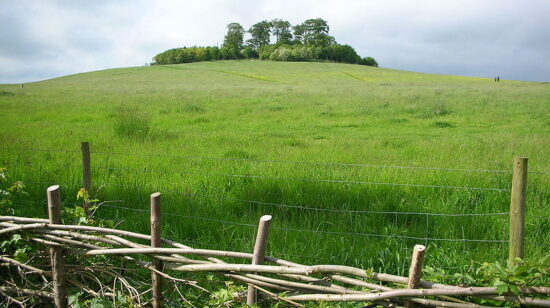
Spodden Valley is full of archaeology, from Mesolithic to Medieval and the modern day.

There’s a wealth of archaeology in Spodden Valley that has yet to be explored, with sites from the Mesolithic period over 8,000 years ago right through to military archaeology from the 20th century, such as anti-invasion pillboxes and munitions factories.

Spodden Valley

Witworth in Rossendale, Lancashire

Spodden Valley is something of an archaeological dark horse. We really don’t know much about it prior to the industrial revolution, when Spodden and the surrounding area became an important place for the manufacturing of textiles, quarrying and coal mining.

All the evidence we’ve found, however, suggests that the area has been in use since at least the Mesolithic period, with a history spanning all the way through the medieval, industrial revolution and right up to the present day.

Spot The Hunter Gatherers

It is notoriously difficult to find evidence of hunter-gatherers, because they led nomadic lifestyles, constantly moving around to exploit the resources in different areas. The area around Spodden Valley, however, has one of the richest concentrations of hunter-gather sites in Europe. You can help us survey the valley and find them.

Approximately 10,000 years ago, the Spodden Valley was part of the Forest of Rossendale, which covered a huge area of 22,000 acres. This period of time is known as the Mesolithic, or ‘Middle Stone Age’, commonly accepted as 11,000 to 5,500 years before present. During this time, people lived nomadically, constantly on the move to follow food sources. Because they did not settle in one area, evidence of Mesolithic hunter-gatherers is difficult to find in the archaeological record.

The hunter-gatherers who came to the Spodden Valley area left behind what archaeologists call ‘flint scatters’, which means a collection of flint artefacts found on the surface of the ground . Anyone who has ever tried flint knapping (and we have!) will know that there’s a lot of debris (called ‘debitage’), and the process is quite difficult. There is a lot of waste material, such as flint cores (the larger flint object that was struck to get useful flakes and blades) and the waste flakes struck off the cores. This debris remains on the ground, and is then buried over thousands of years. Erosion of the ground surface sometimes reveals the flint in situ where it was originally left, and this is known as a flint scatter.

Recently, Mesolithic flint artefacts were found near Spodden at Rushy Hill, including knives, scrapers, arrowheads and spear tips. This is an excellent start to our hunt for archaeology, but we think there’s plenty more – it’s time to get out there and survey the valley, to locate as many flint scatters and hunting camps as possible.


Post-Medieval Settlement

Once home to John Stott, a herbalist doctor who supplied the community with tinctures and potions in the early 19th-century, Brown Wardle Farm is now a ruin. But what was life like for the many generations of the Stott-Milne family who lived here? Did anyone live there before them? What did they do, and why did they leave?

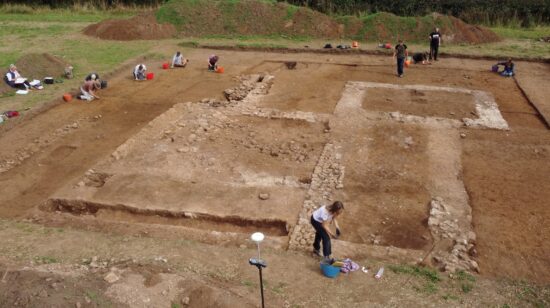
In May 2018, with the help of our Venturers, DigVentures will be conducting an excavation at Brown Wardle Farm to establish the earliest date of the settlement, how people lived, and why it was abandoned. Evidence suggests that the earliest settlements are much more likely to have been on the uplands rather than down in the valley, and no one really knows why the settlement was abandoned.

We’ve chosen this small hamlet for our excavation because it is typical of many similar abandoned sites in the wider area. Nobody knows when they started, when they ended, and what effects the industrialisation of the area had on them. This is our chance to find out!

The Domesday Book, commissioned by William The Conqueror after his successful invasion in 1066, records a settlement in Spotland occupied by ‘Gamel the Thane’, proving that there have been people living near Rochdale for over 1,000 years. It is likely that settlement began much earlier, however there is no conclusive evidence. Place names also indicate that there was some Scandinavian settlement locally, showing that the area was rich in diversity and culture.

We’ve chosen Brown Wardle Farm for the excavation because there is a good chance that there there is an earlier phase to the site predating the buildings we can see today, and because the location is likely to have been important to the wider area. In addition to the excavation, we’ll be doing photogrammetry and building surveys at another site nearby called Cow Clough, an early industrial settlement and nunnery removed by the construction of a reservoir. Both of these sites have very significant archaeological questions to answer.


Follow our progress

Follow the latest archaeology action from Spodden Valley as it happens.
Get the DigVentures Newsletter

Sign up to discover opportunities to get involved in archaeology - in your area, and beyond!

Easy opt-out at any time - Privacy Policy

Archaeology / In Your Hands
  • Heritage Lottery Fund
  • CIfA

See all the archaeology digs, talks, festivals and other events coming up at DigVentures

Learn more about digging up the past and have fun while you're doing it!

We're connecting people who love archaeology, with opportunities to do archaeology.

Archaeology experiences and other perfect presents for people who love the past.